





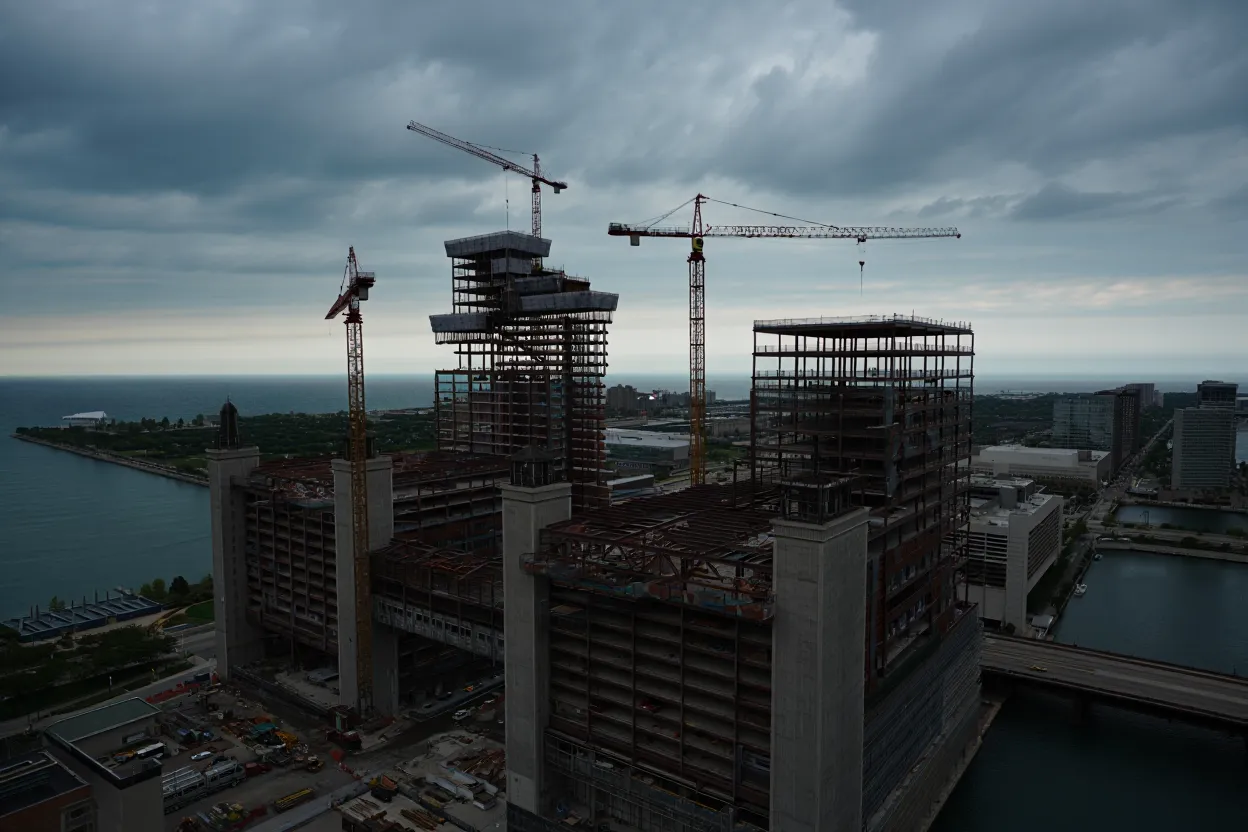
- Bally’s has stopped work on most of its $1.7B Chicago casino and hotel amid a conflict over newly legalized video gambling in the city.
- The dispute centers on the city’s introduction of video gambling terminals, which Bally’s says violates its exclusive gaming agreement.
- Lenders and contractors remain on standby as the stalemate creates uncertainty for local jobs and Chicago’s broader gaming market.
City’s Expansion of Video Gambling Sparks Tension
Bally’s decision to partially halt construction of its Chicago casino follows months of escalating friction with city leaders. According to Bisnow, the casino operator took issue with the City Council’s move to legalize video gambling terminals (VGTs) within Chicago limits as part of a budget-balancing strategy.
Bally’s claims this expansion breaches its 2022 agreement, which it believed ensured gaming exclusivity for its $1.7B riverfront development and associated amenities. With nearly 50,000 VGTs operating statewide by the end of 2025—the largest network globally—the competitive threat is tangible. Chicago’s recent approval of VGTs was intended to help close a $6.8M budget shortfall, but the backlash from Bally’s highlights just how contentious expanded gaming remains in the city’s economic playbook.
Get Smarter about what matters in CRE
Stay ahead of trends in commercial real estate with CRE Daily – the free newsletter delivering everything you need to start your day in just 5-minutes
The Details
Bally’s issued a work “reset” notice on August 8 to the Chicago Community Builders Collective. The general contracting JV oversees its project along the Chicago River. This pause affects most of the complex, including the hotel tower, events center, and several restaurant spaces. Notably, the company still targets early 2027 for the permanent casino’s phased opening. The setback follows Bally’s earlier securing $940M in financing for the Chicago development.
Meanwhile, 268 VGT applications remained pending in Chicago as of July 2026, according to the Chicago Tribune. None had been approved, according to the Chicago Tribune. In anticipation of volatility, Bally’s funding partner Gaming and Leisure Properties—a major gaming REIT—reports it factored in the risk of VGT competition when underwriting the casino’s construction loan. Despite tensions, no formal withdrawal from the project has occurred, keeping the door open for resumed talks.
Illinois’ Casino Market Faces New Pressures
The rapid expansion of VGTs—nearly 50,000 statewide per the Illinois Gaming Board—has transformed the competitive landscape for physical casinos across Illinois. Bally’s claims Chicago’s casino was supposed to be buffered from this competition, facilitating a profitable launch of its 1.2M SF entertainment and gaming hub.
With hundreds of new VGT licenses now pending approval, operators and lenders are uneasy about oversaturation and diluted revenues. For contractors, the pause disrupts key work for roughly 1,500 union tradespeople. Market watchers note that this standoff comes as Illinois eyes additional casino projects in other cities, adding further complexity to the state’s gaming future and potentially influencing regional CRE investment strategies.
Why It Matters
This is a high-stakes standoff for both Chicago’s real estate and gaming sectors. With one of the country’s largest casino projects now partially on ice, ripple effects spread to labor, developers, and the city’s anticipated tax base. Bally’s is betting that its objections will spur city officials to revisit the scope of VGTs or offer other economic assurances. For lenders and institutional capital already backing the project, like Gaming and Leisure Properties, the reset signals that even well-underwritten deals can stall over regulatory pivots. The initial promise of a $1.7B flagship casino driving urban revitalization faces new hurdles, especially as the city seeks gaming revenue to fill budget gaps.
The pause also underscores the complexity of exclusive gaming rights in urban cores. According to the Illinois Gaming Board, VGT revenue reached $2.7B statewide in 2025, outpacing returns from several legacy casino properties. The move by Chicago to embrace VGTs could set a precedent, prompting future casino investors to demand more robust protections or incentives. Labor is another flashpoint: Bally’s stated concern for 1,500 tradespeople aligns with broader union anxieties about major CRE projects stalling due to political or regulatory shifts. As developers, contractors, and REITs navigate uncertain returns, the outcome may influence gaming-centric development across other US metros facing similar pressures between fiscal needs and private partner commitments.
What’s Next
Bally’s says it remains open to renewed talks with the mayor’s office and City Council, signaling a pause but not a permanent withdrawal. The company continues work on select casino core elements pending a potential resolution. Whether Chicago ultimately limits or modifies VGT expansion—and on what timetable—will directly shape the future of the $1.7B riverfront complex, job creation, and future gaming-related CRE activity in the city.
For now, lenders, construction teams, and local officials are watching closely as both sides weigh the next move. Any deal could become a template for how urban jurisdictions balance gaming revenue, investor confidence, and labor stability in a volatile market.