




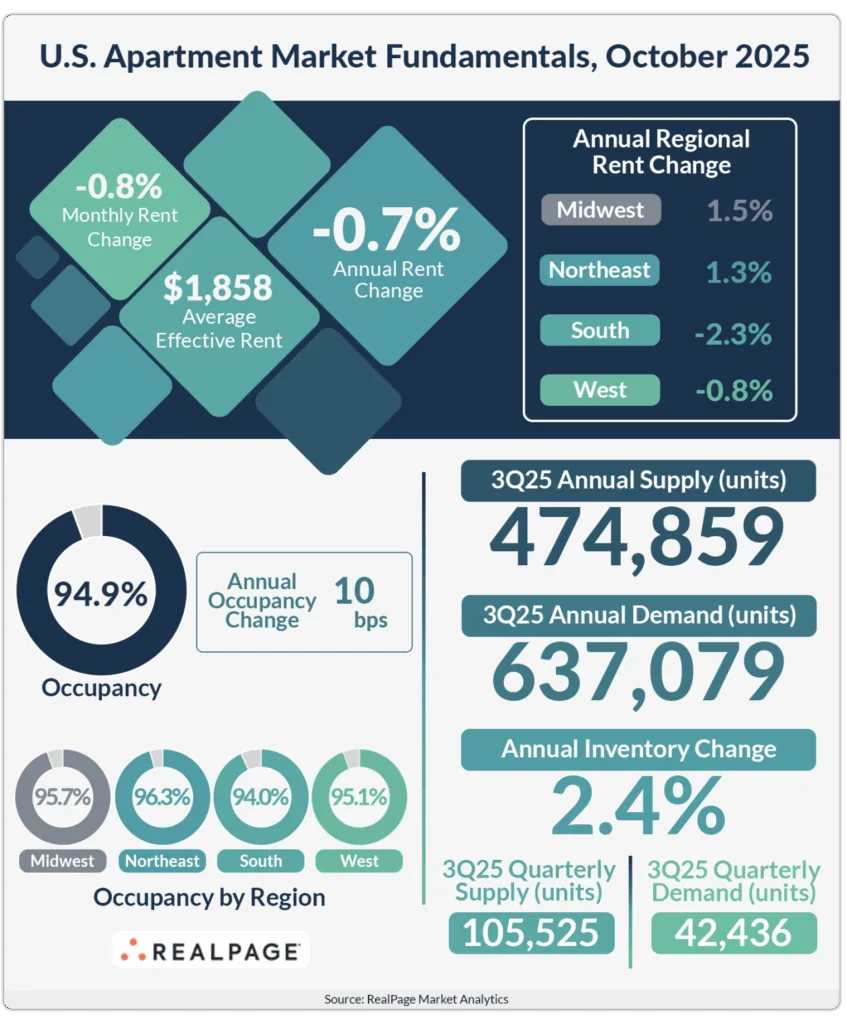
- US apartment rents dropped 0.7% year-over-year in October, marking the steepest annual rent cut since March 2021.
- National occupancy dipped for the third consecutive month to 94.9%, with declines driven by oversupply in the South and West.
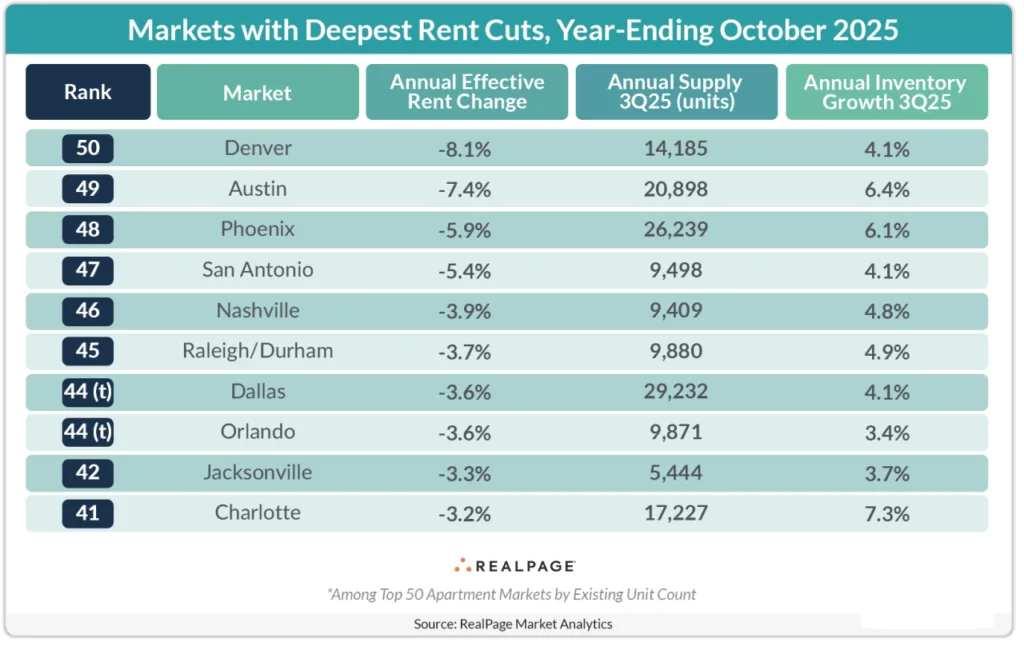
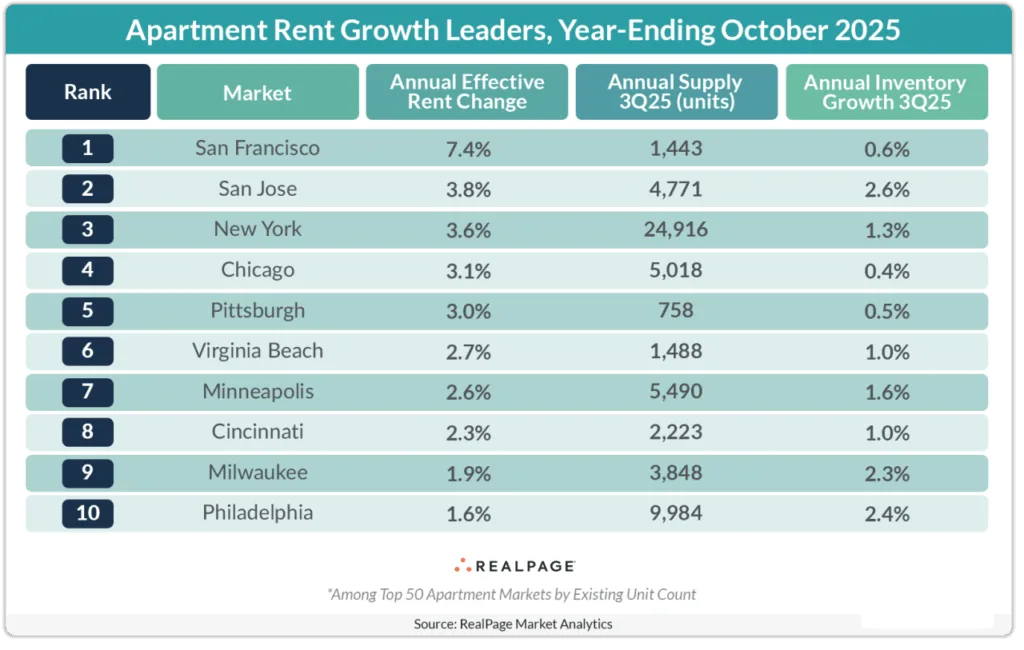
- Tech-focused markets like San Francisco and New York saw strong rent gains, while Sun Belt cities such as Austin and Phoenix faced the largest rent cuts.
A Market Losing Momentum
October marked the third straight month of annual rent declines in the US apartment market. According to RealPage Market Analytics, effective asking rents fell 0.7% year-over-year — the sharpest drop in more than four years.
Contributing to the slump is softening occupancy, which slid to 94.9% nationally in October, down 20 basis points (bps) from September and 60 bps over the past three months. Still, occupancy remains slightly higher than a year ago, up 10 bps year-over-year.
Southern and Western Markets Under Pressure
Price weakness was concentrated in the South and West, where aggressive supply pipelines have flooded markets. Cities like Austin, Phoenix, Denver, and Charlotte posted some of the most significant rent cuts, even amid steady demand.
In fact, the South hasn’t seen any annual rent growth since mid-2023, as operators respond to new inventory with more conservative rent-setting. The West saw similar pricing pressure in October, further dragging down the national average.
Tourism-driven cities such as Orlando and Nashville also posted deep rent cuts, reflecting signs of softer consumer discretionary spending. Las Vegas and Tampa narrowly avoided joining the bottom tier but still recorded 3% year-over-year declines.
Tech Hubs Outperform Amid AI Optimism
In contrast, tech-heavy coastal metros bucked the trend. San Francisco, San Jose, and New York all posted strong rent growth between 3% and 7% over the past year, fueled by a rebound in tech hiring and investor enthusiasm around AI.
Other metros with notable gains included Chicago, Pittsburgh, Virginia Beach, and Minneapolis, which benefited from steady demand and less exposure to overbuilding.
Why It Matters
After years of robust growth, the multifamily market is showing signs of moderation. Overbuilding in key markets is applying downward pressure on rents, forcing operators to prioritize occupancy over pricing. Meanwhile, stronger performance in tech hubs signals that economic sentiment and industry-specific dynamics are playing an increasing role in regional rent trends.
What’s Next
With new supply continuing to hit the market in many Sun Belt cities, pressure on rent growth is likely to persist into 2026. However, strength in tech and Midwest markets could offer some counterbalance. Operators will need to stay agile as regional dynamics increasingly diverge across the multifamily landscape.
Get Smarter about what matters in CRE
Stay ahead of trends in commercial real estate with CRE Daily – the free newsletter delivering everything you need to start your day in just 5-minutes