






- NAR’s Q3 2026 index found manufacturing, transportation and warehousing hiring pushed San Antonio, Seattle and Nashville sharply higher, even though industrial employment barely moved at the national level.
- Only 143 of 306 metros scored above 100, the line for stronger-than-average demand drivers. St. George, Utah, stayed first at 132, with Huntsville, Alabama, next at 125.
- Local payroll growth, not national trends, now separates markets that look alike on vacancy and rent growth, making metro-level hiring a useful early read on where demand is heading.
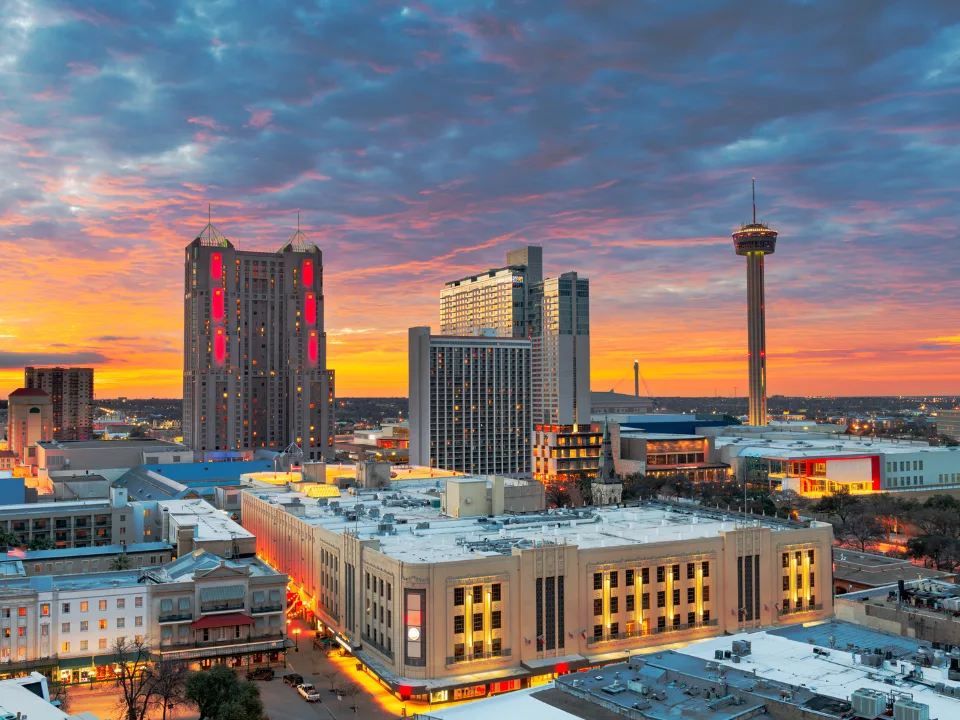
Where companies add workers is redrawing the map of CRE demand. In NAR’s demand index for the third quarter, San Antonio shot up 67 spots to rank 9th, the biggest climb of any market.
Nationally, industrial payrolls were roughly flat. The gains came from metros where manufacturing, transportation and warehousing employers hired faster than average.
Get Smarter about what matters in CRE
Stay ahead of trends in commercial real estate with CRE Daily – the free newsletter delivering everything you need to start your day in just 5-minutes
Who Climbed
Seattle jumped 102 places to 44th. Nashville rose 53 to land at 20th.
Austin broke into the top ten in 2026 for the first time, and its rank is the best since Q3 2023. Industrial hiring drove most of that rebound too.
The Leaderboard
The index tracks 306 metros, and 143 of them scored higher than 100, which flags above-average demand drivers. St. George, Utah, kept first place at 132.
Huntsville, Alabama, came in at 125. Fayetteville-Springdale-Rogers, Arkansas, and Sherman-Denison, Texas, tied at 123, and Ocala, Florida, scored 121.
Notably, none of the top five is a major gateway market. All are smaller metros in Utah, Alabama, Arkansas, Texas and Florida.
Big Coastal Markets Lag
Miami, New York, Los Angeles and San Francisco again scored below the average. San Francisco did add roughly five points from a year earlier.
Beyond industrial, leisure and hospitality jobs grew in about two-thirds of metros, while retail trade payrolls trailed.
Zoom Out
The hiring pattern fits the story in our brief on the onshoring boom. That piece cited a Hines estimate that US manufacturing construction would grow by $1T through 2030, creating demand for roughly 430M SF of logistics space.
NAR’s rankings suggest part of that wave is already visible in job counts across San Antonio, Nashville and the Pacific Northwest.
Why It Matters
NAR’s Nadia Evangelou makes the key point: two markets can post matching vacancy and rent growth while sitting on very different demand. Sector-level job growth helps explain which one has momentum.
For developers and investors, hiring in factories and warehouses is a cleaner signal than headline employment. It also flags markets where rank may be moving faster than rents.
What’s Next
The Q4 reading will show whether San Antonio, Seattle and Nashville keep their gains or whether this was a one-year surge. Watch industrial payroll data in those metros in the meantime.
Investors screening sites can pair the index with local vacancy and rent figures, since NAR notes that markets with similar numbers on both can have very different demand underneath.