








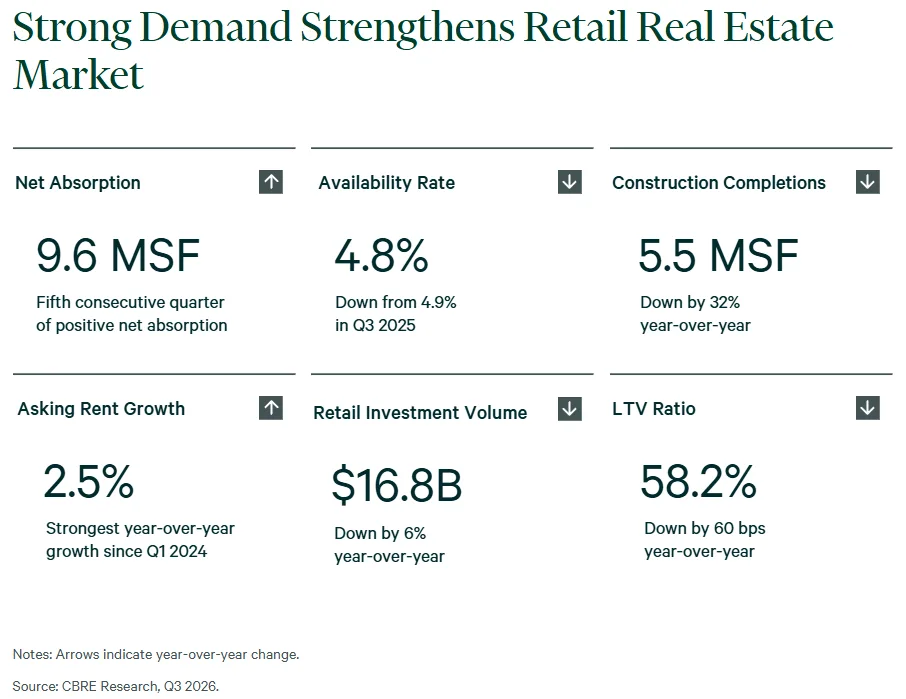
- U.S. retail net absorption reached 9.6 million SF in Q3, the fifth consecutive positive quarter, led by neighborhood, community and strip centers at 2.4 million SF.
- Completions hit a quarterly low of 5.5 million SF and a record-low four-quarter total of 7.4 million SF, keeping availability at 4.8% and lifting asking rents 2.5%.
- Leasing is strong but investment volume fell 6% to $16.8 billion, so landlords hold pricing power while buyers stay cautious on asset-level pricing.
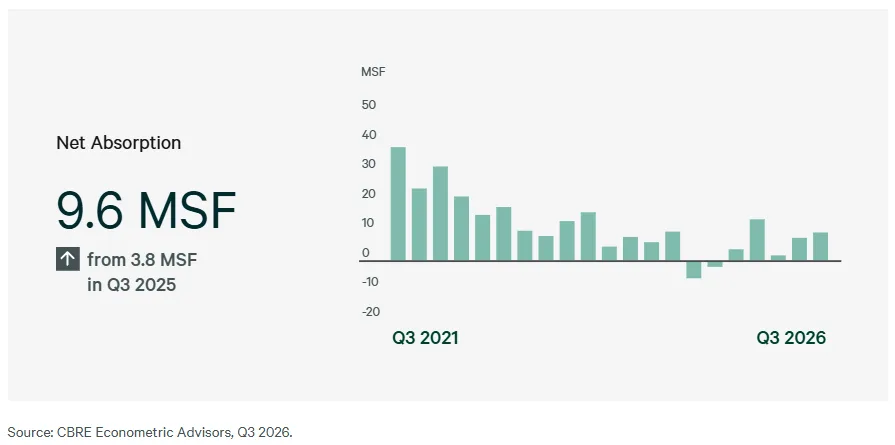
U.S. retail net absorption hit 9.6 million SF in the third quarter, the fifth straight quarter of positive demand, according to CBRE’s retail figures reported by IREI.
It was the strongest quarter since the fourth quarter of 2025.
Get Smarter about what matters in CRE
Stay ahead of trends in commercial real estate with CRE Daily – the free newsletter delivering everything you need to start your day in just 5-minutes
Where Demand Landed
Strip, community and neighborhood centers topped the property types at 2.4M SF. Dallas was the top market at 924,000 SF.
Retailers favored newly delivered space because supply is so limited.
Supply Keeps Shrinking
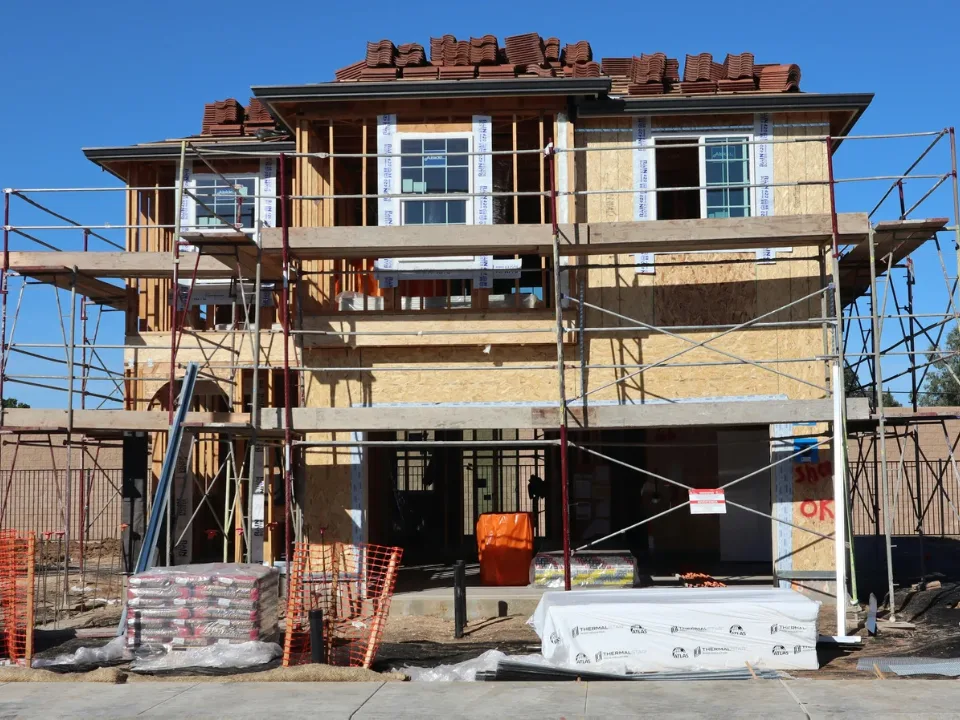
Completions came in at 5.5M SF, a quarterly low, and trailing four-quarter completions of 7.4M SF are the lowest on record. CBRE pointed to higher building costs and a shortage of workers.
Southern markets made up eight of the 10 biggest for completions. Dallas delivered 993,000 SF, Austin 633,000 SF and Phoenix 370,000 SF.
Rents Up, Deals Down
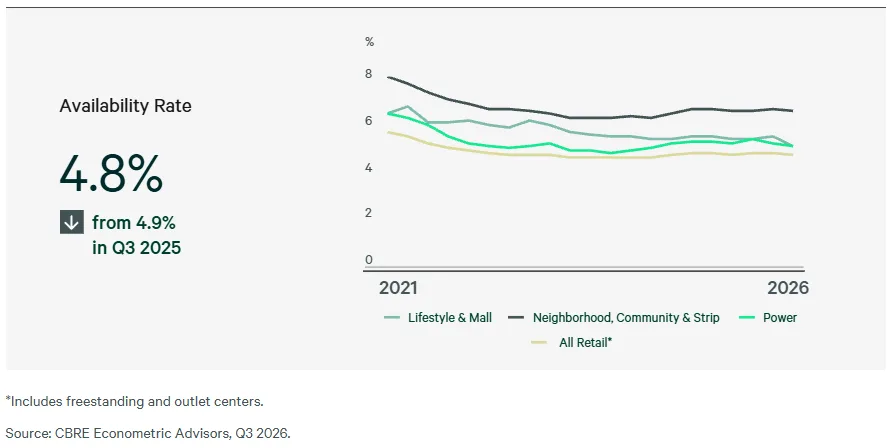
Availability slipped to 4.8%, inside the 4.7% to 4.9% band it has held since late 2022. Average asking rent rose 2.5% to $24.89 per SF, the best annual growth since early 2024.
Investment volume totaled $16.8B, down 6% from a year earlier, which CBRE tied partly to asset-level pricing swings.
Why It Matters
Different trackers agree on direction. Colliers’ Q3 data showed vacancy down 10 basis points to 4.3% and absorption of 10.5M SF, the strongest since 2023, with 58.1M SF under construction.
Tight supply and steady demand give landlords leverage, even as sales volume lags.
What’s Next
With construction costs and labor still limiting new projects, watch whether availability finally breaks below its long-held range as absorption stays positive.