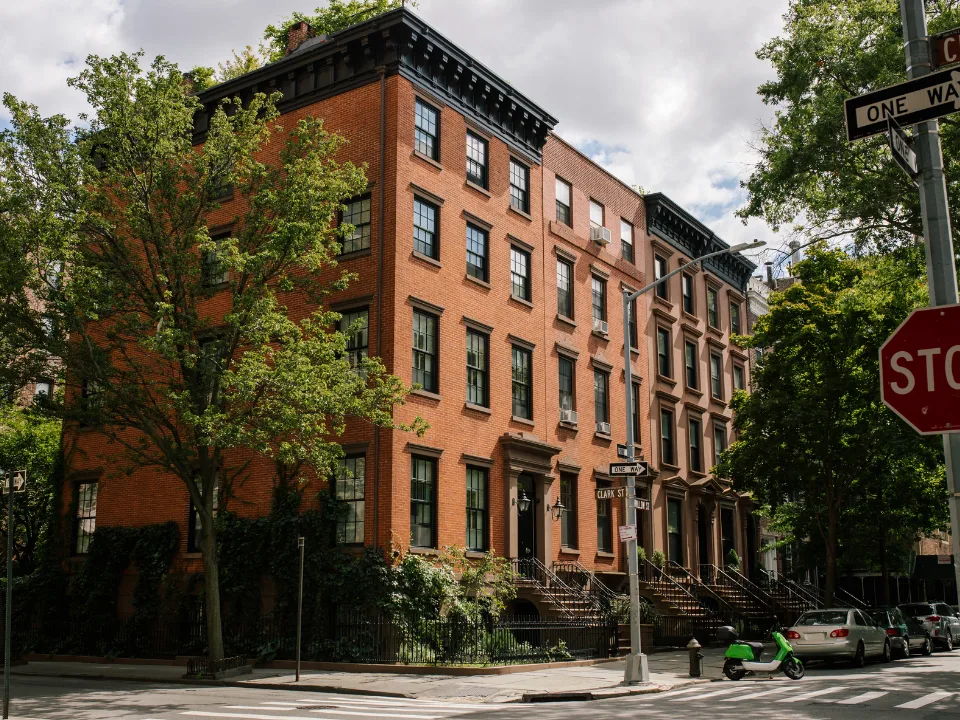





- Three Crown Heights rent-stabilized buildings with nearly 1,000 combined open code violations were transferred to new owner Mark Schwartz on Sept. 3.
- The city plans roughly $10 million in rehabilitation financing, with the 88 units to be held long-term through a nonprofit housing development fund corporation structure.
- The deal reflects a broader city push, backed by tools like Article XI tax breaks, to move troubled rent-stabilized buildings away from unresponsive owners toward preservation-focused operators.
Three long-neglected rent-stabilized buildings in Crown Heights have new ownership, and the Mamdani administration is treating it as a model for how it wants to handle the city’s most distressed housing. The buildings at 1018 Eastern Parkway, 1074 Eastern Parkway and 1392 Sterling Place changed hands this week, according to Bisnow, after racking up nearly 1,000 open code violations between them.
Get Smarter About What Matters in New York
Subscribe to our free newsletter covering the biggest commercial real estate stories across the five boroughs — delivered in just 5 minutes.
How It Started
The properties’ problems date back to at least 2002, when the state ordered a rent freeze at 1074 Eastern Parkway pending repairs that the previous owner, Rubin Dukler, allegedly never made. HPD eventually brought Dukler to housing court in 2020 to force repairs, according to city records, but Dukler died in February 2021, leaving tenants with no clear owner to hold accountable. Residents began organizing in 2018 and formally created the Dukler Tenant Union in 2025, pushing not just for repairs but for the buildings to change hands entirely.
The Details
New owner Mark Schwartz, who is also the mayor of Teaneck, New Jersey, acquired the mortgage on the properties from Dime Community Bank before the city approached him about a preservation deal. The city’s Department of Housing Preservation and Development expects to provide roughly $10 million in rehabilitation financing, pending a financial needs assessment, and the 88 units will be owned through a housing development fund corporation, a nonprofit structure subject to added HPD oversight. Schwartz has already reached an agreement with the tenant union committing to rehabilitation with tenant oversight and a path toward resident ownership. “This is what we hope to be the first of many rent-stabilized buildings that the city preserves,” Schwartz said in a statement announcing the deal, framing it as part of a broader push by the administration rather than a one-off transaction.
Zooming Out
Schwartz isn’t new to this kind of deal: he already owns a small portfolio of walkup buildings, including four preserved through the city’s Article XI program over the past two years, which trades reduced or eliminated taxes for affordable-housing rehabilitation, and he has eight more such deals pending. That enforcement muscle is part of a broader pattern: the city has also rolled out a housing court fast-track aimed at rogue landlords, another lever meant to speed up accountability for owners who let rent-stabilized buildings deteriorate.
Why It Matters
Rent-stabilized buildings across New York have fallen into disrepair amid rising costs, 2019 rent-law changes that squeezed owner economics, and now an incoming citywide rent freeze. That incoming freeze could further pressure multifamily bank credit tied to rent-stabilized buildings, raising the stakes for how many more properties end up needing a transfer like this one. Advocates are already using the deal to push for the Safer Homes Act and Community Opportunity to Purchase Act, which would expand how easily distressed buildings can change hands. Urban Homesteading Assistance Board policy director Arielle Hersh said the coalition wants “tools like COPA and the SAFER Homes Act to make this possible for so many more tenants,” framing the Crown Heights deal as proof of concept rather than a one-off.
What’s Next
HPD says it will work directly with Schwartz and tenants on the rehabilitation timeline, though new deeds for the properties haven’t yet been recorded publicly. HPD Commissioner Dina Levy, a former tenant organizer, has said the city does not “take over” properties outright but instead relies on tools like court-appointed administrators and the third-party transfer program to move distressed buildings toward responsible ownership. With Schwartz citing eight more preservation deals in the pipeline, the Crown Heights transfer looks likely to become a template the administration points to as it faces pressure over the health of the city’s rent-stabilized housing stock heading into the rent freeze’s October start date.