




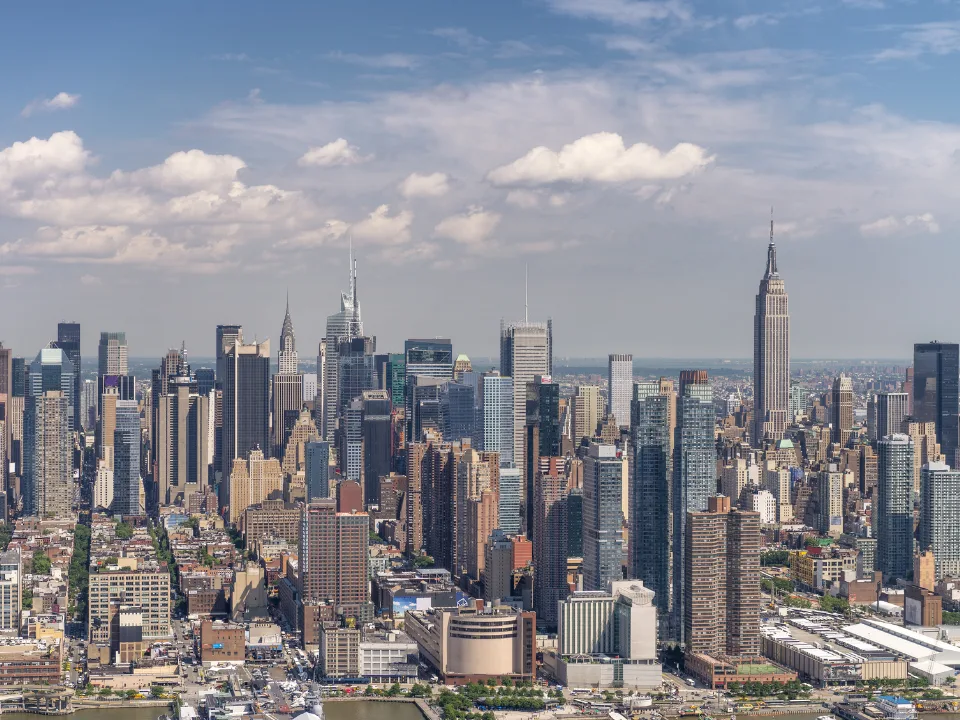



- Manhattan tenants leased 3.25 million square feet in August, 13% above the five-year monthly average, putting 2026 on pace for the strongest office leasing year since 2000.
- Midtown available space fell to 27.86 million square feet, just 150,000 square feet above its March 2020 level, while sublease inventory hit its lowest point since August 2019.
- Manhattan-wide availability slipped to 12.5%, the lowest since September 2020, though asking rents are only modestly higher than a year ago.
Manhattan’s office market is closing the gap on its last pre-pandemic benchmark. Tenants leased 3.25 million square feet in August, 13% above the five-year monthly average and 16% above the 10-year average, according to Colliers data reported by The Real Deal. Through August, tenants have absorbed 29.91 million square feet, up 9.4% from the same period in 2025.
Get Smarter About What Matters in New York
Subscribe to our free newsletter covering the biggest commercial real estate stories across the five boroughs — delivered in just 5 minutes.
How Far the Market Has Come
Leasing dipped 16% from July, but the pullback looks more like a pause than a reversal given the underlying pace of activity. The clearest evidence is in Midtown, long the epicenter of the market’s post-pandemic overhang. Available space there fell to 27.86 million square feet at the end of August, just 150,000 square feet above the 27.71 million square feet recorded in March 2020, the last month before Covid emptied out the submarket. One large lease, or a handful of smaller ones, could push Midtown below its pre-Covid availability level entirely, a threshold that would have seemed unreachable at almost any point over the past five years.
That gap has been closing steadily rather than in one dramatic move. Through August, tenants absorbed nearly 30 million square feet, a pace that puts 2026 on track to be the strongest year for Manhattan office leasing since 2000, according to Colliers, itself a marker of how far demand has recovered from the depths of the pandemic-era slump.
The Details
Midtown and Midtown South drove virtually all of August’s activity: Midtown tenants signed 1.54 million square feet, while Midtown South added another 1.53 million square feet, leaving Downtown a minor contributor to the month’s total. Manhattan-wide availability fell 0.2 percentage points to 12.5%, with total available space dropping to 65.4 million square feet, the lowest level since September 2020. Sublease inventory, often the clearest signal of how much space companies still don’t need, declined to 10.07 million square feet, its lowest level since August 2019 and down 22.3% year-over-year, suggesting the glut of pandemic-era sublet space is finally being absorbed or pulled from the market.
Zooming Out
Pricing has been slower to follow than availability. Average asking rents slipped 0.2% from July but remained 4.2% above a year earlier, a sign landlords still lack the leverage that a tighter market would typically produce. Recent deals bear that out: Savills’ full-floor lease at a Rudin office tower is exactly the kind of large single-tenant commitment driving August’s volume, even as landlords hold off on aggressive rent hikes.
Why It Matters
Declining sublease space matters more than the headline availability number, since it suggests companies are no longer sitting on excess square footage created early in the pandemic. Large anchor commitments like General Atlantic’s anchor lease at Related’s 625 Madison Tower show blue-chip tenants are still willing to commit to trophy space years in advance, reinforcing that the leasing wave has staying power beyond a single strong month. For investors, a tightening leasing market is usually the leading indicator that valuations and sales activity follow, which is why office landlords and lenders alike are watching Manhattan’s numbers as closely as any market in the country right now.
What’s Next
The next test is whether sustained leasing volume can keep tightening availability without a slowdown once the current wave of return-to-office and lease-expiration activity works through the pipeline. If Midtown availability does dip below its March 2020 level in the coming months, it would mark the clearest symbolic milestone yet that Manhattan’s office reset is over, even if rents still have room to climb before landlords fully recoup their leverage. Whether that leverage arrives will depend largely on whether large single-tenant commitments keep pace with the smaller deals that have carried the market so far this year.