









- US Treasury will at least double buybacks of 10- to 30-year bonds, aiming to rein in long-end yields from multi-year highs.
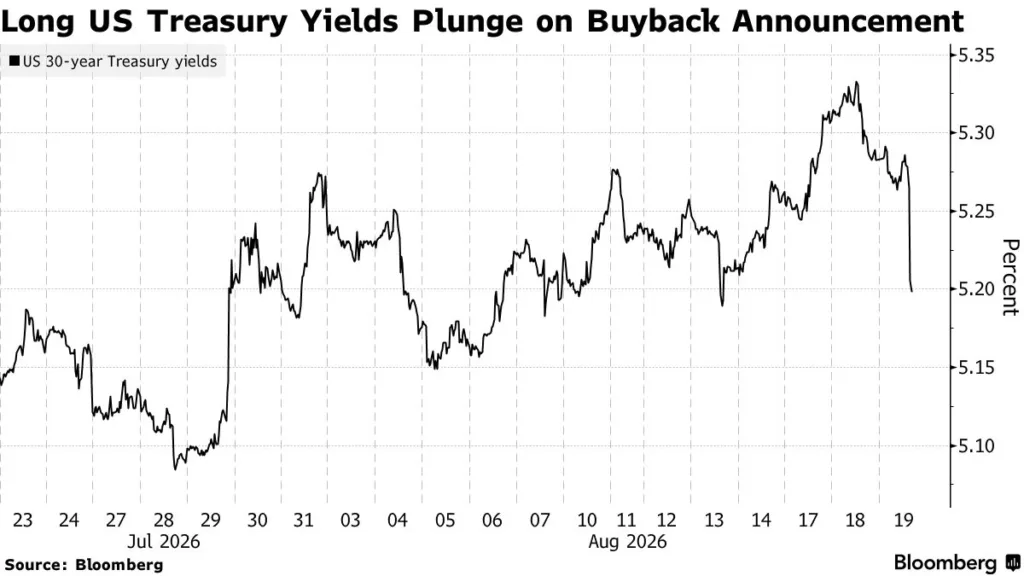
- The move follows tepid demand at a $16B 20-year auction and comes as 30-year yields touched their highest mark since 2007.
- Elevated Treasury yields are pressuring CRE financing costs and signaling broader market worries ahead of the US midterm elections.
Buyback Program Signals Concern Over Yield Trajectory
US Treasury Secretary Scott Bessent is escalating government efforts to tamp down long-dated borrowing costs, according to Bloomberg. The Treasury plans to at least double the size of its buyback operations for 10- to 30-year securities, marking a significant increase in direct market intervention. This move comes after weeks of steadily rising long-term yields, with the 30-year bond touching its highest level since 2007 amid lackluster demand at recent auctions.
The renewed buyback push comes as elevated long-end yields drive up costs throughout the financial system, including CRE debt financing. According to Bloomberg data, a 30-year Treasury yield reaching 5.18% has not been seen in nearly two decades. For the Biden administration, mounting borrowing costs risk becoming a political liability ahead of November’s midterms, amplifying the urgency behind the Treasury’s intervention.
Get Smarter about what matters in CRE
Stay ahead of trends in commercial real estate with CRE Daily – the free newsletter delivering everything you need to start your day in just 5-minutes
The Details
The Treasury Department will increase its current quarter’s buybacks in the 10- to 30-year sector “by at least double,” starting September 9. Two weeks prior, Treasury listed a $14B total for these maturities on its buyback calendar—suggesting the new commitment could push purchases to $28B or more. These buybacks target older, less liquid off-the-run issues, aiming to ease strain on benchmark securities favored by investors.
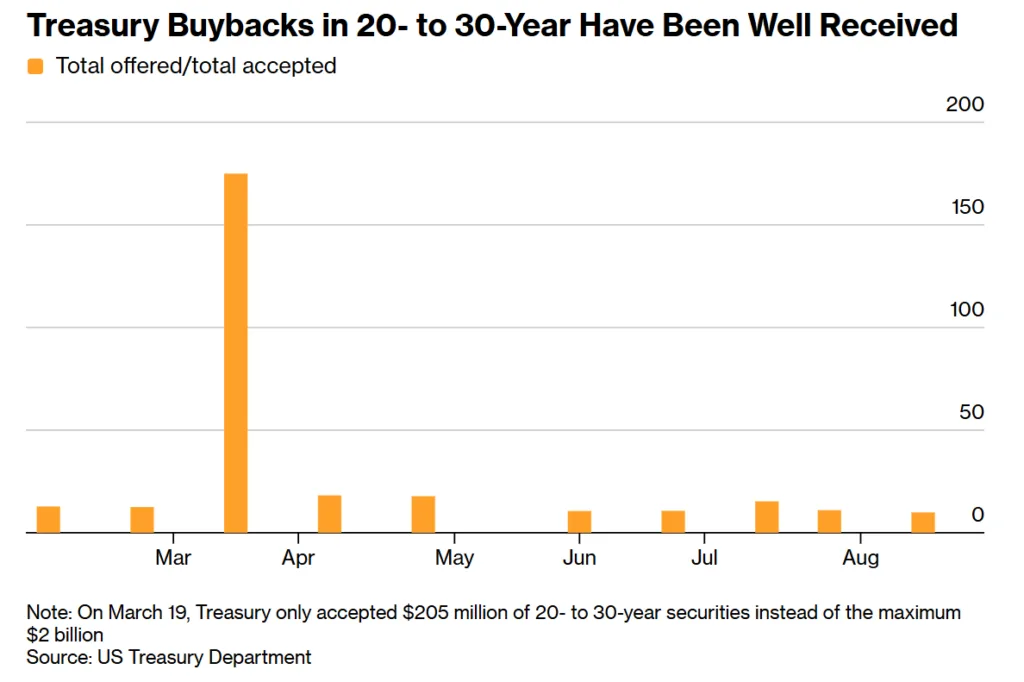
Recent buybacks have been heavily oversubscribed; on Tuesday, the Treasury took in $2B for bonds set to mature between 2046 and 2056, with demand outstripping supply by a factor of 10. Officials have not detailed funding sources for the ramped-up operations, but the Treasury typically covers such needs with shorter-term bill issuance.
Rising Yields Pressure Funding Markets
The buyback expansion follows a July spike in long-term Treasury yields, with 10-year and 30-year auctions fetching their highest financing costs since the mid-2000s. The recent climb in long-term Treasury yields has raised concerns across markets, as investors reassess the impact of higher borrowing costs on real estate and other rate-sensitive sectors. Per Bloomberg, the 20-year auction last week saw tepid appetite for $16B in supply. These conditions have translated to higher mortgage rates and steeper borrowing costs for CRE sponsors, already dealing with tightening credit and economic uncertainty.
Globally, long-end government yields have marched higher, reflecting investor concern over US fiscal deficits and monetary policy uncertainty. Market strategists, including Brandywine’s Jack McIntyre and Deutsche Bank’s George Saravelos, see Bessent’s intervention as an urgent, if temporary, step to combat bearish sentiment in rates and stave off economic drag.
Why It Matters
CRE borrowers closely watch Treasury yields as a bellwether for long-term debt costs. When the 30-year US bond pays out at 5.18%, repricing risk flows straight into commercial property loans—from fixed-rate CMBS to floating-rate bank debt. High base rates compound challenges for refinancing, new acquisitions, and even development pro formas, given tighter lender underwriting since 2023.
For the Treasury, the stakes extend beyond CRE. US government debt service hit a record $85B interest payout to bondholders in August, per Bloomberg. The buyback initiative seeks to cushion financial market stability, protect public borrowing costs, and indirectly support housing and CRE demand. However, analysts caution that buybacks alone may not shift deeply entrenched market dynamics—absent a broader economic slowdown or geopolitical resolution in places like Iran, supply and deficit worries could keep upward pressure on yields.
As midterm elections approach, the optics of Treasury stepping up to cap yields are hard to ignore. The approach resembles past attempts at so-called “Operation Twist,” though with the Treasury, not the Fed, shifting debt from long-dated maturities into bills. Market participants must weigh whether this signals a lasting new playbook—or a politically timed effort to control headline rates in the months ahead.
What’s Next
The expanded buybacks begin September 9 and are expected to run through November 4, overlapping with the US midterm election cycle. Operational details, including precise purchase sizes or the impact on future Treasury bill issuance, remain to be clarified.
CRE market participants will be watching both auction results and the secondary effects on mortgage and corporate bond spreads. Any sustained reprieve in long-term rates could offer breathing room for refinancing pipelines and deal underwriting. Still, much depends on macro factors—growth, inflation, and global investor sentiment—as the Treasury tests how much muscle it can really flex in the face of persistent bearishness at the long end of the curve.