





- US logistics net absorption reached 66 MSF in Q2 2026, marking the strongest quarter since 2022, per Prologis Research.
- Projected 2026 absorption of 220 MSF will exceed expected completions, tightening availability, especially for large prime facilities.
- Rents rose 70 bps quarter-over-quarter in Q2, with competition for high-quality logistics space intensifying nationwide.
Logistics Momentum Frees Up Growth Strategy
According to Prologis Research, the US logistics market entered a new growth phase by mid-2026. Net absorption reached 66M SF in Q2, the highest level in two years. Expansionary leasing activity supported the gain. Stronger supply chain investment and long-term planning also boosted occupier confidence across industries.
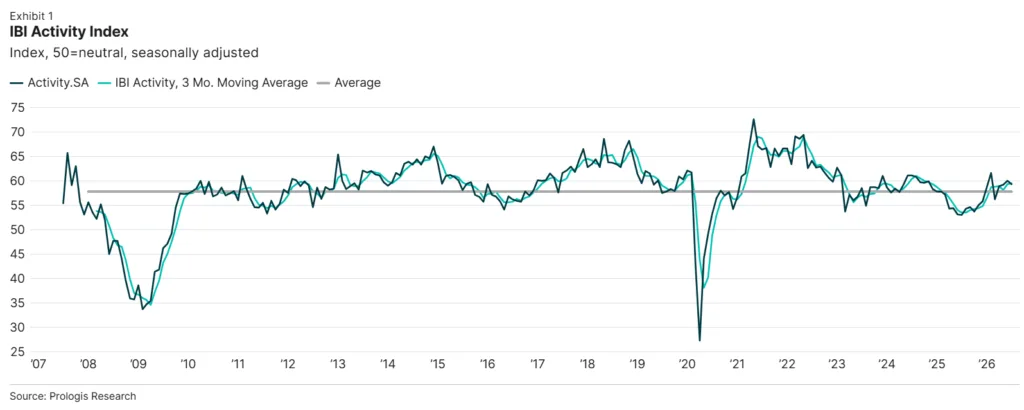
The IBI Activity Index stayed in the high 50s throughout H1 2026. Customers continued committing to logistics and distribution facilities despite weakness in some cyclical sectors. Net absorption also outpaced new supply. Prologis expects that trend to continue through 2026. Vacancy could fall about 30 basis points, while tighter availability supports further rent growth.
Get Smarter about what matters in CRE
Stay ahead of trends in commercial real estate with CRE Daily – the free newsletter delivering everything you need to start your day in just 5-minutes
The Details
Net absorption reached 66M SF in Q2 2026, the strongest quarterly result since 2022. Prologis based its findings on data from CBRE, JLL, and other sources. Developers should deliver about 205M SF this year, while demand should reach 220M SF.
Large-format supply remains limited. Bulk-space vacancy sits 60 basis points below the overall market. Rents increased 70 basis points during Q2. Competition for prime locations drove pricing higher. Bulk leasing volume also ran 10% to 15% above last year’s pace. Demand continues exceeding both speculative and build-to-suit supply across most US markets.
Inventory Management Remains Volatile
Strong leasing has not eliminated uneven utilization. The IBI Utilization Rate ranged from 81.8% to 84.5% during Q2, averaging 83%. Retail and wholesale inventories also remain historically low. Census Bureau data shows an inventory-to-sales ratio of 1.1, below the typical 1.2 to 1.3 expansion range.
Manufacturers and technology companies continue selective restocking. However, many businesses still operate with lean inventories. Some pre-peak season stocking appeared in May. Even so, shippers remain cautious. The next few months should reveal the full impact of restocking on logistics demand.
Why It Matters
The logistics recovery reflects more than a cyclical rebound. Demand now comes from a wider range of industries. E-commerce, essential goods providers, and advanced manufacturers continue expanding. Companies supporting data centers and defense logistics also add new demand, according to Prologis Research.
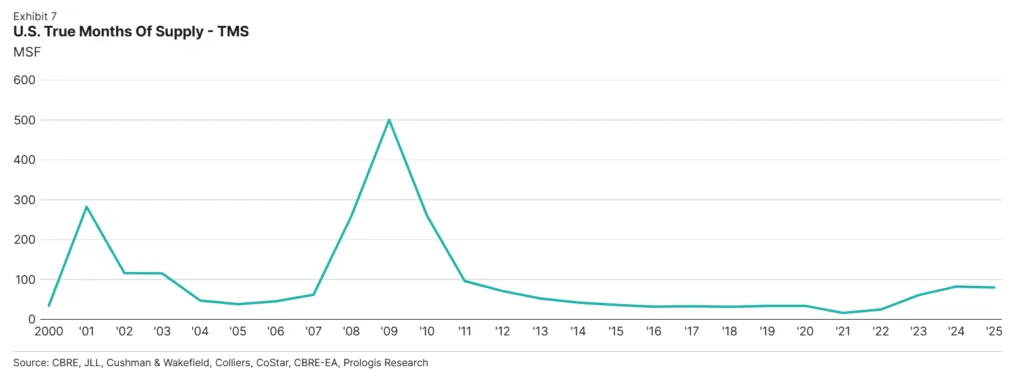
Meanwhile, completions continue trailing absorption. Market rents remain about 20% below replacement-cost levels, limiting new development. High construction costs discourage large-format projects. Competition continues rising for bulk and prime facilities. That trend follows recent evidence that industrial vacancy has declined as tenant demand continues exceeding new supply across major markets. Competition supports rent growth across Texas, the Southeast, the Midwest, the Bay Area, and coastal markets with limited new supply.
The recovery also has room to strengthen. Housing and automotive demand remain below normal levels. A broader economic recovery could create another wave of logistics demand.
What’s Next
Logistics markets should continue tightening through late 2026 and into 2027. Absorption should outpace completions for several more quarters. Prime large-format facilities will become harder to secure. Tenants with expansion plans may need earlier commitments and greater reliance on build-to-suit projects.
Rents should keep rising while supply stays constrained. High construction costs will continue limiting new development. A rebound in cyclical industries could create another growth phase. CRE professionals should prepare now for a more competitive leasing environment.