




- Texas counties and metros account for the most ranch listings nationwide according to June 2026 Realtor.com data.
- While Texas dominates in listing volume, states like Wyoming and Montana host much higher median ranch prices.
- Inventory has rebounded post-pandemic, but buyer demand has softened amid economic uncertainty and higher interest rates.
Texas Ranch Listings Set a National Pace
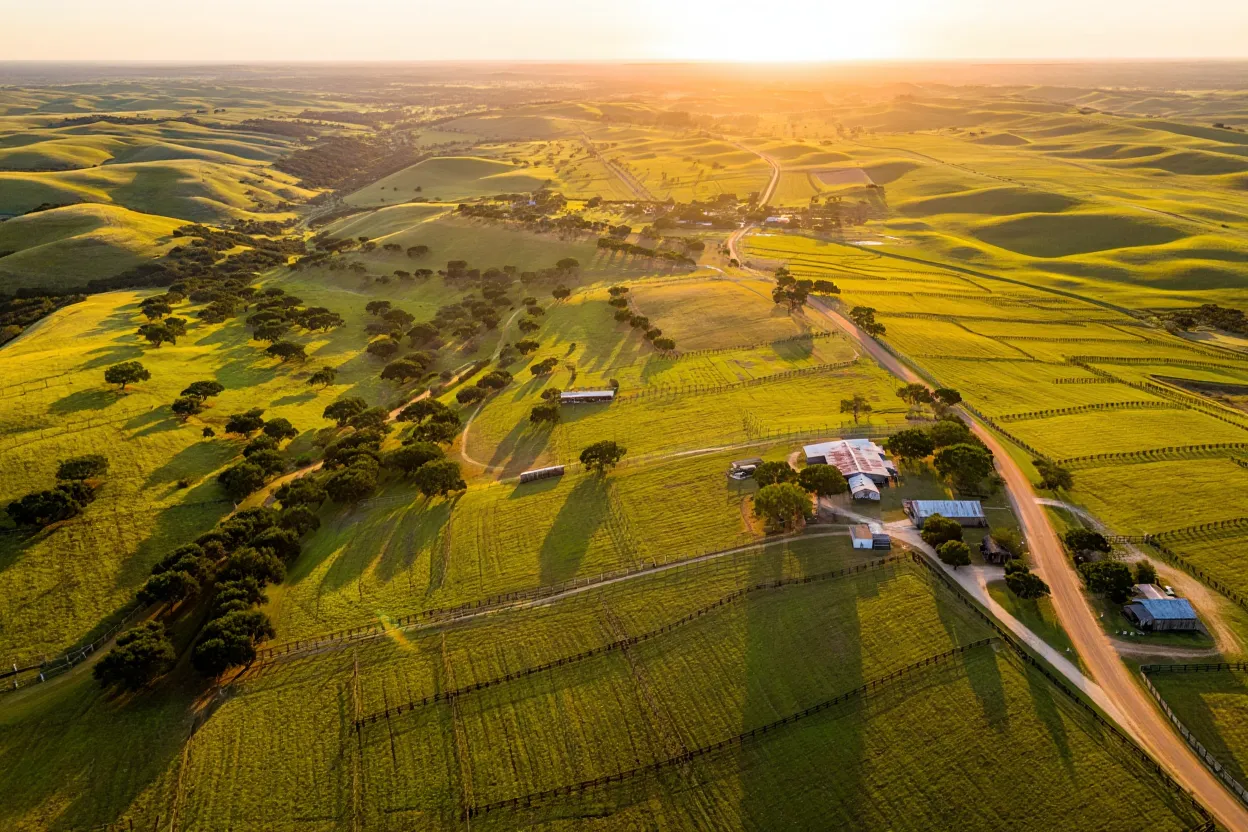
According to The Dallas Morning News, Texas is firmly at the epicenter of America’s ranch real estate market. Nine out of the 10 US counties with the most ranch properties listed for sale are in Texas, as measured by active June 2026 listings on Realtor.com. Burnet County alone leads with 237 active listings, followed closely by Fayette (232), Williamson (189), and Kerr (188). On the metro level, areas around Austin, Houston, and San Antonio host the highest concentration of available ranches. The Austin-Round Rock-San Marcos metro alone recorded 727 ranch listings as of June. Realtor.com’s senior economist Anthony Smith attributes this to Texas’s vast open space—a natural fit for the scale demanded by ranching operations.
This inventory dominance is not mirrored on the pricing front. For buyers seeking trophy assets, the Texas market offers broad selection but not the highest sticker price.
Get Smarter About What Matters in Texas
Subscribe to our free newsletter covering the biggest commercial real estate stories across Texas — delivered in just 5 minutes.
The Details
The volume of Texas ranches on the market vastly exceeds that of any other state. Realtor.com’s June 2026 data shows Texas at the top for listing counts, both by county and metro area. The Houston-Pasadena-The Woodlands area posted 640 listings, while San Antonio-New Braunfels logged 564. Even Dallas-Fort Worth-Arlington, with its median ranch price of $1.4M and 274 listings, ranked among the nation’s top five ranch metros. Listings include properties like the Freeman Family Ranches—nearly 88,000 contiguous acres spanning the Texas and Oklahoma panhandles, sold for close to $128M in July. However, while Texas posts volume, luxury pricing leadership lies elsewhere: Jackson, WY claims a median ranch price of $7.9M, with Bozeman, MT following at $4.9M.
Open Space Meets Broad Demand
Texas’s unique combination of large tracts and proximity to major cities drives demand. Most counties with top listing volume sit within a two-hour radius of Austin or San Antonio, fueling city-dweller migration toward recreational or investment ranch ownership. Large-scale land ownership also remains a strategic priority for major investors, reinforcing long-term interest in scarce rural assets. According to Tyler Thomas at TT Ranch Group, buyers typically fall into three categories: agricultural operators expanding working properties, investors seeking stable land plays, and urbanites seeking residential or recreational escapes. The COVID-19 pandemic spiked rural demand, depleting inventory to historic lows between 2020 and 2021.
Why It Matters
Texas’s dominance in ranch inventory is a supply-side advantage, especially as other regions prioritize higher-value legacy and lifestyle assets. The Dallas Morning News notes that Texas’s top counties offer more product—237 listings in Burnet County alone—than entire states elsewhere. This creates opportunity for investors and operating buyers, with comparatively moderate median prices ($1.4M in D-FW) versus the $7.9M highs in Jackson, WY. However, the rebound in listings post-pandemic has not matched return buyer demand. Economic caution and higher rates have muted transaction velocity, shifting more power to buyers and making property differentiation crucial.
Historical context further underscores the sector’s resilience: Thomas, with TT Ranch Group, suggests that compared with boom-and-bust residential or commercial cycles, the Texas ranch market now trends towards stability—peaks and plateaus instead of sharp dives. Demographic growth, especially in Texas metros, is likely to support long-term valuation even as buyer pools shift. The market’s finite nature—a ranch can’t simply be built overnight—anchors value independent of broader CRE trends, insulating it somewhat from industrial or office construction surges. As reported by Realtor.com, this supply constraint is one reason operators and long-term investors remain active, even amid market pauses.
What’s Next
With inventory levels rebounding and buyer interest diversifying across operators, investors, and lifestyle purchasers, Texas’s ranch market stands at a critical juncture. Sustained population growth in metro areas near top ranch counties is likely to keep demand steady, but economic volatility and interest rates will continue to temper speculative activity. Major trophy properties—especially those exceeding 30,000 acres—will remain rare, with even tighter availability for parcels over 75,000 acres, according to Chad Dugger of Hall and Hall. Watch for continued resilience as urban migration, generational turnover, and investor appetite keep the Texas ranch market on the industry’s radar despite softer pricing compared to Western luxury peers.