




- Year-to-date US data center project starts reached $81.5B by June, already surpassing total 2025 spending.
- Average data center size doubled since 2022, approaching 700,000 SF per facility in Q2 2026.
- Rapid growth driven by AI demand is shifting new builds toward the South and Midwest, with concentration in just a few key states.
Record-Breaking Pace for US Data Centers
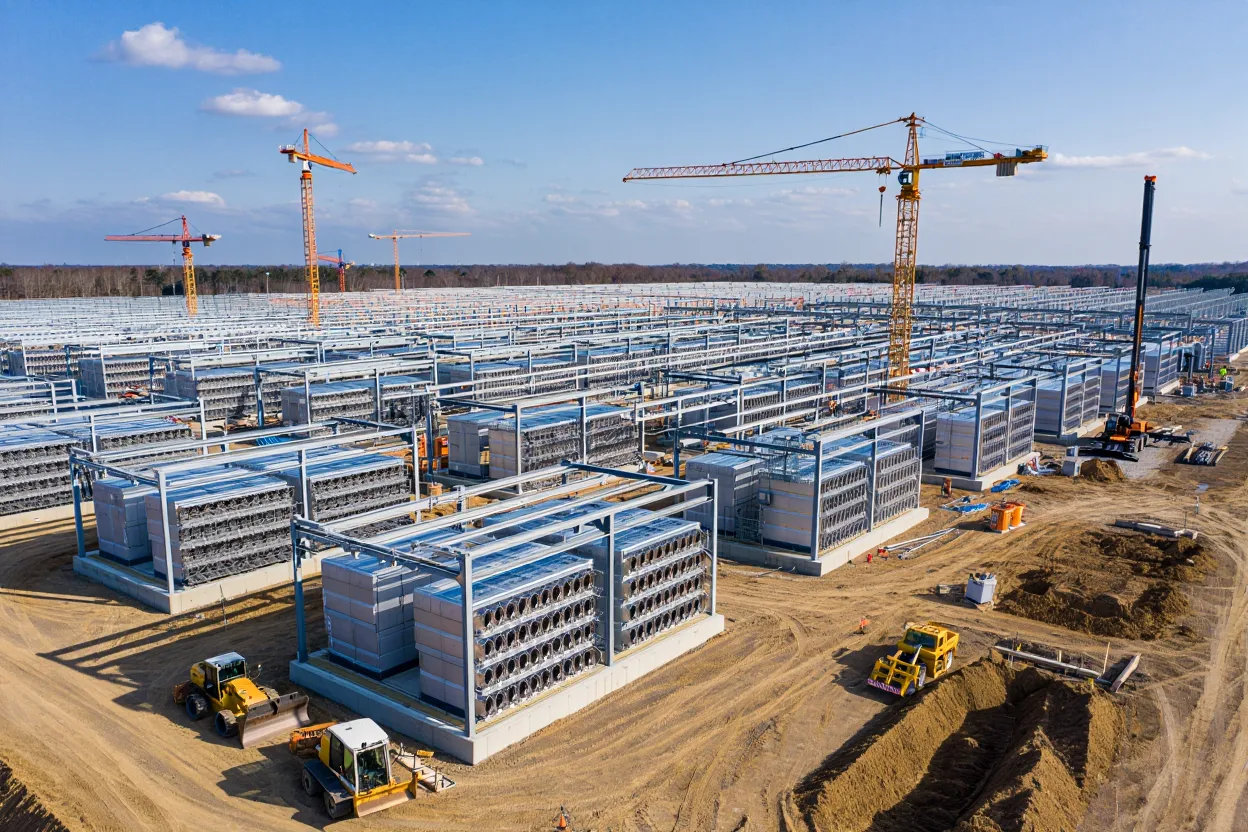
This year’s US data center construction pipeline is outstripping previous years by a wide margin. According to CoStar News, citing ConstructConnect data, year-to-date spent on data center projects launched through June 2026 reached $81.5B—eclipsing not only the $72.5B spent in all of 2025 but more than tripling the 2024 tally. The first half of 2026 featured standout months: January alone saw $25.5B in construction starts, a record for a single month, while June maintained the momentum with $22.3B in new projects.
The sector is leaning hard into growth as artificial intelligence and digital infrastructure push both the urgency and scale of new facilities. The number and average size of projects are climbing in tandem, setting new benchmarks that reflect the sector’s red-hot status in a shifting CRE landscape.
Get Smarter about what matters in CRE
Stay ahead of trends in commercial real estate with CRE Daily – the free newsletter delivering everything you need to start your day in just 5-minutes
The End of Modest Data Centers
ConstructConnect’s latest report highlights just how dramatically the scale of these projects has changed. As noted by Chief Economist Michael Guckes, the typical data center now exceeds 700,000 SF—more than double the average recorded in 2022. June saw 23 projects break ground nationwide, pushing the 2026 total so far to 116.
Around 1,500 data center projects are in planning stages nationwide, per The Pew Research Center. Yet, new construction remains concentrated in states like North Carolina, Indiana, Illinois, and Michigan, each recording over $10B in starts for 2026. Traditional data center markets Virginia and Texas remain close behind, underscoring both geographic diversification and persistence of core hubs.
The Details
The top single-project launches in Q2 include the $500M Stak Energy AI Data Center Campus in Alaska, the $480M Project Swan Data Center Complex in Florida, and the $456.8M Parcel A Data Center in Virginia per Dodge Construction Network. Several headline-grabbing megaprojects are also in the works—including Google’s proposed 8M SF campus across 23 buildings in Georgia and OpenAI’s envisioned $20B, 4.4M SF data center near Savannah on a 1,600-acre site. Trammell Crow and Georgia Power back the Google effort, which is scheduled to phase in over a decade.
With more projects planned than ever, rising costs are beginning to register. ConstructConnect reports median data center construction expenses climbed 17% and averaged a 22% increase nationwide over a five-year period—a trend that could reshape project viability and location decisions going forward.
AI Demand Transforms Location Strategy
The shift toward the South and Midwest is one of the clearest trends emerging from the current surge. Developers are targeting markets offering abundant power and water, key requirements as AI model training and cloud storage drive ever-larger energy demands. Power-connected sites are also gaining a competitive edge as developers race to secure reliable capacity before breaking ground. North Carolina, Indiana, Illinois, and Michigan now lead on new build value, suggesting a migration from traditional coastal hubs toward more business-friendly, resource-surplus regions.
This regional diversification is partially defensive. Access to utility infrastructure, lower land costs, and streamlined approval timelines appeal to large-scale users planning multi-phase campuses. But legacy markets are far from out of play: Virginia and Texas still account for billions in new starts year-to-date, and their foundational role in the sector is underpinned by established fiber and power infrastructure.
Why It Matters
The pace and scale of data center investment have material implications for US commercial real estate. Data center construction represents one of the few high-growth sectors in 2026, handily outpacing sectors like office or retail which continue to face secular headwinds. According to ConstructConnect, not only has 2026 spending eclipsed the previous year’s total in just six months, but project footprints are ballooning to sizes once reserved for major logistics or manufacturing plants.
AI adoption is the prime driver, with enterprise and hyperscale users jockeying to establish or expand their infrastructure. This is inflating demand for power, water, and land in target states—fueling local economies but also magnifying permitting and utility bottlenecks. ConstructConnect notes that average build costs have increased by 22% since 2021, hinting at intensifying competition for labor and materials.
CRE operators, investors, and developers need to note where and how this economic engine is evolving. Strategic partnerships, as seen in Google’s Georgia project with Trammell Crow and Georgia Power, will likely become more common as utility coordination grows in importance. For municipalities, this trend represents both an opportunity and a challenge: access to new tax bases and jobs, balanced against infrastructure strain and environmental impact.
What’s Next
With more than 1,500 projects in planning and outsized AI investment driving the pipeline, expect continued momentum in data center construction through year-end and into 2027. The South and Midwest should see further acceleration as utilities race to accommodate hyperscale users. Rising costs, both for construction and land, could spur innovation in design and location selection—while making partnership among developers, utilities, and local governments more critical than ever. For CRE professionals, tracking the shifting geography and growing scale of this asset class will be essential as the next generation of data centers reshapes both regional and national real estate maps.