






- Large banks drove a modest net easing of multifamily loan standards in Q2 2026, according to the latest SLOOS survey.
- Trepp-i data shows multifamily loan spreads at the bottom of their post-2021 range, indicating price-based competition is already advanced.
- Credit easing is more visible in loan terms than rate spreads, signaling a shift toward structural adjustments rather than broad late-cycle loosening.
Large Bank Easing Outpaces the Pack
Trepp reports that according to the latest Federal Reserve Senior Loan Officer Opinion Survey (SLOOS), multifamily lending standards eased modestly during Q2 2026. Large banks drove the change, reporting a 15% net easing in multifamily loan standards. Smaller banks reported little change and remained cautious.
The survey highlighted a growing divide between lender groups. Mid-sized and small banks still favor tighter underwriting despite improving market conditions. SLOOS also asked banks to compare current standards with historical levels. Most lenders still consider multifamily credit tighter than the average over the past two decades. Large banks show more interest in new deals, but the market remains far from pre-pandemic lending conditions.
Get Smarter about what matters in CRE
Stay ahead of trends in commercial real estate with CRE Daily – the free newsletter delivering everything you need to start your day in just 5-minutes
The Details
Multifamily loan demand also split by lender size. A net 5.7% of banks eased standards during Q2, driven entirely by large banks. Those lenders also reported a 15% net increase in multifamily loan demand. Smaller banks recorded a 15.1% net decline.
The gap extended beyond multifamily. Large banks reported a 21.1% net increase in nonfarm nonresidential loan demand. Smaller banks reported an 8.9% decline. Meanwhile, price competition has stalled. Trepp-i shows multifamily spreads near the bottom of their post-2021 range. Lenders now compete through loan structure instead of pricing. They offer higher leverage, longer interest-only periods, and other flexible terms. Construction and land development demand weakened across all bank sizes.
Spread Compression Has Run Its Course
Trepp-i provides deeper insight into loan pricing than SLOOS alone. SLOOS measures lender sentiment and directional changes. Trepp-i tracks actual pricing trends. It shows multifamily spreads have recovered from pandemic highs and reached the lower end of their recent range.
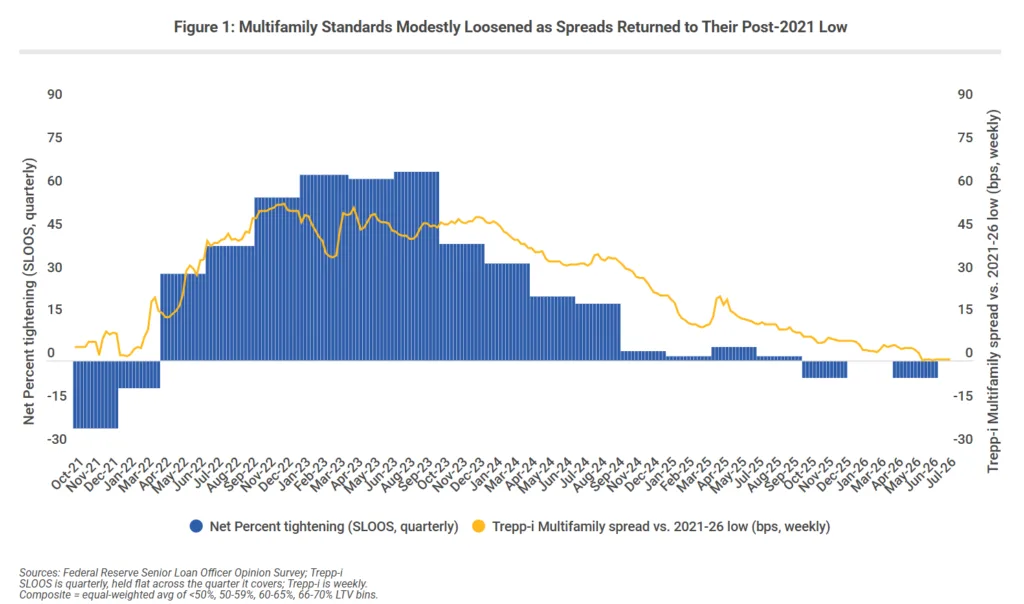
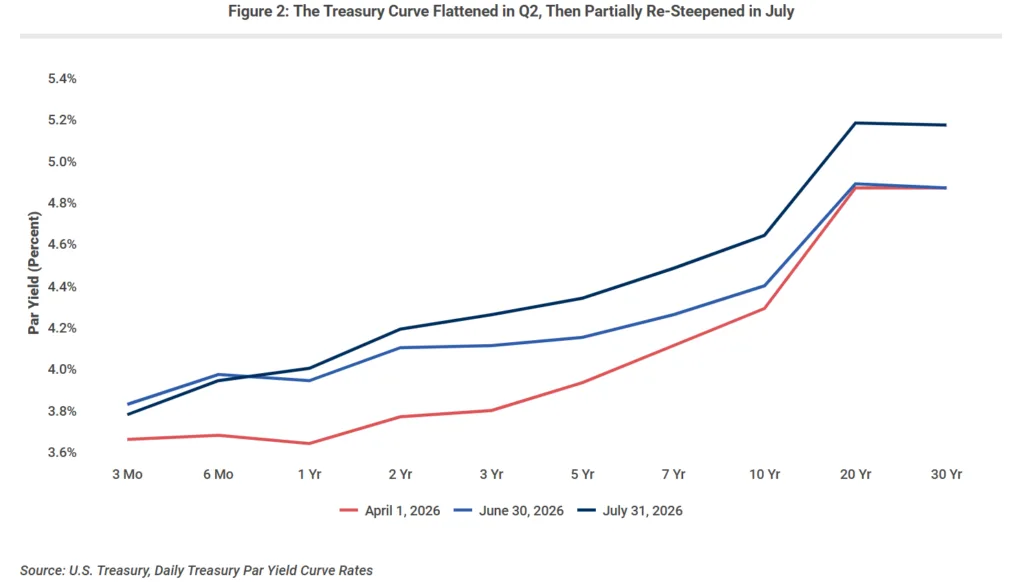
As a result, lenders have little room to compete through lower pricing. Future easing will likely come through higher leverage, lower debt coverage requirements, and longer interest-only periods. Treasury markets tell a similar story. The 10-year and 2-year spread narrowed from 52 to 30 basis points during Q2. It rebounded to 45 basis points by late July. Even so, quoted multifamily loan spreads barely changed.
Why It Matters
Multifamily borrowers should expect lenders to compete on loan terms instead of rates. Trepp-i shows spreads already sit near post-2021 lows. Additional pricing relief appears limited even as some lenders pursue market share.
The SLOOS results also reveal a widening gap between large and small banks. Large lenders have stronger balance sheets and greater risk tolerance. They have started easing standards and responding to recovering demand. Smaller banks remain cautious. Recent lending data also shows improving activity across commercial real estate, although the recovery remains uneven by property type and lender size. This split matters because capital availability now depends heavily on lender size. Investors must identify which institutions actively finance new deals.
Current lending standards also reduce the risk of excessive leverage. SLOOS shows multifamily credit remains tighter than long-term averages between 2005 and 2026. Demand outside large banks also remains stable rather than overheated. That discipline could support healthier transaction growth as activity recovers.
Looking ahead, borrowers will negotiate more on loan structure than pricing. Lenders may compete through DSCR requirements, repayment flexibility, and recourse terms. Those differences could shape financing strategies for acquisitions, refinancings, and new development.
What’s Next
If current trends continue, multifamily borrowers should expect gradual improvements in loan terms instead of cheaper financing through the rest of 2026. The gap between large and smaller banks will likely widen as markets respond to shifting economic signals and interest rate uncertainty.
Investors and borrowers will continue watching lending standards at large banks. Those lenders may provide the clearest signal for future deal activity and capital availability. If broader easing arrives, Trepp and future SLOOS surveys will likely show it through loan structure before pricing.