





- Midwest and Northeast metros dominate the Summer 2026 WSJ/Realtor.com Housing Market Index, reflecting enduring affordability and market resilience.
- South Bend-Mishawaka ranks first for the third straight quarter, while metro Milwaukee’s size and price stability set it apart among large metros.
- Affordability gaps are narrowing in top-ranked markets, drawing sustained buyer demand and reinforcing long-term local housing strength.
Regional Divide Defines Housing Market
The Wall Street Journal/Realtor.com Emerging Housing Markets Index for Summer 2026 highlights a deepening regional split in US housing opportunities. According to The Wall Street Journal, the Midwest and Northeast continue to attract buyers with affordable prices and tight inventory, while the South and West are experiencing a more balanced environment. Mortgage rates hovered near 6.3% in June, offering only moderate relief from last year’s highs as inflation remained pressured by geopolitical conflict. With affordability still constrained in most large metros, prospective buyers are hunting for overlooked markets where their dollars and lifestyles stretch further.
Data from this cycle’s ranking reveals that, despite volatility elsewhere, the fundamental story has not changed: demand in select metros routinely outpaces supply, often resulting in homes selling weeks faster than the national norm. The regional performance gap is now a defining theme, shaping where investors and homeowners alike are placing their bets.
Get Smarter about what matters in CRE
Stay ahead of trends in commercial real estate with CRE Daily – the free newsletter delivering everything you need to start your day in just 5-minutes
The Details
The index evaluates the 200 largest US metropolitan areas on housing and economic indicators, weighting real estate market conditions at 60% and broader economic health at 40%. In the Summer 2026 ranking, South Bend-Mishawaka (IN-MI) tops the list for the third consecutive quarter, with a median listing price of $341,000 and unemployment at 3.7%. Appleton, WI ($400,000 median price, 2.8% unemployment) and Lancaster, PA ($417,000, 3.3% unemployment) follow closely. Notably, Milwaukee-Waukesha-West Allis is the largest top-20 metro (1.6M population), holding steady due to a 45.9% price increase since 2019, an unemployment rate of 3.7%, and homes selling in just 33 days as of June.
Five markets—including Peoria, Akron, Youngstown-Warren, Canton-Massillon, and Rockford—now see typical household incomes exceeding the recommended threshold for buying, a rare feat in major metros. These markets report homes spending just over a month on the market, about three weeks less than the national average, signaling durable demand rooted in local economic alignment.
Midwest Consistency Trumps Short-Term Momentum
The durability of top-ranked metros stands out. Sixteen of the top 20 from spring reappear this quarter, demonstrating stable, fundamentals-driven performance. For example, South Bend, Canton-Massillon, Springfield, and Milwaukee have all been repeat entries over the past year. Four previously top-20 markets—such as Flint (MI) and Lansing—dropped due to cooling price appreciation or sharper reversals, but remain in the upper third nationally. New entrants like Champaign-Urbana surged on the back of double-digit year-over-year home price gains, while Youngstown-Warren and York-Hanover joined owing to supply tightness and improved pricing trends.
This persistence, especially in the Midwest and Northeast, contrasts with headline-grabbing boom-and-bust cycles elsewhere. That pattern also reflects broader population shifts, as more households choose Midwestern markets for affordability and long-term value. In places like Milwaukee, high internal demand and local economic health support steady growth. The market relies on broad-based demand instead of speculative migration.
Why It Matters
The 2026 WSJ/Realtor.com Index reinforces a key message: durable affordability and underlying economic strength are underpinning sustained housing demand in select regional markets—primarily in the Midwest and Northeast. According to the index, the median gap between local incomes and the amount needed to buy a median-priced home in the top markets is just 8.1%—far better than the 19.6% average for the 200 largest metros. In five of these metros, incomes actually exceed the recommended threshold, flipping the usual script of affordability stress and broadening the local buyer pool beyond just high earners.
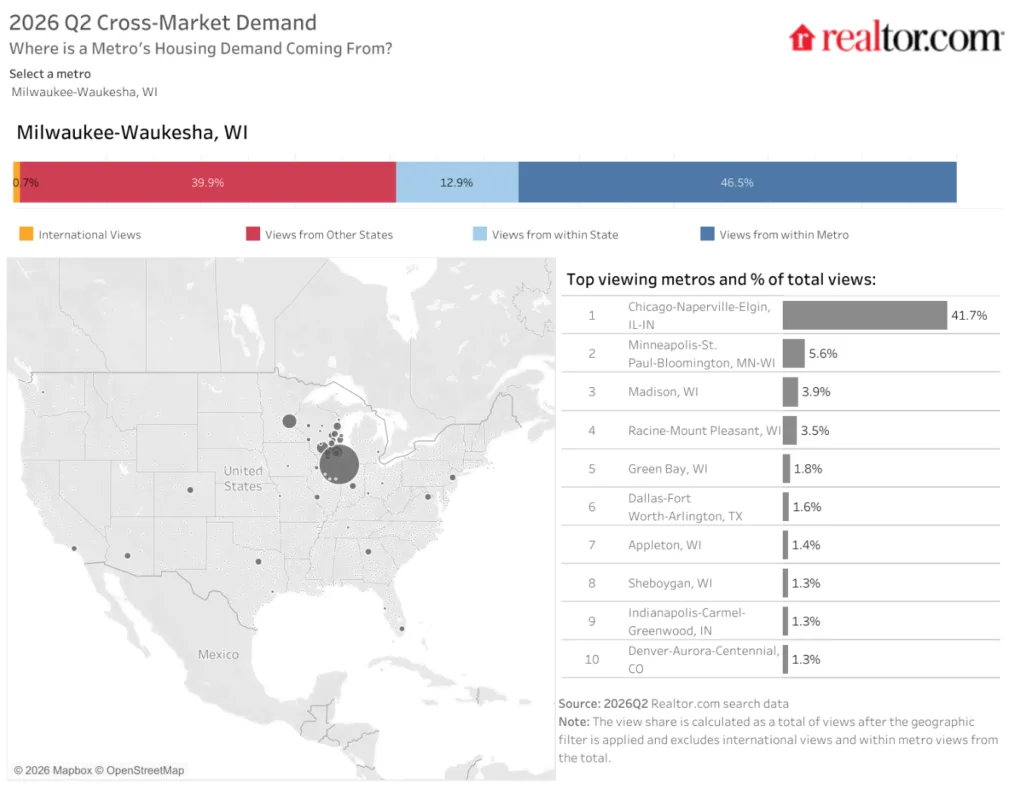
Milwaukee’s detailed data illustrates these themes in action. Despite a 46% run-up in median list price since pre-pandemic (per Realtor.com), listings in the metro remain active for about a month, and unemployment sits well below the national average at 3.7%. The local market draws sustained interest from Chicago buyers seeking better value, as reflected by over 40% of out-of-metro views. This fusion of in-migration, economic stability, and internal demand is structurally reinforcing—not fleeting. Climate risk scores also favor these inland locations as insurance costs surge in risk-prone coastal and Sun Belt cities.
For investors, this ranking serves as a clarion call to look beyond traditional headline metros and consider markets where the math and the fundamentals align. With mortgage rates forecast to stay flat or gradually ease, and inventory still tight, these Midwestern and Northeast markets could continue to deliver outsized returns relative to national averages.
What’s Next
Looking forward, summer’s persistent market divides are likely to continue driving migration and capital into stable, midwestern metros with affordability and supply advantages. The Wall Street Journal projects mortgage rates to average 6.3% for 2026, suggesting modest relief but not a reset. While volatility in prices and supply may persist in other regions, the top-ranking metros—anchored by robust local economies, manageable climate risks, and quality-of-life amenities—appear well positioned for the remainder of the year. Market participants should watch for further inventory tightening and demographic shifts, especially as buyers who have been priced out of coastal metros seek value in alternative destinations.