



- Demand exceeded new supply in the US industrial market in Q2 2026, marking the first time this has happened since 2022, per Colliers.
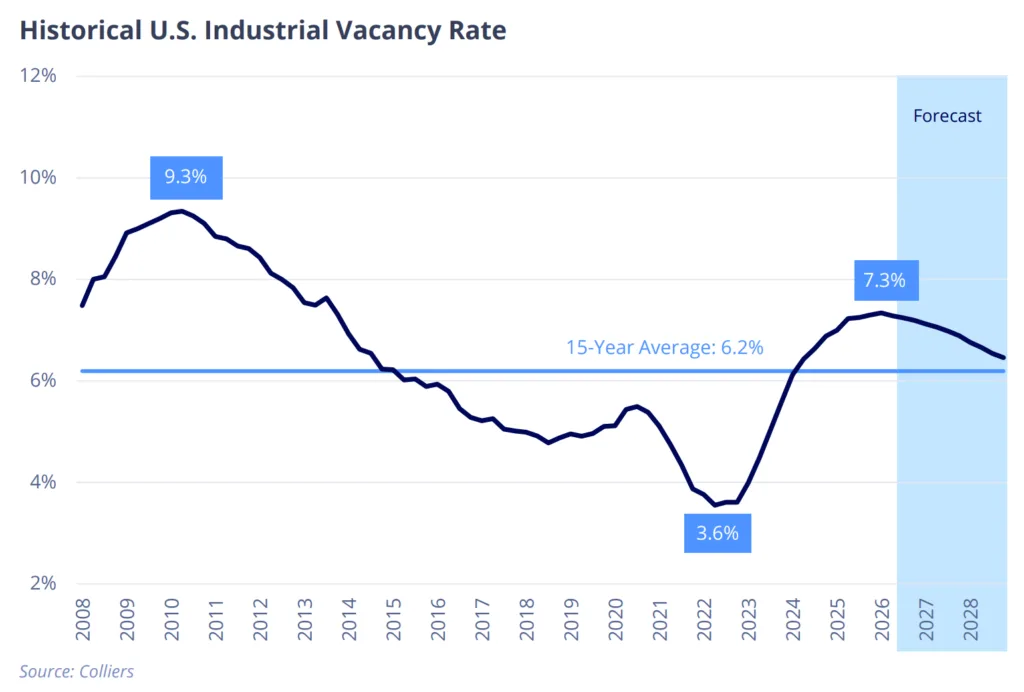
- The national vacancy rate dropped to 7.3%, with net absorption outpacing completions by 6M SF—a significant acceleration compared to last year.
- These shifts signal the start of a new, more selective development cycle, with implications for rent stabilization, project pipeline growth, and region-by-region divergence.
A Shift From Surplus to Shortage
After nearly three years of record deliveries and rising vacancy, the US industrial market tightened in Q2 2026. Colliers reports that occupier demand outpaced new supply for the first time since 2022. The shift shows the sector has absorbed much of the excess space delivered during 2023 and 2024.
National industrial vacancy fell 7 basis points to 7.3%. Meanwhile, net absorption reached 59M SF, more than double the year-ago volume. Tenants seeking modern, functional space now drive the market rather than developers.
This shift reflects a balance unseen since the last construction boom began. Performance remains uneven, with Indianapolis, Columbus, and Phoenix among the fastest-tightening markets. However, logistics, manufacturing, and data center users continue to broaden tenant demand.
Get Smarter about what matters in CRE
Stay ahead of trends in commercial real estate with CRE Daily – the free newsletter delivering everything you need to start your day in just 5-minutes
The Details
National industrial vacancy reached 7.3% in Q2 2026, down 7 basis points from the previous quarter. Vacancy remained nearly flat compared with the same period last year. Net absorption surged to 59M SF, exceeding the 53M SF of new supply.
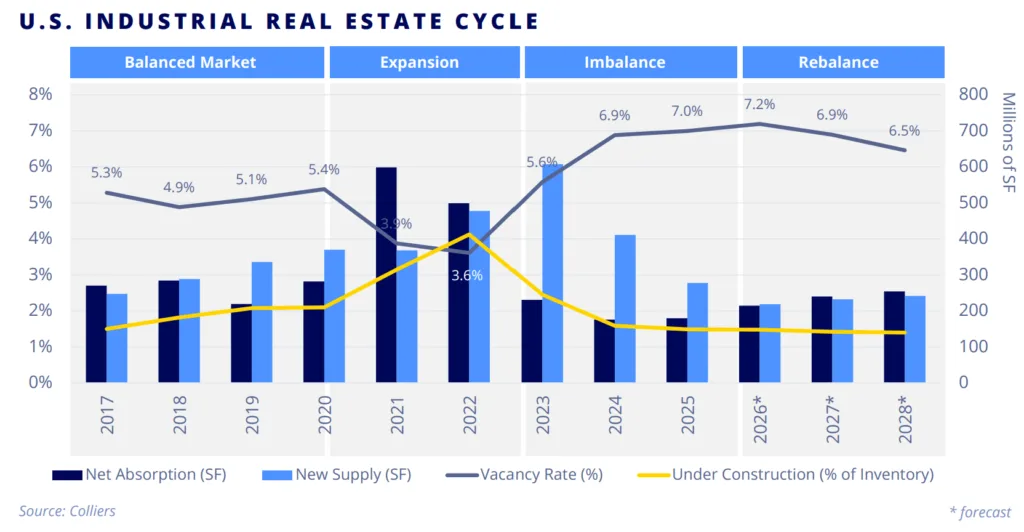
That figure also more than doubled the 27M SF absorbed in Q2 2025. Third-party logistics firms, manufacturers, retailers, and data center occupiers supported activity. Texas industrial markets have also absorbed heavy new supply while maintaining resilient tenant demand. Houston recorded 7.5M SF of absorption. Dallas-Fort Worth followed at 4.7M SF, while Atlanta reached 4.5M SF.
New supply fell more than 28% year-over-year during Q2. Quarterly deliveries now stand below half the peak levels recorded between 2022 and 2024. However, space under construction climbed 15% quarter-over-quarter to 314M SF as developers regained confidence.
Developers continue targeting select markets and property types rather than expanding broadly. Meanwhile, national asking rents fell 1.6% year-over-year to $10.36/SF. That national figure masks significant differences across regions.
Regional Gaps Widen as Fundamentals Improve
National figures point toward stabilization, but regional differences remain significant. The Midwest recorded the country’s lowest vacancy rate at 5.4%. Disciplined development kept supply controlled while demand continued outpacing deliveries.
The South posted 8.4% vacancy but led every region in net absorption. Houston, Dallas-Fort Worth, and Atlanta powered much of that demand. Meanwhile, Los Angeles and Phoenix recorded strong absorption rebounds across the West.
However, overbuilt markets continue working through elevated vacancies and rent corrections. These challenges remain particularly visible across the Northeast and California’s Inland Empire. Asking rents also highlight the widening divide between markets.
Tight markets command substantial premiums, including Austin at $14.25/SF and Los Angeles at $16.13/SF. Older properties and oversupplied markets continue facing weaker rent growth or outright declines. Overall, 63% of 79 tracked markets recorded stable or declining vacancy year-over-year.
Recovery speeds still vary significantly by market. Developers increasingly align new supply with local fundamentals rather than national trends. Austin leads construction activity at 12.6% of inventory, while New Hampshire follows at 11.8%.
Why It Matters
Q2 2026 marks a clear shift in the US industrial market’s trajectory. Demand now consistently outpaces new completions, helping push vacancy lower. This trend reverses the supply expansion that shaped the market during 2023 and 2024.
According to Colliers, quarterly net absorption more than doubled from year-ago levels. Construction activity is also rebounding, although developers remain measured. These conditions could support further tightening through year-end, particularly in markets that avoided excessive development.
For investors and developers, differences between markets have become increasingly important. Coastal and overbuilt markets continue experiencing rent corrections. However, tightening markets offer selective opportunities for modern logistics and data center-ready developments.
Tenant leverage remains strong across several metros. Yet landlords are gradually gaining leverage in supply-constrained markets as available space declines. High-quality properties could benefit first from this changing balance.
National asking rents still fell 1.6% year-over-year to $10.36/SF. However, continued demand growth could limit further corrections as tenants absorb available supply. Occupiers increasingly prioritize building quality, operational efficiency, and reliable power infrastructure.
These requirements create premiums for high-specification industrial properties. At the same time, older commodity assets face increasing competitive pressure. The widening quality gap could shape leasing and investment decisions through the next cycle.
What’s Next
Colliers expects US industrial demand to remain strong throughout the rest of 2026. The construction pipeline is expanding as developers respond to improving fundamentals. Space under construction has risen 15% since year-end 2025.
Still, lenders, developers, and occupiers continue exercising discipline. Developers increasingly calibrate projects to local supply and demand conditions. Construction costs and tighter credit standards should also help limit another wave of overbuilding.
Vacancy rates should remain stable or improve if current demand trends continue. Rent growth could return first across the country’s tightest industrial markets. Meanwhile, overbuilt markets may require additional time to normalize.
Industrial fundamentals now support a more sustainable and regionally differentiated growth cycle. The sector is moving beyond its post-pandemic supply correction. Future performance will increasingly depend on local demand, development discipline, and property quality.