





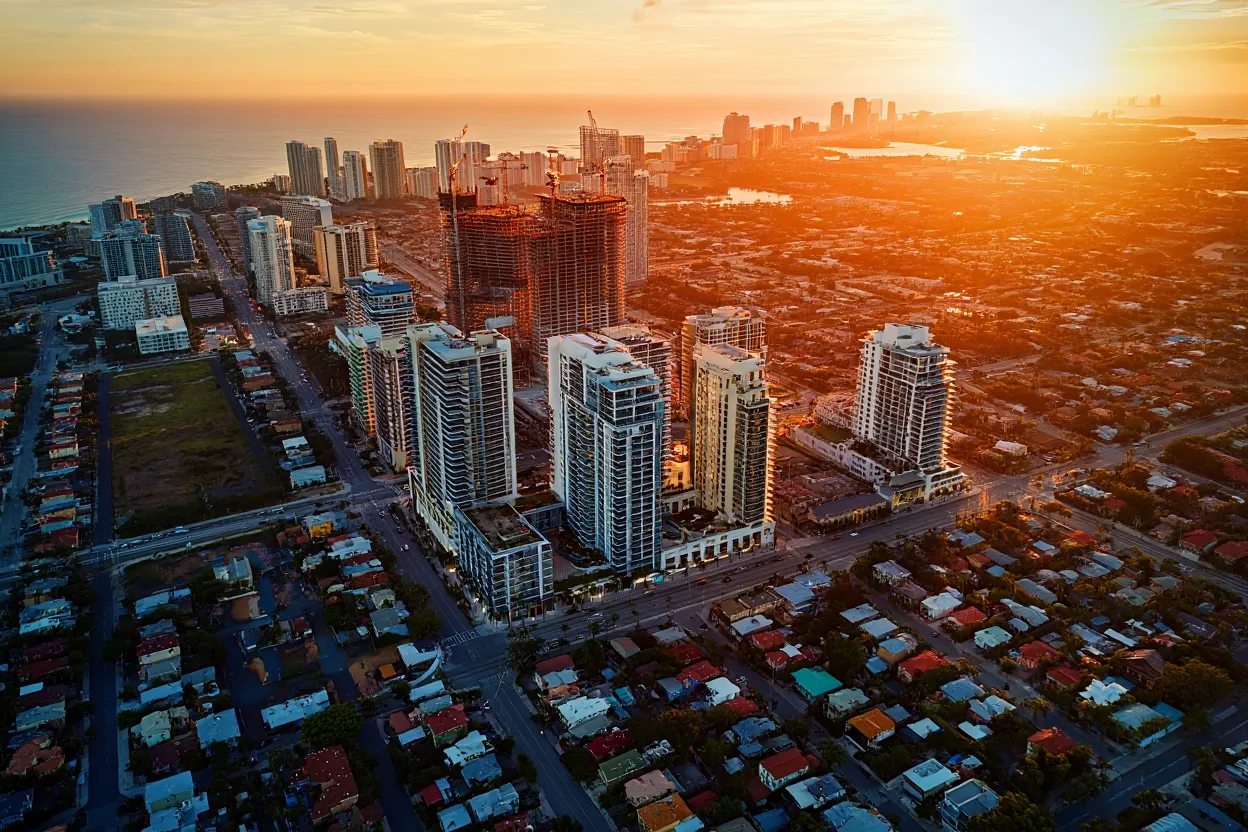
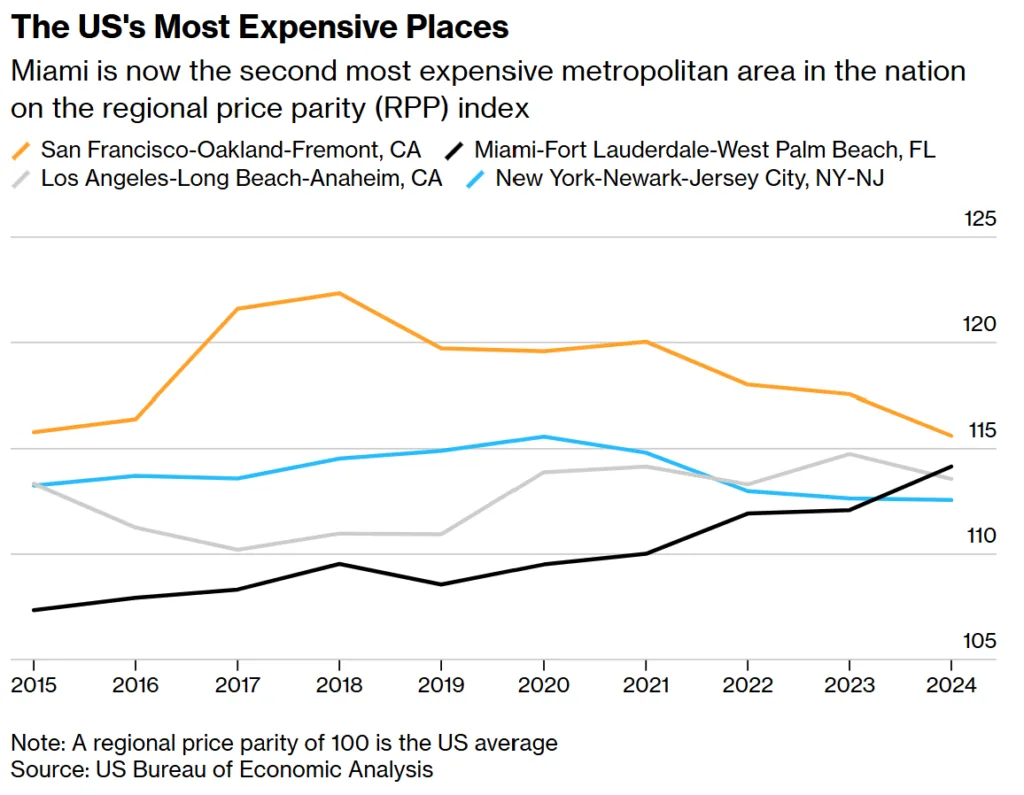
- Miami’s overall cost of living has overtaken New York City for the first time, per US Bureau of Economic Analysis 2024 data.
- Soaring housing prices, insurance premiums, and service costs are erasing the historic financial advantage for professionals relocating to Miami.
- This shift may slow migration to Miami luxury condos from NY, with only the ultra-wealthy still seeing clear tax or lifestyle benefits.
Migration Arbitrage Narrows
Miami has long been pitched as an affordable upgrade for successful New Yorkers seeking sun and low taxes, but that narrative is fading fast. According to Bloomberg, new data released by the US Bureau of Economic Analysis reveals Miami’s overall cost of living eclipsed New York City for the first time in 2024.
Consumer prices in the Miami metro are up 36% since 2019, outpacing all other major US metros except Tampa. What was once a straightforward financial move—trading cold, costly Manhattan for Florida’s warmth and savings—is no longer so simple. Professionals find that higher costs across real estate, insurance, and private school tuition are quickly eating into any tax advantages.
This market transition is moving Miami squarely into the realm of America’s most expensive cities. Once a haven for those looking to escape high Northeast costs without sacrificing city amenities, Miami’s surging housing market and cost of services are closing the gap, fundamentally changing the logic behind many migration and investment decisions.
Get Smarter about what matters in CRE
Stay ahead of trends in commercial real estate with CRE Daily – the free newsletter delivering everything you need to start your day in just 5-minutes
The Details
Housing drives Miami’s rising living costs. Realtor.com reports Miami’s median home price reached $357 PSF in June 2026. New York’s median reached $537 PSF.
Miami homes still look cheaper on paper. However, prices in Coral Gables now rival those in Manhattan. Since the pandemic, Miami home prices have climbed 79%, according to S&P Case-Shiller. Property taxes have also risen 62% since 2019, according to Attom.
Insurance adds another burden. Average homeowners insurance premiums now reach $8,292. That is more than four times New York State’s average, according to Insurify. New residents also pay higher property taxes. Longtime Floridians benefit from legacy assessment caps that newcomers cannot access.
Renters also face mounting costs. Many high-rise apartments now charge $1,000 more per month than just a few years ago. Those increases push many residents into suburbs or different cities.
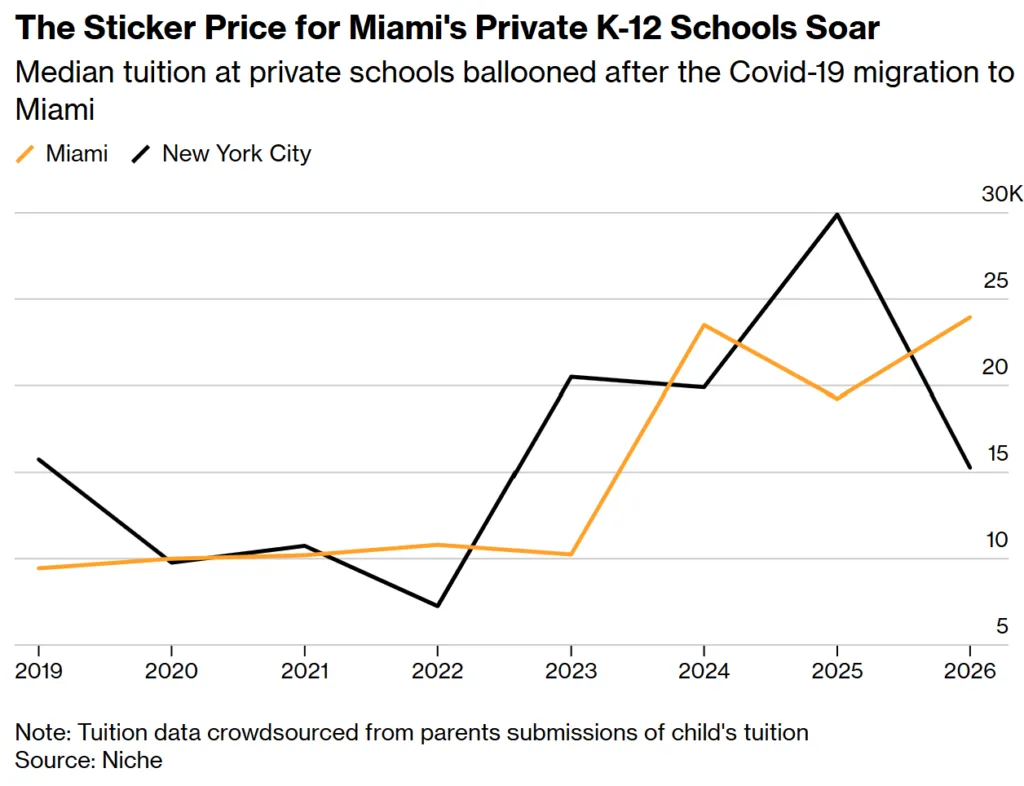
Dining and education costs keep climbing. Miami residents now spend an average of $94 per restaurant visit. New Yorkers spend $79, according to OpenTable and Niche. Legal salaries also trail New York. Miami lawyers earn about $51,000 less on average, according to the Bureau of Labor Statistics.
Cost Pressures Erode Inbound Momentum
Miami’s rising costs are already changing migration trends. The city once attracted finance and tech professionals seeking lower taxes. That advantage now benefits mostly the ultra-wealthy.
Douglas Elliman broker Ben Jacobs says “merely well-off” buyers now feel squeezed. Insurance, property taxes, and school costs erase many tax savings. Southern Connecticut now costs less than Miami for the first time on record.
Local residents and recent arrivals both feel the pressure. Longtime homeowners still benefit from lower tax assessments. Their new neighbors often face much higher bills. Renters continue moving farther from the urban core.
State lawmakers approved measures that could help longtime residents. However, most new arrivals do not qualify. That weakens Miami’s appeal as “Wall Street South.”
Why It Matters
Rising housing costs are reshaping Miami’s residential market. They also create new challenges for commercial real estate investors. S&P Case-Shiller shows home values have climbed 79% since 2020. Miami’s property tax increases also exceed the national average.
The US Bureau of Economic Analysis reports Miami’s regional price parity now exceeds both the national average and New York City. That change weakens one of Miami’s biggest relocation advantages.
High-profile moves by billionaires like Mark Zuckerberg and Ken Griffin still attract attention and capital. However, average professionals and upper-middle-class families face growing financial pressure. Brokers report slower migration among “merely well-off” buyers. Higher insurance costs and lower salaries erase much of Florida’s tax advantage.
Florida still has no state income tax. Yet that benefit no longer offsets insurance premiums averaging $8,292. Buyers also face costly condo assessments for building upgrades. Many Manhattan owners avoid those expenses.
Miami’s average household income remains about $1,000 below the national median, according to the Census Bureau. That gap highlights the growing affordability challenge.
The market now relies more on ultra-high-net-worth buyers. That shift also mirrors broader migration trends, as population growth increasingly concentrates in markets with stronger affordability and job opportunities.
Meanwhile, professionals and middle-class families face fewer affordable options. Investors, lenders, and developers must adjust to a more mature market. Miami no longer offers the bargain many buyers once expected.
What’s Next
Lawmakers continue searching for relief. Voters will consider a property tax reduction this November. If approved, it will benefit residents with at least five years in Florida.
Industry experts expect Miami to remain attractive to global luxury buyers. However, middle-class migration could slow further. Insurance and property tax costs are also expected to keep rising through 2027.
Commercial real estate investors should watch transaction activity closely. They should also monitor affordability debates and policy changes. Those shifts could reshape migration and investment decisions. Miami is no longer an automatic financial win. Future investment decisions will require more selective underwriting.