






- Dallas and Miami are ramping up efforts to rival New York’s dominance in the financial sector, drawing major firms and investments.
- Texas Stock Exchange’s launch and Miami’s growth in finance are reshaping the competitive landscape with new incentives and talent pools.
- This geographic diversification signals a broader shift for where capital and CRE demand may concentrate in the coming decade.
Competition for US Financial Supremacy Intensifies
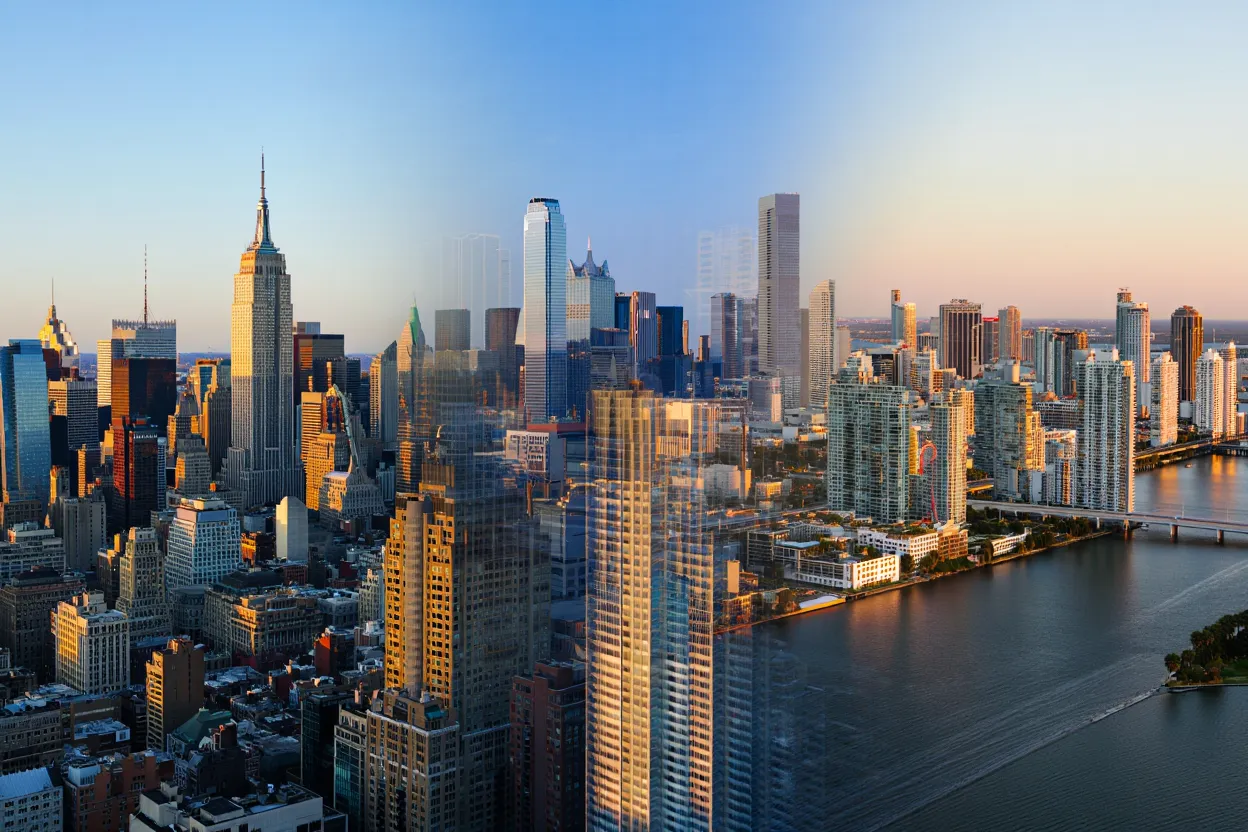
New York’s long-standing dominance in finance is facing new competition. According to CoStar, Dallas and Miami are emerging as major financial hubs. Talent migration and office investment are reshaping the industry’s geography. Sun Belt markets are using tax advantages to attract firms and workers.
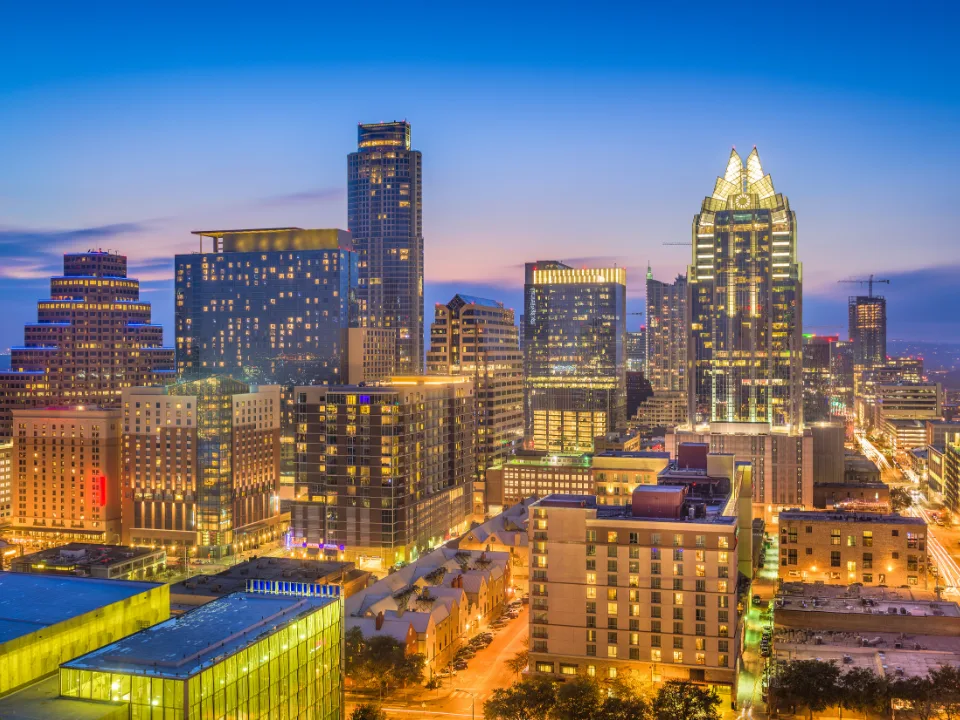
The Texas Stock Exchange is expected to launch soon in Dallas. Miami continues building its reputation as the “Wall Street of the South.” ULI’s 2026 Emerging Trends report ranked Dallas-Fort Worth as the nation’s second-largest financial market. The shift could reshape office demand and capital flows for years.
Get Smarter about what matters in CRE
Stay ahead of trends in commercial real estate with CRE Daily – the free newsletter delivering everything you need to start your day in just 5-minutes
The End of a Manhattan Monopoly
Historically, the financial services map has revolved around New York’s dense CBDs. But cracks appeared as tech enabled more distributed workplaces, and pandemic disruption loosened longstanding ties to Lower Manhattan. Dallas and Miami seized these openings, cultivating deep pools of finance and tech talent, while state and local governments leaned in on incentives and business-friendly regulations. Dallas’ rise is underpinned by backers like BlackRock and Citadel Securities for its new stock exchange, while Miami surged as Wall Street firms followed executives who relocated during the pandemic and chose to stay. Both regions have translated this momentum into billions in CRE investment, major office expansions, and a sales pitch custom-tailored to the preferences of today’s workforce.
The Details
Dallas’ ambitions center on the new Texas Stock Exchange. The exchange plans to compete directly with NYSE and Nasdaq. Dallas-Fort Worth is also attracting major financial office investment. Morgan Stanley is building a $1.3B hub in Uptown Dallas. Goldman Sachs is developing an 800,000-SF campus in the region. Bank of America is constructing a 500,000-SF office tower. Municipal incentives have also supported expansion across North Texas. Chase’s Plano campus received roughly $5M in city incentives. The campus now employs more than 12,000 workers across 1.5M SF.
Miami benefited from pandemic-era migration and international capital flows. Citadel, Morgan Stanley, and Wells Fargo expanded local office footprints. Miami International Holdings opened the Miax Sapphire exchange in 2025. Trophy office rents at 1450 Brickell Ave. now reach roughly $200 PSF.
Race for Talent and Top-Tier Assets
Firms are chasing talent, lifestyle amenities, and favorable business environments. Dallas offers lower living costs for finance workers. According to CoStar, luxury apartments in Plano rent for $1,500 to $2,000 monthly. Miami attracts international talent and Latin American business connections. However, housing costs are significantly higher in South Florida. Luxury apartments in Brickell start near $2,500 per month. Three-bedroom units can reach $4,600 monthly.
New York remains the country’s premier financial center. Midtown East office rents have climbed to roughly $300 PSF. JPMorgan’s 270 Park Ave. headquarters adds 2.5M SF to the Plaza District. JPMorgan is also expanding aggressively in Dallas and Miami. The strategy reflects a more distributed approach to financial growth.
Dallas offers scale, lower costs, and business-friendly policies. Miami provides international connectivity and lifestyle appeal. All three markets are competing aggressively for talent and capital.
Why It Matters
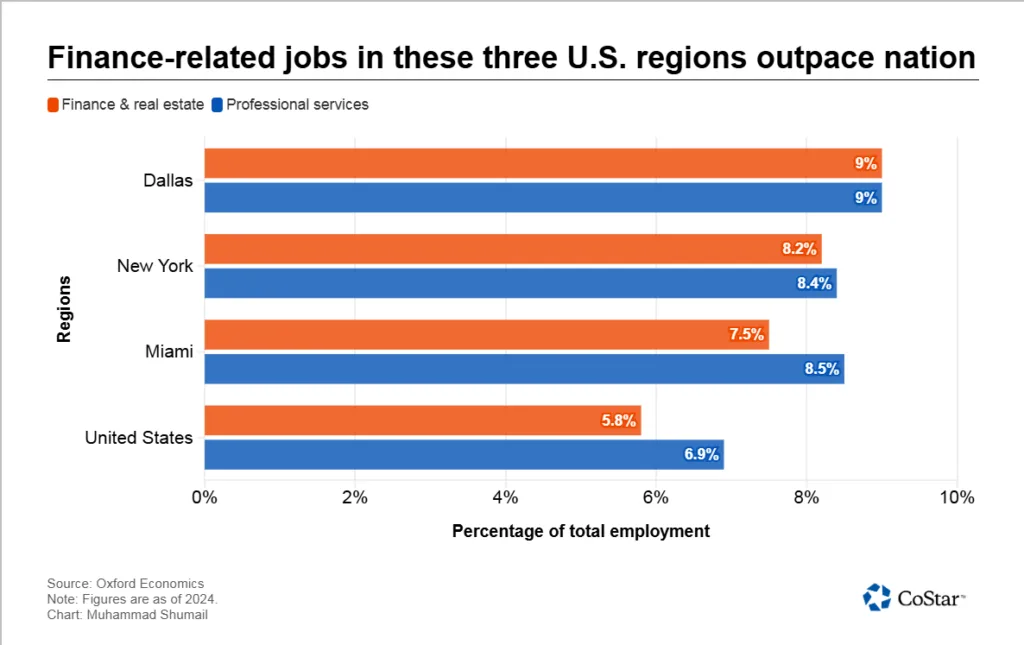
The shift in financial activity has major implications for commercial real estate. Oxford Economics says finance-related industries overindex in all three markets. That could spread office demand across multiple regions. Leasing patterns and capital flows may become less concentrated. Dallas and Miami are also seeing stronger residential demand from finance workers.
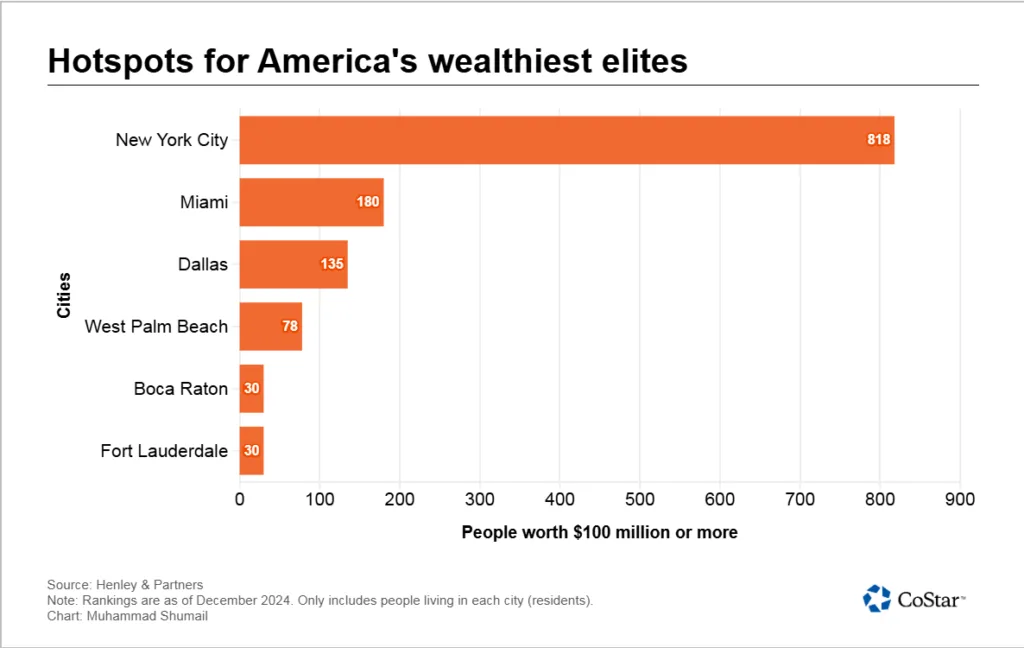
Each market brings distinct strengths and risks. Miami’s economy depends more heavily on international capital and luxury housing. Dallas benefits from corporate campuses and business incentives. New York remains difficult to replicate because of its scale and client base.
Major financial firms are investing across all three cities. That suggests the future US finance landscape will be more distributed. Office and mixed-use demand could continue growing in Dallas and Miami.
What’s Next
The Texas Stock Exchange’s first trades will test whether Dallas can credibly challenge the market-defining platform of NYSE and Nasdaq. Construction cranes are set to remain active in both Dallas and Miami as major developments come online through 2026 and beyond. Watch for continued institutional leasing in Miami’s Brickell and further office campus growth around Legacy West in Plano. With JPMorgan Chase requiring Dallas and New York employees to be onsite five days a week, demand for high-amenity space—and surrounding residential and retail product—should remain strong. As this reshuffling continues, CRE professionals need to track not only where firms go, but where their talent and capital are concentrating, as new financial capitals take shape on the backs of real estate development.