


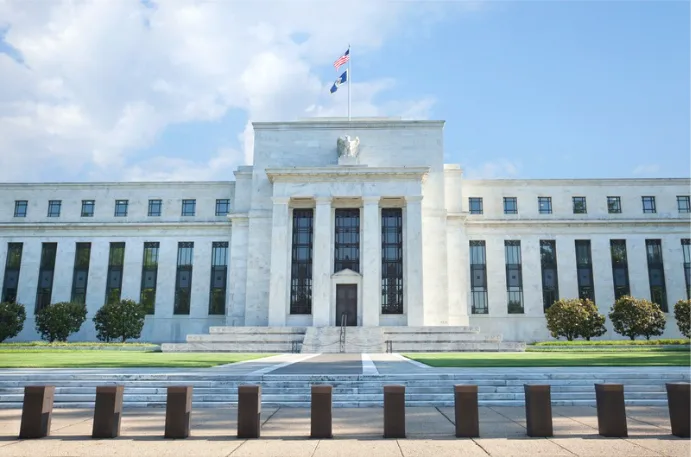



- The Fed’s June 2026 minutes show hesitation on near-term rate cuts as inflation stays above target, with some members suggesting hikes may be warranted.
- PCE inflation hit 4.1% in May, well above the 2% target, complicating the cost of capital and refinancing conditions for CRE across the US.
- CRE investors face continued uncertainty as the Fed signals rate stability or further tightening, dampening optimism for easier financing in the second half of 2026.
Fed’s Cautious Pivot on Rate Policy
The Federal Reserve’s latest meeting minutes reinforced expectations for higher rates for longer. According to Bisnow, officials remain concerned about persistent inflation and resilient labor markets. The FOMC unanimously held rates steady at its June 2026 meeting. That marked a shift from months of divided votes and easing expectations. The 10-Year Treasury yield has climbed above 4.5%, pressuring commercial real estate financing. Refinancing and acquisition conditions are unlikely to improve soon.
The minutes also showed concern over rising commodity prices and geopolitical instability. While long-term inflation expectations remain anchored near 2%, current data remains elevated. Fed officials warned those pressures could delay future rate cuts further.
Get Smarter about what matters in CRE
Stay ahead of trends in commercial real estate with CRE Daily – the free newsletter delivering everything you need to start your day in just 5-minutes
Warsh Era Brings Structural and Tonal Change
Federal Reserve Chair Kevin Warsh stamped his authority at June’s meeting—the first unanimous FOMC rate decision since June 2025 and his inaugural policy move since succeeding Jerome Powell. Warsh’s approach: concise official statements and a public focus on “delivering price stability.” He’s also pushed through reforms internally, starting five task forces to review the Fed’s bureaucracy and policy tools. While Warsh was initially viewed as dovish, the June projections tell a different story: half the committee’s 18 members now anticipate rate hikes, eight expect rates to stay flat, and just one predicts a cut before year-end. Wall Street odds of a hike at July’s meeting stand at 30%, per Bisnow. The war in Iran, volatility in energy prices, and the impact of new tariffs are all feeding inflation fears and making Warsh’s job harder—as is the Fed’s own acknowledgement that policy may not be as “restrictive” as previously assumed.
The Details
The June 2026 FOMC minutes paint a picture of division and caution. Several Fed participants did not view monetary policy as meaningfully restrictive; a minority saw it as only “slightly restrictive.” While all voted to hold the federal funds target range steady, some argued that there was a legitimate case for a hike at the June meeting. Economic projections show FOMC members almost evenly split between further tightening and continued holds. Inflationary readings back up this stance—personal consumption expenditures (PCE), the Fed’s preferred metric, registered at 3.8% in April and ticked up to 4.1% in May, per the minutes. The 10-Year Treasury yield surged back above 4.5% due to geopolitical tensions and remains a critical threshold for CRE refinancing. Against this backdrop, business investment—largely driven by artificial intelligence—continues strong, helping offset some drag from inflation and rates. However, that same AI-driven growth is also cited as a new inflationary impulse.
CRE Refinancing Faces Tougher Path
Higher inflation and a hawkish Fed are adding pressure to strained capital markets. Many investors entered 2026 expecting multiple rate cuts. Instead, the Fed has pushed back against easing expectations. Lenders remain cautious, while investors hesitate to pursue expansion plans. According to MSCI, US CRE transaction volumes fell 33% year over year in Q1 2026. Deal activity remains subdued across most property sectors. The 10-Year Treasury yield has stayed above 4.5%, increasing borrowing costs. Green Street estimates $920B in US CRE loans will mature through 2027. Many of those loans originated when interest rates were near zero.
Real estate’s appeal as an inflation hedge is also fading. Investors are increasingly concerned about returns and fundraising conditions. Value-add and opportunistic strategies face particular pressure. The Fed’s outlook remains divided, according to the meeting minutes. Any shift toward rate cuts depends on easing inflation and weaker labor markets. Neither condition appears imminent.
What’s Next
For CRE professionals, the immediate future holds more uncertainty than optimism. The Fed will meet again later in July, and markets now see a real risk of a rate hike over a cut. Lenders are almost certain to remain conservative, focusing on established sponsors and assets with strong in-place cash flows. Borrowers refinancing in the second half of 2026 will need to navigate both elevated benchmark rates and tighter underwriting standards. Warsh’s reforms, both procedural and tonal, could continue to reshape communication and policy choices into 2027. Until inflation makes a clear move toward the 2% target, the capital markets environment for CRE is likely to stay challenging—and the runway for near-term relief appears to be getting longer.