




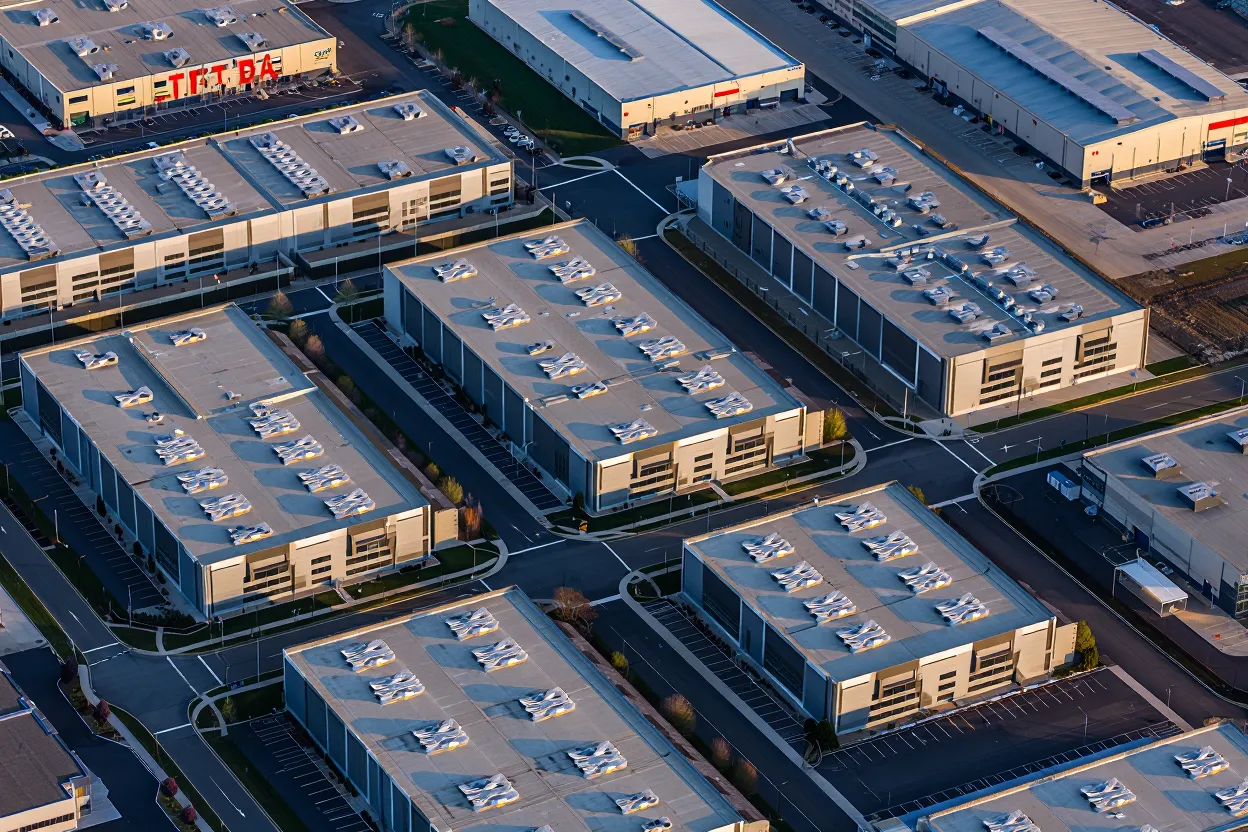



- Warehouse leasing tied to AI-fueled data center growth is surging in Northern Virginia and the broader mid-Atlantic.
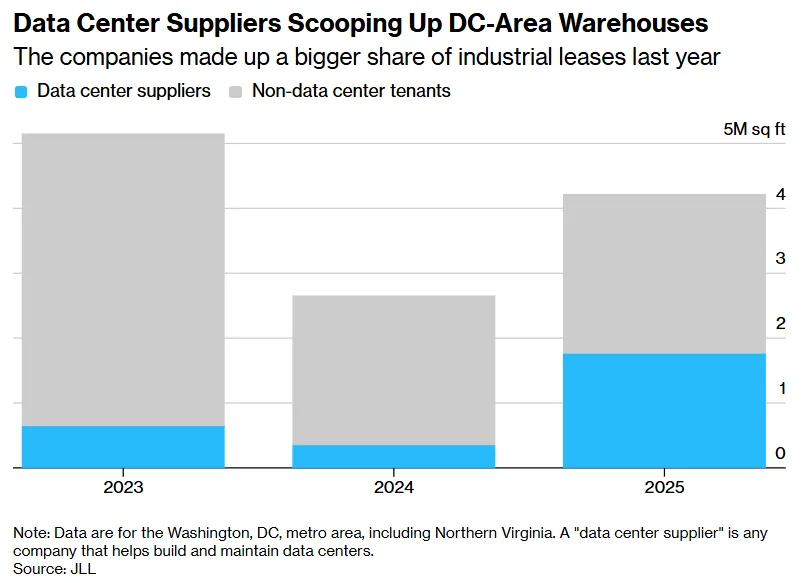
- Data center-related tenants made up over 40% of new industrial leasing in the D.C. metro in 2025, tripling from the prior year, per JLL.
- Rent growth in the region is outpacing national trends, but sustained gains may hinge on power infrastructure and local policy.
AI Push Drives Industrial Spillover
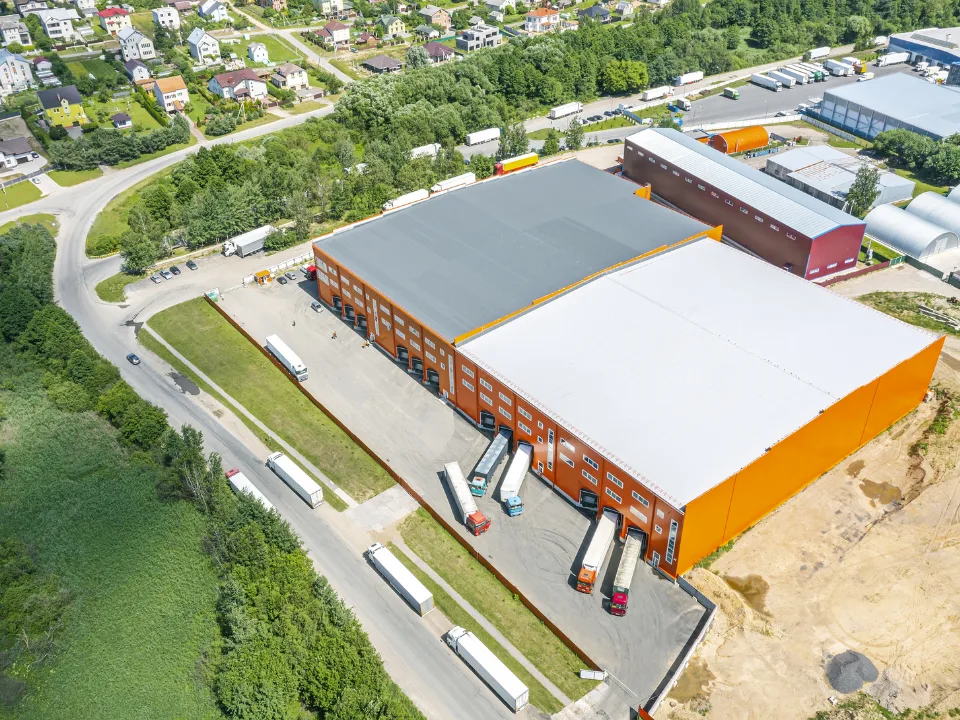
The accelerating buildout of data centers by Meta, Google, and other tech giants is creating ripple effects across the Washington, D.C., region’s industrial market. According to Bloomberg, real estate requirements from AI companies—primarily for equipment storage—are soaking up warehouse capacity in areas adjacent to Northern Virginia’s “Data Center Alley.” JLL projects that data center-linked tenants will lease about 4M SF of warehouse space across the mid-Atlantic in 2026, up from 2.8M SF in 2025. That number could reach 14M SF by 2030, demonstrating the stakes as the sector’s need for logistics and construction support balloons alongside digital infrastructure demand.
Get Smarter about what matters in CRE
Stay ahead of trends in commercial real estate with CRE Daily – the free newsletter delivering everything you need to start your day in just 5-minutes
The Details
Tech companies and their suppliers are striking warehouse deals to keep up with a pipeline of under-construction data centers. JLL reports that in the D.C. area—including Northern Virginia—data center-related firms accounted for over 40% of new industrial leasing activity in 2025, up sharply from just 13% in 2024. Over the past nine months, Blackstone’s Link Logistics saw about 15% of new US industrial leases tied to the sector. QTS, owned by Blackstone, has not only leased but also acquired industrial space to manage the growing logistical burden. Warehouse property sales in the region hit nearly $1B for deals over $25M in 2025—a threefold increase over the previous year—with average pricing jumping 39% per JLL.
Northern Virginia Rents Outpace US
All this activity is reshaping local market dynamics. Average industrial rents in Northern Virginia climbed 20% over the past three years—double the US average, according to JLL. Unlike the broader industrial sector, which is contending with a 7.5% national vacancy rate and tepid 0.8% rent growth in early 2026, the data center-driven corridor is tightening. With major data center projects underway and sometimes delayed, landlords are fielding demand from both operators and the growing web of construction and equipment suppliers. That has helped erase post-pandemic vacancy and boost negotiating power for property owners.
Why It Matters
Data center demand is creating unexpected tailwinds for nearby warehouse assets. Industrial properties near major tech hubs are commanding premium rents and stronger pricing.
JLL reported D.C.-area warehouse purchases tripled in 2025 from the prior year. Northern Virginia warehouse rents rose 20%, double the national average.
The trend is helping absorb excess industrial supply and support valuations. However, rent growth could slow if data center construction moderates.
Zoning disputes and power constraints also threaten future expansion. Smaller logistics tenants may face rising costs as tech firms outbid traditional occupiers.
What’s Next
JLL forecasts strong demand for warehouse space in Northern Virginia and the mid-Atlantic through the end of the decade, with data center-related industrial leasing possibly hitting 14M SF by 2030. Policymakers and utilities will play a growing role, as power grid constraints and land-use debates may curb further growth. For now, landlords stand to benefit from a demand surge, but eyes will be on whether the next wave of data center development maintains this pace—and how communities manage the mounting pressures from big-tech real estate expansion.