






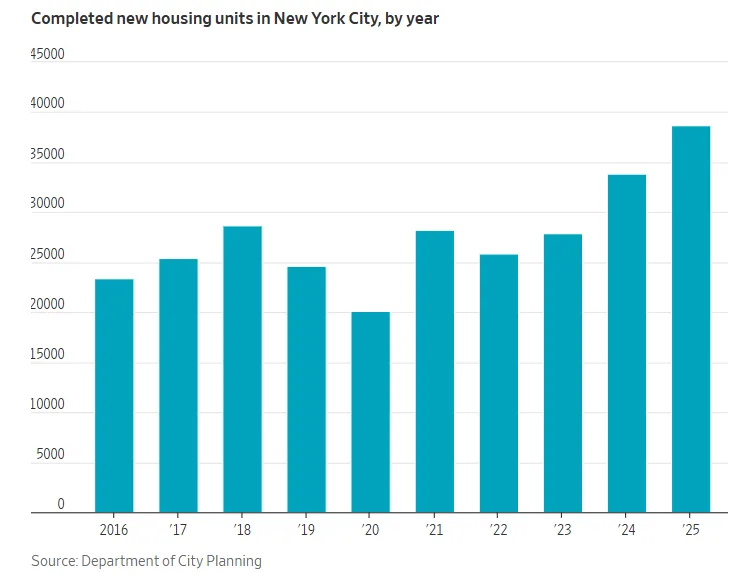
- New York City added 38,682 housing units in 2025, the city’s strongest annual apartment delivery total in six decades and a sharp outlier from the national slowdown in multifamily construction.
- The pipeline is still active, with 16,815 proposed units across 281 buildings in Q1 2026, as rezonings and the new 485-x tax incentive keep developers in the market despite high rates and construction costs.
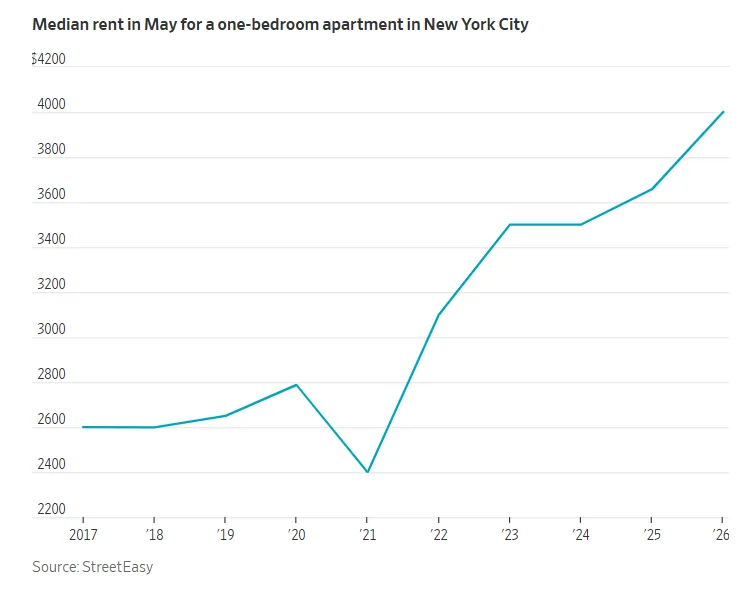
- The burst of supply is meaningful, but it is nowhere near enough to reset affordability in a market where one-bedroom rents just hit a record $4,000 and the metro remains short roughly 400,000 homes.
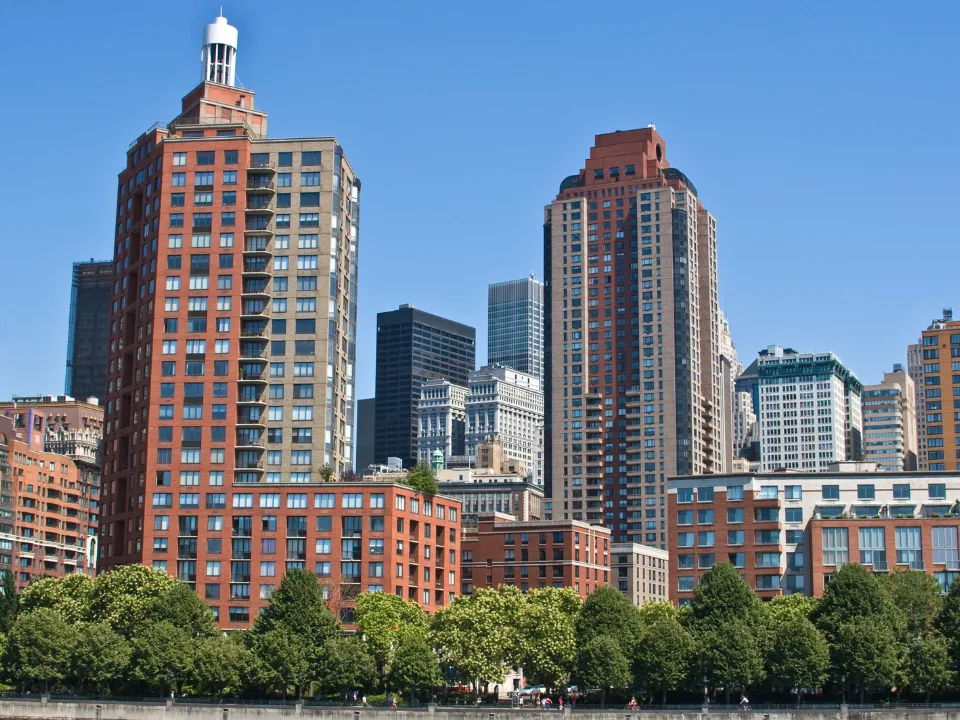
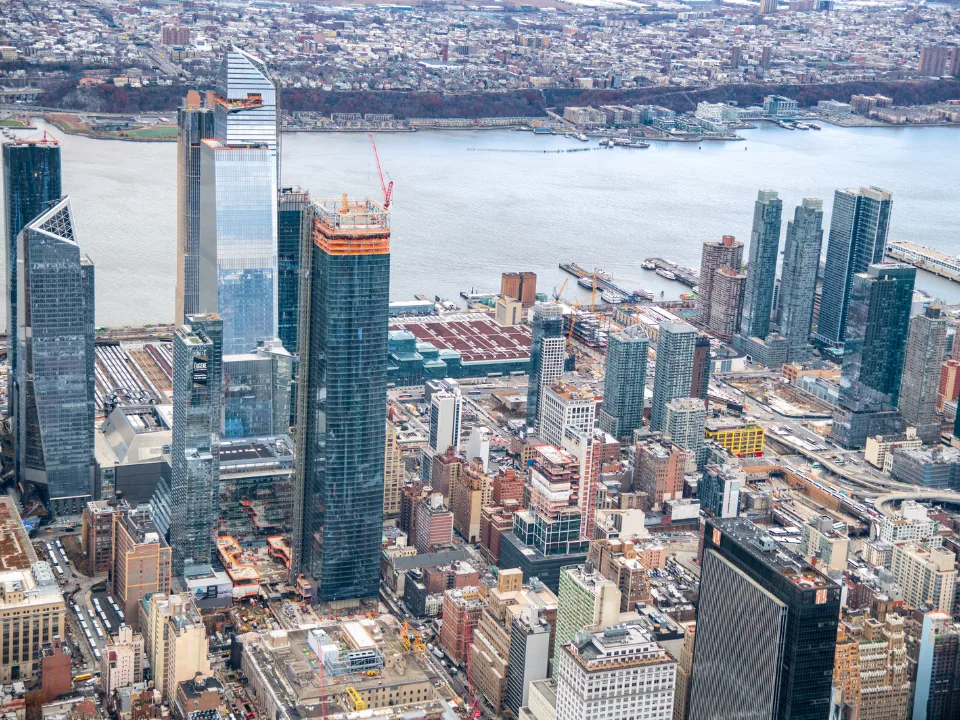
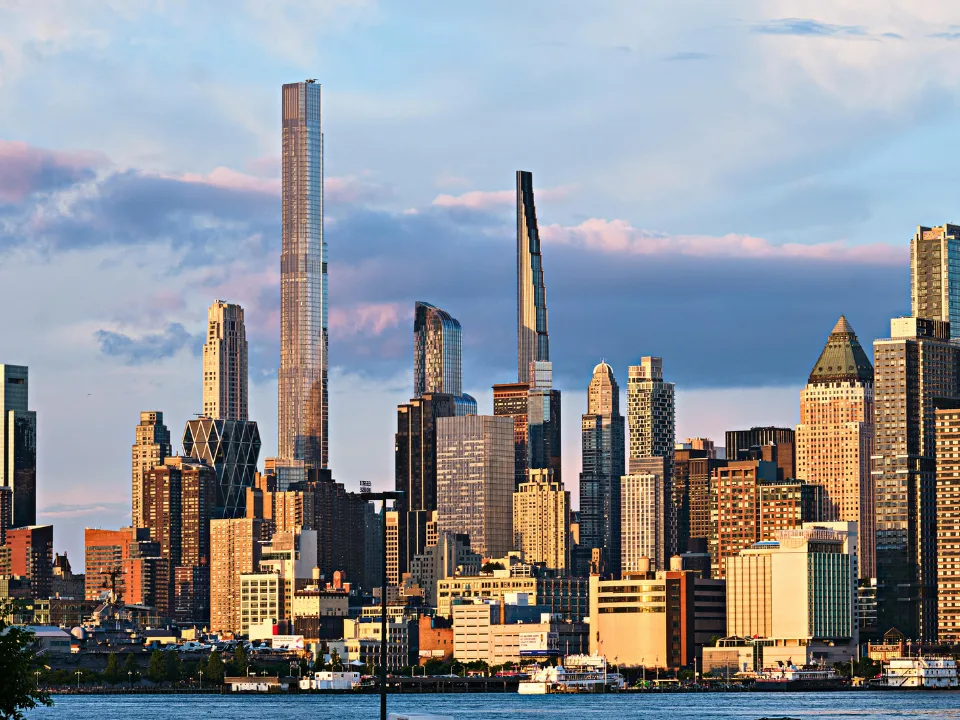
New York City is building apartments at a pace it hasn’t seen in decades, even as multifamily development cools across much of the country, per WSJ. The city added 38,682 units in 2025, the highest annual total since 1965, according to the Department of City Planning.
That surge comes as national apartment construction has fallen sharply and hit a 15-year low earlier this year, according to The Wall Street Journal. In New York, though, rent growth, job creation, rezonings, and tax incentives are still supporting new development. The result is a rare bright spot for housing production, though not yet a solution to the city’s affordability crunch.
Get Smarter about what matters in CRE
Stay ahead of trends in commercial real estate with CRE Daily – the free newsletter delivering everything you need to start your day in just 5-minutes
New York’s Housing Pipeline Keeps Running
New York’s 2025 delivery total stands out not just locally, but nationally. Apartment construction has been slowing for years across the US, squeezed by higher borrowing costs, softer rent growth in some Sun Belt markets, and rising construction expenses. New York has largely resisted that pullback.
Part of the reason is simple math. Demand remains deep, especially in neighborhoods tied to finance, tech, and other white-collar job centers. Rents are still high enough to justify new projects in many parts of the market, particularly outside the rent-stabilized stock. The city has also continued to open new pockets of development through rezonings in places like Gowanus, Mott Haven, and Long Island City. Those policy changes have created more land and more density for multifamily builders at a time when many markets are moving in the opposite direction.
The Details
The 2025 total of 38,682 completed units marked New York City’s strongest year for apartment deliveries since 1965, per the Department of City Planning. The pipeline remains active in 2026. According to a recent Real Estate Board of New York report, developers proposed 16,815 units across 281 buildings in Q1 alone.
Several forces are driving that volume. New York still has some of the highest apartment rents in the country, which helps offset elevated financing and construction costs. The policy backdrop also matters. A new tax abatement program, 485-x, took effect in 2024 and revived project filings after a lull that followed the expiration of the earlier 421-a incentive structure. Developers say rezonings have also been critical. Domain Companies, for example, recently completed a 360-unit project in Gowanus and a 499-unit building in Long Island City, with 30% of the LIC units set aside as affordable.
Zoning Reform Reopens Key Multifamily Submarkets
A big part of the story is where the city is allowing new housing to happen. Kenny Lee, senior economist at StreetEasy, pointed to rezonings in Gowanus, Mott Haven, and Long Island City as major catalysts for new apartment production. In those neighborhoods alone, thousands of units have been added in recent years.
That matters because New York’s development pipeline is increasingly tied to specific rezoned corridors rather than broad, citywide expansion. Builders need density, predictable approvals, and some version of tax relief to make projects pencil in a high-cost market. Rezonings help on the land-use side. Tax incentives help on the capital stack side. Together, they have created a workable, if still expensive, path for multifamily development. Without those tools, New York likely would look much closer to the rest of the country, where starts and completions have been rolling over.
Why It Matters
The headline number is impressive, but it does not come close to solving New York’s housing shortage. Zillow estimates the metro area needs more than 400,000 additional homes to meet demand. At 2025’s pace, it would still take roughly a decade to close that gap, assuming the city could sustain near-record production every year.
Meanwhile, rents keep climbing. StreetEasy reported that the median rent for a one-bedroom apartment in New York City hit a record $4,000 in May 2026. RentCafe data underscores the pressure at the lower end of the market: a $1,500 monthly budget rents just 210 SF in Manhattan, the smallest footprint among the 200 markets it ranked. In other words, supply is rising, but not fast enough to materially loosen conditions in the city’s most expensive neighborhoods. For owners, that supports continued pricing power. For renters and policymakers, it keeps affordability front and center.
What’s Next
The next question is whether New York can keep this pace once the current incentive cycle matures. Researchers at New York University’s Furman Center have warned that part of the 2025 surge reflected developers racing to qualify for tax benefits before an older program expired. Under that structure, developers who met certain requirements by June 15, 2022, could still access exemptions tied to multifamily projects with at least 20% affordable units.
Now the market is shifting to 485-x, which includes tougher affordability requirements and higher wage standards for construction workers. Early signs suggest it is helping revive applications. REBNY said apartment proposals in Q1 2026 reached their highest level since the 2022 spike, and filings have been climbing steadily since 2024. The issue for the market is less whether New York will keep building and more whether it can build enough. Until production consistently outpaces demand, record deliveries will still look small against the city’s housing deficit.