






- San Francisco and Denver lead the nation for pet-friendly coworking, each offering pet perks in 26% of flexible workspaces.
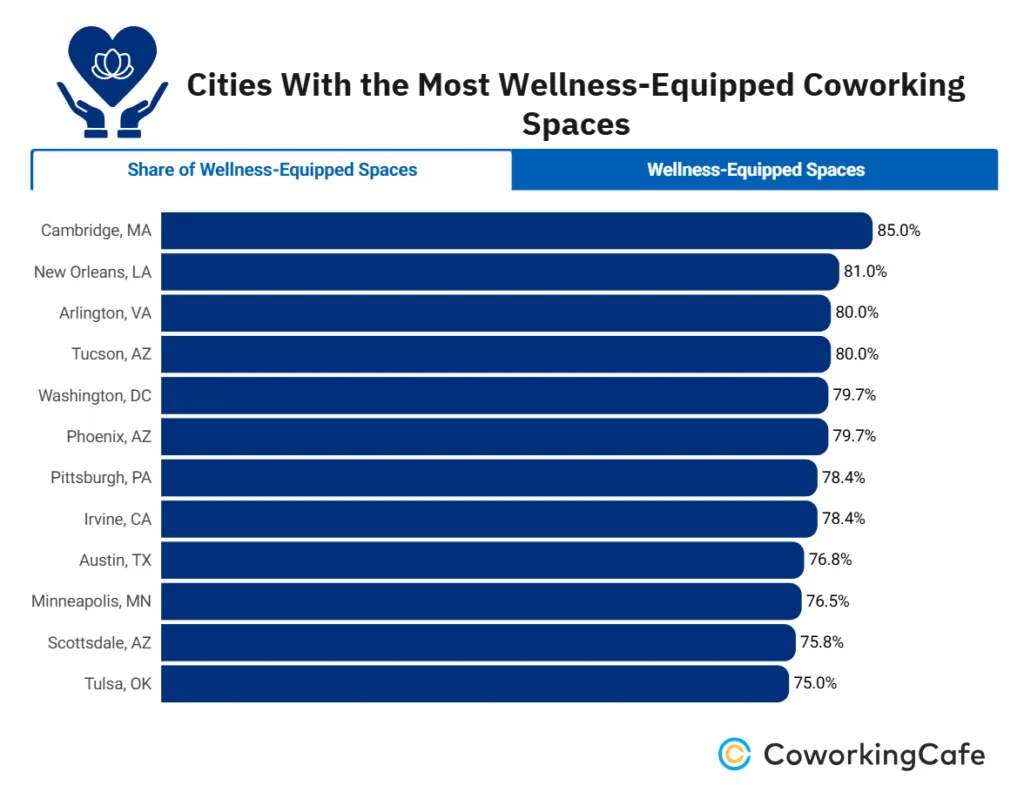
- Cambridge, MA stands out for wellness and sport amenities, with 85% of spaces providing lounges, fitness centers, or wellness rooms.
Amenity Wars Move Beyond the Desk
The coworking landscape in the US is evolving to meet demands that go far beyond desks and Wi-Fi. According to CoworkingCafe’s 2026 listing analysis reported by Andreea Neculae, approximately 25.4% of coworking spaces now offer standout amenities—features that distinguish the best-in-class flexibility hubs from the competition. This national analysis, based on data from over 8,200 coworking spaces, shows a rising premium on pet-friendliness, wellness, childcare, and EV-charging infrastructure. The significance is clear: operators are betting that the next phase of flexible work will be won not by price or location, but by a richer amenity suite tailored to user lifestyles.
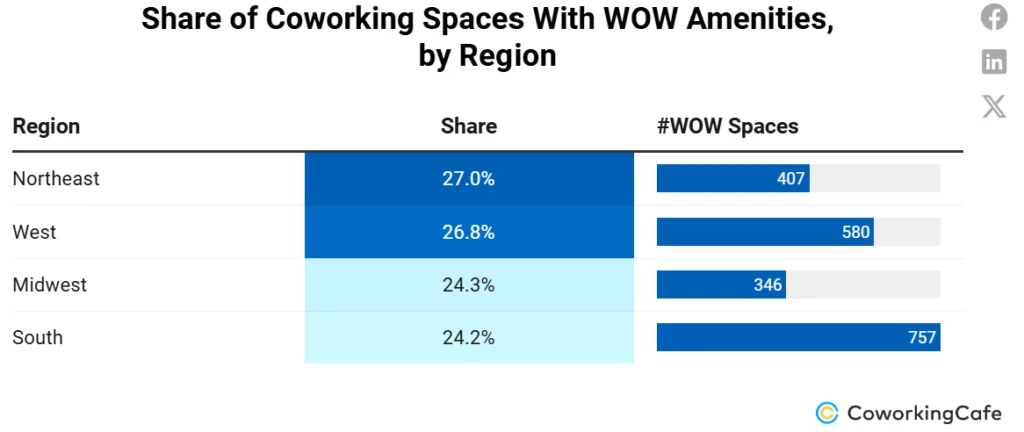
Regional dynamics matter, too. The Northeast edges ahead with 27% of spaces providing upgraded perks, while the South lays claim to the largest volume of amenity-rich coworking environments. What’s classified as a premium feature varies by place and culture—reflecting the unique priorities of regional workforces from the podcast rooms popular in the South to EV-charging stations proliferating in the West.
Get Smarter about what matters in CRE
Stay ahead of trends in commercial real estate with CRE Daily – the free newsletter delivering everything you need to start your day in just 5-minutes
The End of One-Size-Fits-All Workspaces
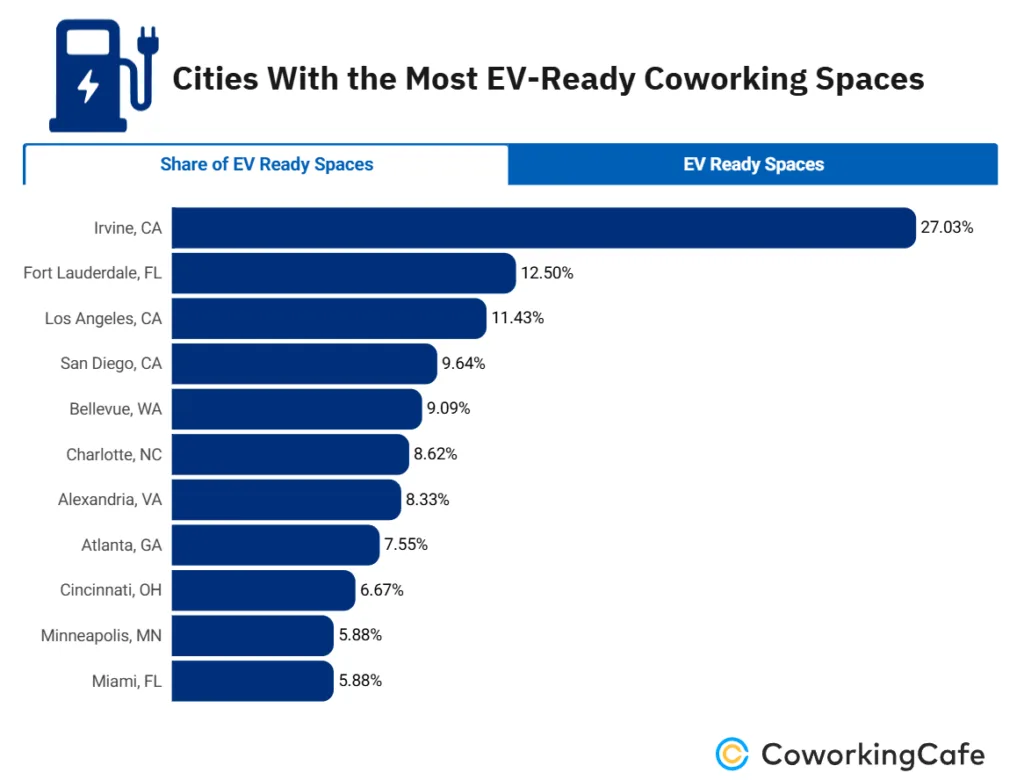
Basic coworking has become common. However, amenity-rich space now reflects local market needs. In the West, EV charging has become a key differentiator. California leads this trend as electric vehicle adoption grows. Per CoworkingCafe, Irvine offers charging stations at 27% of flex locations.
Meanwhile, the South favors entrepreneurial amenities. Podcast studios rank as the region’s most common premium feature, with 332 locations. The Midwest and Northeast still emphasize fitness centers and event spaces. However, the Northeast also offers breakfast service, creating a stronger social and networking culture. This regional focus shows the flex sector is maturing. Operators now tailor amenities to local workforces instead of following one model.
The Details
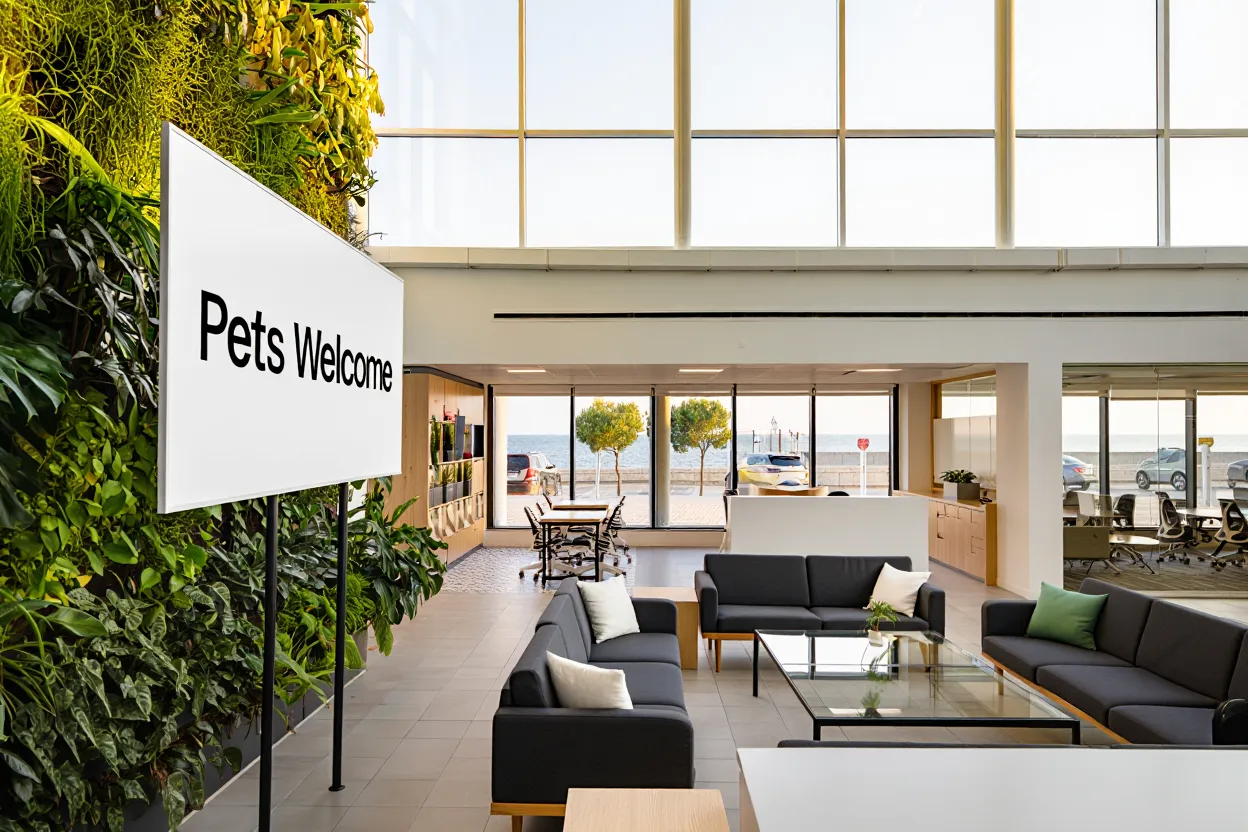
San Francisco and Denver lead the nation in pet-friendly coworking. Both cities offer pet-friendly policies at 26% of locations. That equals 18 of San Francisco’s 69 sites and 24 of Denver’s 92. Bellevue and Oakland follow at 22.7%. Seattle and Alexandria also rank highly, reinforcing a strong West Coast trend with select East Coast participation.
Cambridge leads wellness amenities, with 85% of spaces supporting health and relaxation. New Orleans, Arlington, Tucson, and Washington, D.C., also rank among the leaders. That momentum also aligns with Cambridge’s broader push for higher-density development, which supports continued growth in life sciences and flexible workplaces. Minneapolis leads childcare offerings. About 29% of coworking providers offer mother’s rooms or on-site care. Oakland, Austin, and San Francisco also perform well. These results suggest family-friendly design is gaining traction. Irvine remains the clear EV leader, with charging stations in 27% of locations. It offers roughly twice the share of the next closest market.
Flex Demand Mirrors Local Labor Trends
This analysis shows coworking operators now compete through hyperlocal differentiation. Cities leading in pet-friendly space reflect local culture. San Francisco has more dogs than children. Denver also ranks among the nation’s strongest dog ownership markets.
Cambridge’s wellness focus matches its large life sciences industry. Knowledge workers increasingly expect spaces that support physical and mental health. Southern markets, including Austin, Atlanta, and Miami, invest heavily in podcast studios. These amenities support creator economies and entrepreneurial workers. Minneapolis emphasizes childcare because local policies support working parents and remote work. Meanwhile, Irvine and San Diego continue expanding EV charging. California had more than 150,000 public chargers by 2026, reinforcing that long-term strategy.
Why It Matters
Amenities have become central to flex-space differentiation and tenant retention. CoworkingCafe tracked standout amenities at nearly 2,100 of 8,222 coworking spaces in March 2026. Operators that ignore these features risk falling behind. The Northeast leads with amenity-rich space at 27% of locations. However, the South and West also continue expanding premium offerings.
Landlords and operators gain an advantage by matching amenities to local demand. Cambridge sets the national benchmark with wellness features in 85% of spaces. Southern markets prioritize podcast studios. Western markets continue investing in EV charging. These regional strategies show how local values shape investment decisions. Developers and investors should expect lifestyle integration to become the next competitive edge. Spaces supporting families, wellness, and sustainability will attract more tenants as preferences continue evolving.
What’s Next
The race to add premium amenities will likely accelerate. Operators will continue targeting specific user groups with specialized features. As a result, leading coworking spaces will resemble hospitality venues more than traditional offices. They will combine wellness, convenience, and lifestyle into one experience.
Landlords should expect higher tenant expectations, especially in markets where leaders already offer childcare, EV charging, and pet-friendly perks. CRE professionals should also expect stronger competition across brands and asset types. Coworking will keep moving beyond basic office space toward highly customized experiences through 2026 and beyond.