






- Apple has spent $545.2M on Silicon Valley office acquisitions over the past year, prioritizing high-performing properties it already occupies.
- Recent deals include a $162.2M Sunnyvale purchase and major investments in Cupertino and Santa Clara, per GlobeSt.com and Silicon Valley Business Journal.
- The tech giant’s strategy spotlights demand for premium assets in core tech markets, reinforcing resilience even as capital deployment tightens.
Silicon Valley’s Value Proposition Stands Out
Apple is reinforcing its commitment to Silicon Valley’s market fundamentals, steadily expanding its real estate foothold despite tighter capital flows across the CRE sector. According to Globe St, Apple’s acquisitions center on properties already integral to its operational footprint, a strategy aligning with broader investor preference for high-quality assets in proven tech corridors. Newmark Vice Chairman Edmund Najera noted stronger demand and investor confidence for high-performance buildings—highlighting how tenant track record and prime location are dictating which assets can still command aggressive bids in a selective environment.
Get Smarter about what matters in CRE
Stay ahead of trends in commercial real estate with CRE Daily – the free newsletter delivering everything you need to start your day in just 5-minutes
The Details
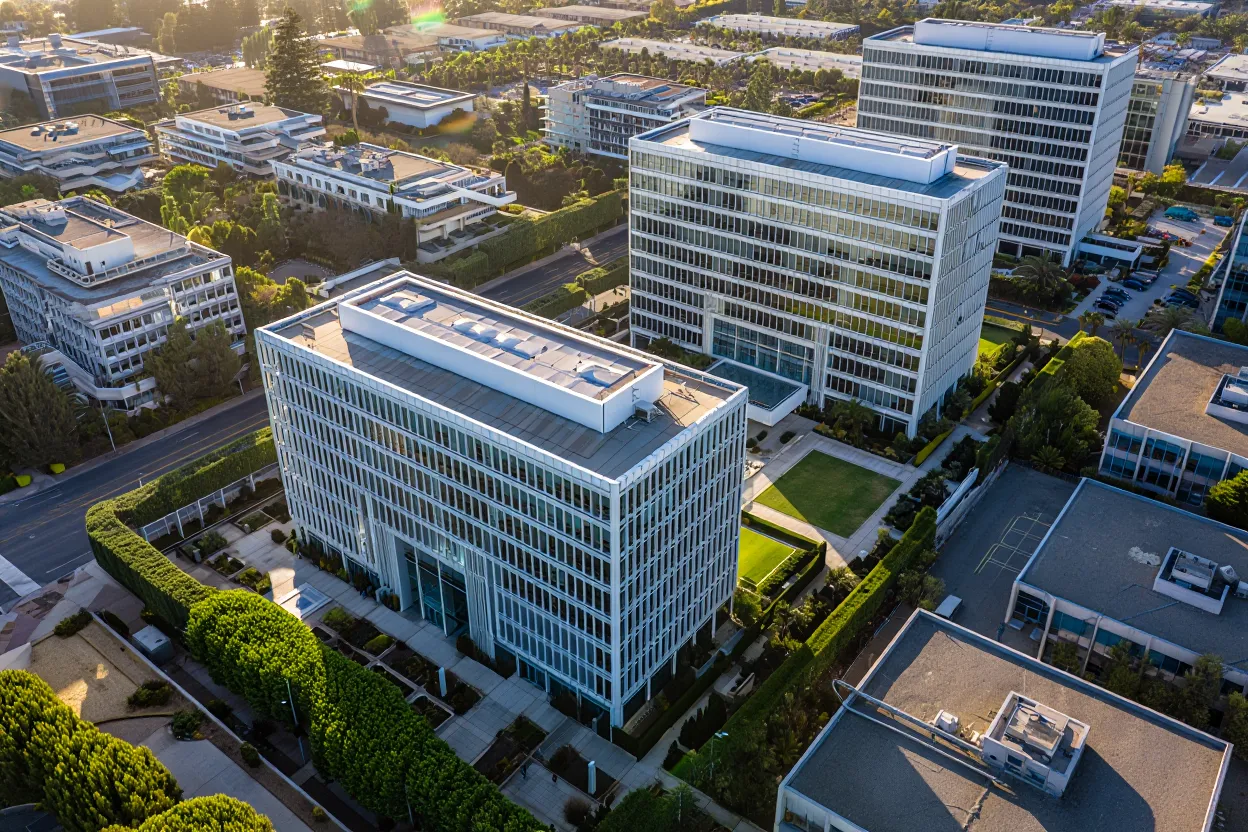
Apple’s most recent buy saw the company pay $162.2M for 684 W. Maude Ave. in Sunnyvale after signing a sublease for the 194,624-SF building. That site sits in Peery Park, within a mile of offices Apple secured from Kilroy Realty in September 2025. Apple also paid $216M for two Cupertino offices it had leased since 2015 and added a $167M package on the Cupertino–Santa Clara border in June 2025, according to Silicon Valley Business Journal. Altogether, the tech firm’s purchases over the last 12 months total $545.2M.
Prime Tech Assets Outperform
Apple’s latest moves reflect broader Silicon Valley trends. Well-located, high-performing assets outperform a difficult market. According to Newmark’s Q1 2026 Silicon Valley report, these buildings show stronger leasing demand and attract investor capital. Meanwhile, weaker and less differentiated assets continue to lag. Other major tech occupiers remain cautious about expansion. This trend shows how brand strength and asset quality support values in core innovation corridors.
Why It Matters
Apple’s $545M commitment shows lasting confidence in Silicon Valley’s most desirable locations. Many office markets still face high vacancy and weak demand. CBRE reported a national office vacancy rate of 19.2% in Q1 2026. However, Silicon Valley’s top assets continue to outperform. Recent AI-driven leasing activity has also strengthened office demand and absorption across the region. Newmark’s data suggests a virtuous cycle. Established tenants like Apple buy buildings to secure operations. As a result, investors gain confidence and increase capital activity for Class A assets.
Buying buildings already under lease helps Apple control occupancy costs. It also secures critical infrastructure and reduces landlord-related risks. For investors and owners, these deals create pricing benchmarks in a thinly traded market. They also clarify where value remains. Apple’s preference for buildings it already occupies highlights growing selectivity. It also reflects an increasing focus on owning versus renting in key tech corridors. As CRE enters a new cycle, location and tenant quality remain essential.
What’s Next
Expect more institutional interest in core Silicon Valley assets, especially stabilized properties with major tenants. Many buyers remain cautious. Still, trophy assets with creditworthy tenants and expansion potential should continue to command attention. For landlords, retaining major tech tenants or considering buyout options may become more attractive. Local fundamentals remain stable, while investors compete for a limited supply of blue-chip opportunities.