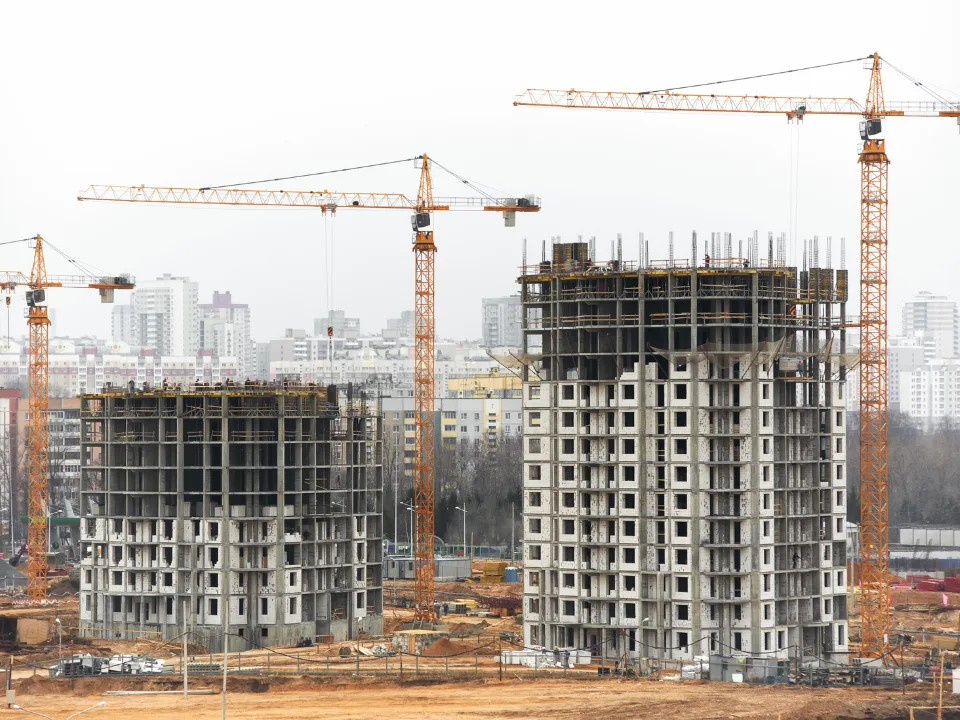





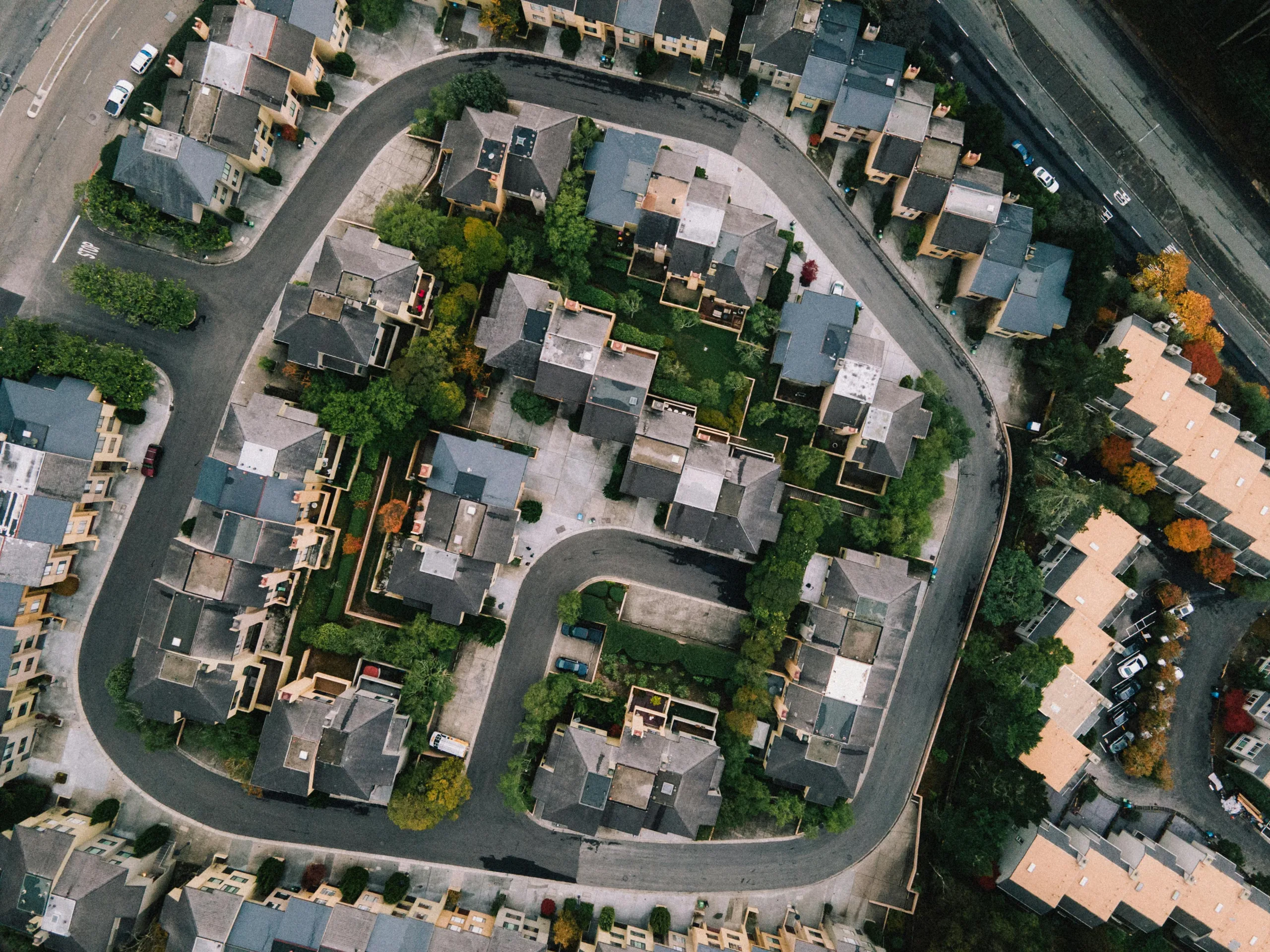
- Census Bureau data shows exurbs surrounding Dallas, Houston, Phoenix, and Raleigh posted some of the nation’s fastest population growth rates through mid-2025.
- Master-planned communities and relatively affordable housing continue to pull residents into distant suburban markets like Celina, Texas, and Queen Creek, Arizona.
- The migration trend is reshaping development pipelines, infrastructure demand, and investment opportunities across Sun Belt suburban markets.
The WSJ reports that Americans are increasingly bypassing major urban cores and settling in fast-growing exurbs, where lower housing costs, larger homes, and sprawling master-planned communities are fueling a new wave of population growth.
Fresh Census Bureau estimates released May 14 show that many of the country’s fastest-growing cities now sit well beyond traditional suburban rings. The trend is especially pronounced across Sun Belt metros, where peripheral communities are absorbing much of the nation’s residential expansion even as population growth slows nationally.
Get Smarter about what matters in CRE
Stay ahead of trends in commercial real estate with CRE Daily – the free newsletter delivering everything you need to start your day in just 5-minutes
Boomtowns Beyond the Core
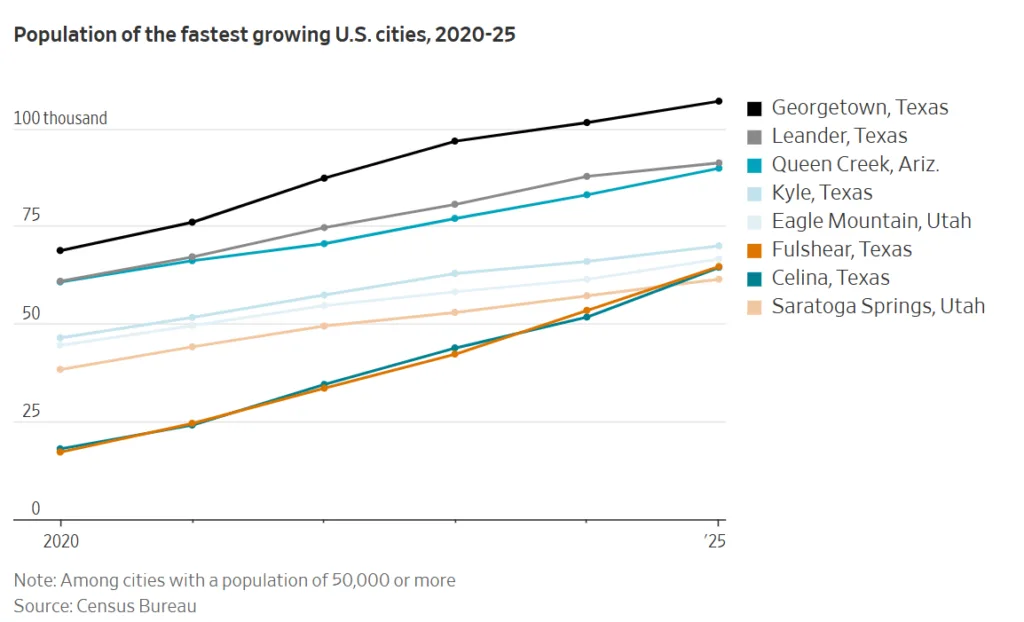
Fulshear, Texas, located roughly 35 miles west of downtown Houston, emerged as the nation’s fastest-growing city with more than 50,000 residents. According to Census Bureau data, its population surged from about 17,000 in 2020 to more than 64,600 by mid-2025.
North Texas posted similar growth patterns. Celina, on the far northern edge of the Dallas-Fort Worth metroplex, added nearly 13,000 residents in the year ending June 2025, bringing its population above 64,400. The city’s growth rate far exceeded Dallas itself, which posted a slight population decline during the same period.
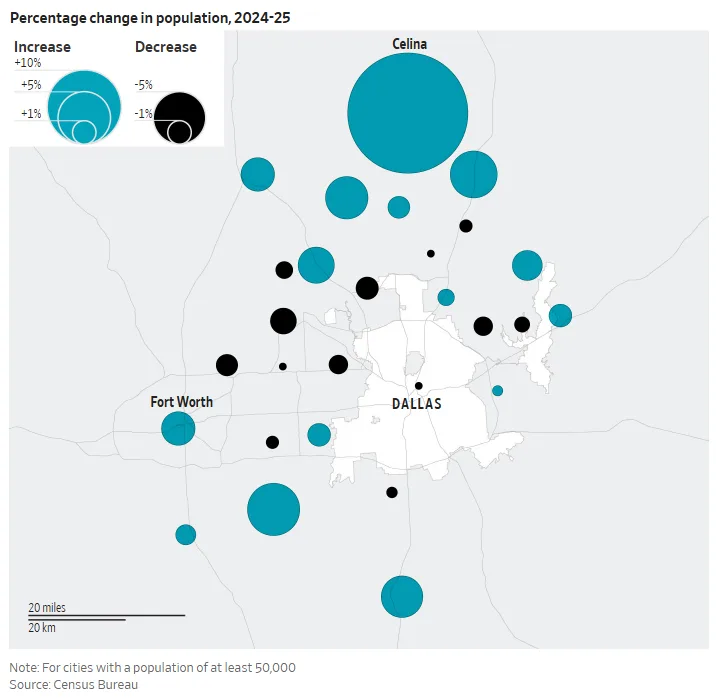
Other high-growth Texas cities included Georgetown, Kyle, and Leander near Austin, as well as Fort Worth, which continued expanding despite already ranking as the nation’s 10th-largest city.
The Details
Arizona’s outer-ring suburbs also continued their rapid ascent. Queen Creek, southeast of Phoenix, grew 8.2% in the latest measured year to nearly 90,000 residents. Nearby cities including Goodyear, Buckeye, Surprise, and Avondale all surpassed 100,000 residents while growing at least 4.5%, according to the Census Bureau.
The Northeast showed a different version of the same trend. Boston’s population edged down slightly, while more affordable secondary cities farther from the urban core gained residents. Manchester and Nashua, New Hampshire, continued attracting households priced out of Greater Boston, while Worcester, Massachusetts, grew 0.9% to nearly 214,000 residents.
Even smaller inner-ring markets saw growth where housing supply expanded. Everett, Massachusetts, adjacent to Boston, posted 4.6% annual population growth amid a recent surge in multifamily development.
A Sun Belt Development Engine
North Carolina’s Research Triangle region remained one of the country’s strongest population magnets. Raleigh and Durham collectively reached roughly 812,000 residents by mid-2025, up 9% since 2020, while surrounding communities including Apex, Holly Springs, Wake Forest, and Chapel Hill expanded even faster.
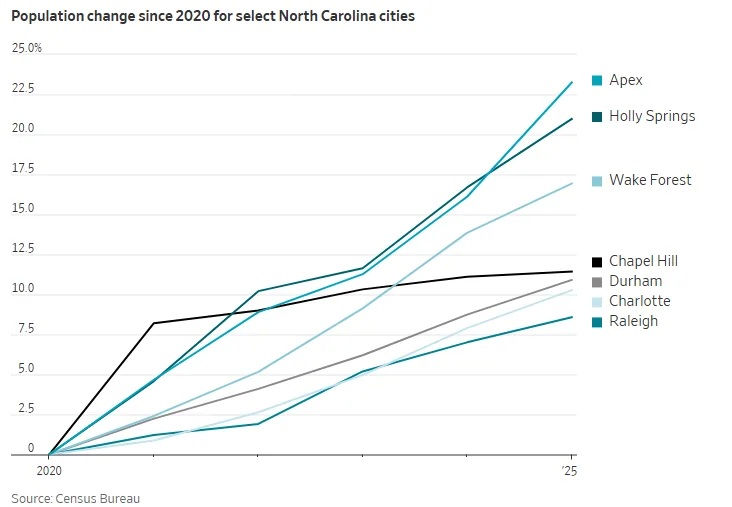
Charlotte also continued climbing toward the 1M-resident mark. The city grew 2.2% in the latest year, making it the fastest-growing US city with more than 500,000 residents, per Census Bureau estimates.
The migration patterns reinforce a broader post-pandemic housing trend: households continue prioritizing affordability and space over proximity to urban job centers. Developers have responded with large-scale residential communities, retail centers, and logistics infrastructure farther from downtown cores. The shift is also fueling demand for single-family rental housing in high-growth suburban markets, where smaller investors still control much of the existing inventory.
Why It Matters
The exurban growth wave is creating new opportunities—and pressures—for CRE investors and developers. Residential builders are racing to deliver housing in fringe markets where land remains relatively available, while industrial, retail, and infrastructure projects follow rooftops outward.
The trend also raises long-term questions about transportation networks, municipal services, and water infrastructure in rapidly expanding communities. According to the Census Bureau, overall US population growth slowed to 0.5% in the year ending June 2025, roughly half the prior year’s pace as tighter immigration policies constrained national growth.
That means many Sun Belt exurbs are capturing an outsized share of the country’s limited population gains.
What’s Next
Developers and institutional investors are likely to continue targeting high-growth exurban corridors, particularly in Texas, Arizona, and the Carolinas, where population momentum remains strongest.
Expect more master-planned communities, mixed-use suburban town centers, and industrial development near expanding residential hubs. At the same time, major urban cores may face mounting pressure to address affordability and housing supply if they want to retain long-term population growth.