






- Los Angeles County recorded 15,735 multifamily units permitted in the year ending March 2026, more than doubling the prior year’s pace and putting the city of Los Angeles at the top of the national permitting rankings.
- New apartment construction is accelerating in submarkets including Downtown Los Angeles, South Bay, Palms/Mar Vista, and Mid-Wilshire, according to RealPage Market Analytics.
- The rebound in permitting contrasts with slowing activity in several Sun Belt markets, signaling a possible shift in multifamily development momentum toward coastal gateway cities.
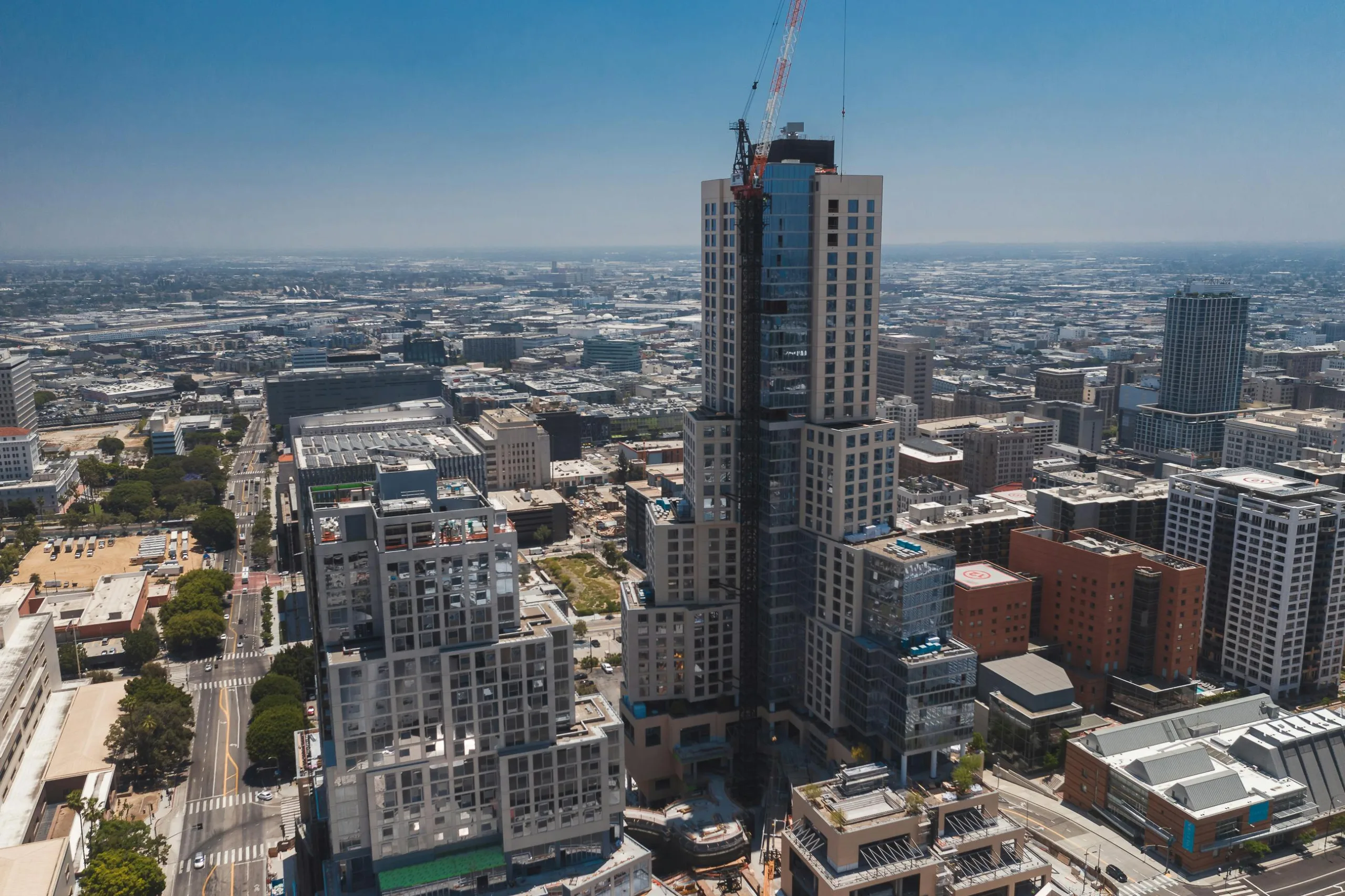
Los Angeles is back in growth mode for multifamily development. The Los Angeles-Long Beach-Glendale metro division posted 15,735 multifamily permits in the year ending March 2026, up from 8,138 units a year earlier, according to RealPage Analytics data published May 11.
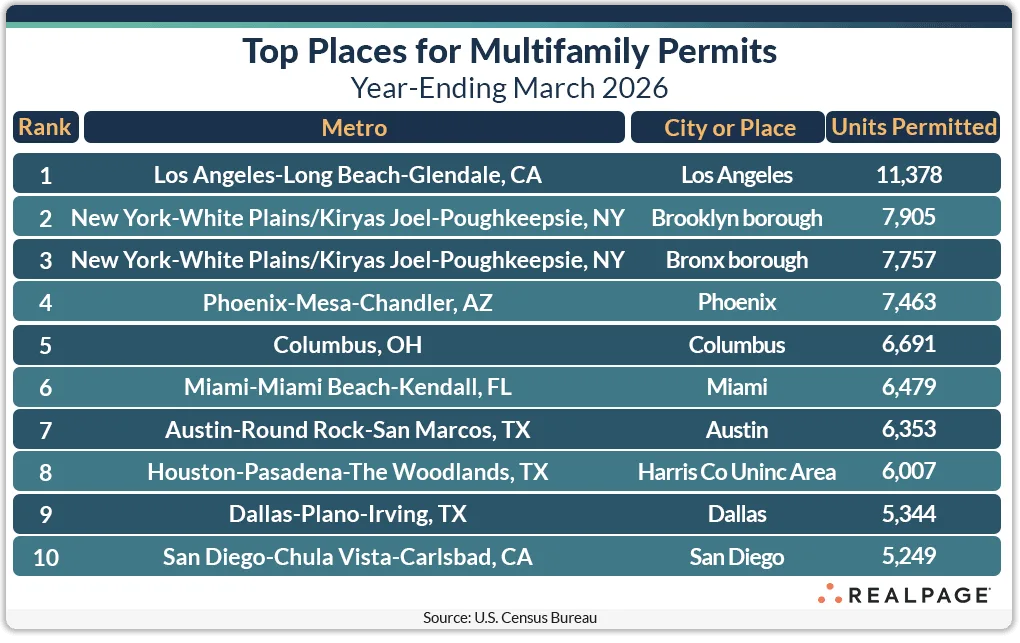
The surge pushed the city of Los Angeles to the top spot among US permitting markets with 11,378 units approved over the past 12 months. RealPage Market Analytics also reported rising starts activity across South Bay, Downtown Los Angeles, Palms/Mar Vista, and Mid-Wilshire, suggesting developers are moving projects beyond the planning phase despite elevated construction costs and financing headwinds.
Get Smarter about what matters in CRE
Stay ahead of trends in commercial real estate with CRE Daily – the free newsletter delivering everything you need to start your day in just 5-minutes
A Sharp Reversal for Los Angeles Apartments
Los Angeles has spent much of the post-pandemic cycle trailing Sun Belt markets in multifamily development activity. Regulatory hurdles, higher land costs, and expensive debt had constrained new construction compared to faster-growing markets like Austin, Phoenix, and Dallas.
That dynamic appears to be shifting. RealPage’s March 2026 permitting data showed Los Angeles outpacing every major US market for annual permit growth among top-tier metros. The 85% jump in permitting represented one of the largest year-over-year increases nationally and far exceeded the roughly 20% growth recorded in other top-five markets including Houston and Phoenix.
The increase also reflects renewed confidence in urban infill development, particularly in neighborhoods with strong renter demand and transit connectivity.
The Details
The broader top 10 US multifamily permitting markets collectively approved 149,729 units in the year ending March 2026, up 17.8% year over year, per RealPage Analytics. New York and Dallas remained among the country’s largest apartment development hubs, while Los Angeles climbed rapidly into the top tier.
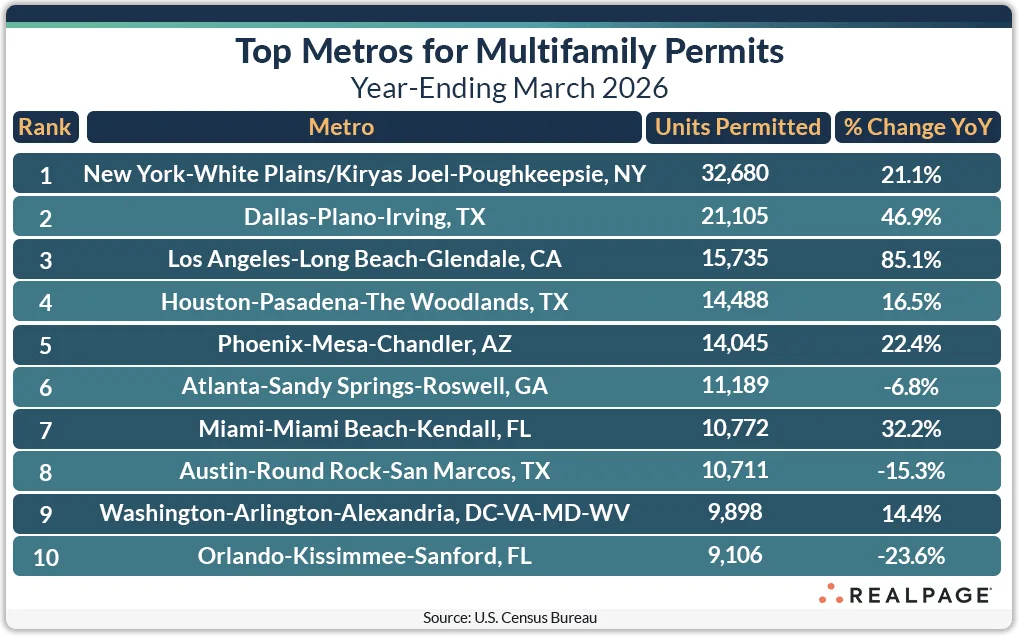
Miami also posted notable growth, with annual multifamily permitting rising roughly one-third to 10,772 units. Meanwhile, several formerly red-hot Sun Belt metros lost momentum. Orlando, Austin, and Atlanta all saw annual permitting totals decline, with Austin among the sharpest pullbacks nationally.
Outside the top 10, RealPage flagged Denver and Salt Lake City as markets to watch for potential oversupply risks after permitting activity jumped between 50% and 60%. Other fast-growing markets included San Jose, Colorado Springs, Madison, Wisconsin, and Fayetteville-Springdale-Rogers, Arkansas.
On the local level, Los Angeles accounted for more than 3,900 additional permitted units compared to the prior reporting period, the largest increase among major US permitting cities.
A Changing Multifamily Development Map
The latest numbers suggest multifamily development pipelines may be normalizing after years of concentrated Sun Belt expansion. Several markets that aggressively added supply during the pandemic apartment boom are now slowing permitting activity as absorption moderates and rent growth cools.
At the same time, coastal gateway cities appear to be regaining developer attention. Los Angeles joining New York near the top of national permitting rankings points to renewed appetite for dense, urban multifamily product despite ongoing affordability concerns and stricter entitlement processes. The shift also comes as apartment rents continue climbing nationwide after reaching their strongest growth levels in nearly two years.
Texas still dominated overall permitting activity, placing six markets among the nation’s top 20 permit-issuing places. New York also remained highly active, with Brooklyn and the Bronx ranking among the top permitting boroughs nationally.
Why It Matters
Permitting remains a key indicator for future apartment supply. Los Angeles multifamily permits jumped 85% year over year. Developers clearly expect renter demand to stay strong in supply-constrained markets.
The timing also matters for affordability. Los Angeles still faces severe housing shortages and high rent burdens. As a result, new apartment deliveries remain a major policy and economic priority. More permits alone will not solve the housing gap. However, they could help moderate rent growth if projects break ground on schedule.
The data also suggests capital may be shifting toward coastal metros again. For years, migration trends favored Sun Belt apartment markets. Now, developers appear more willing to pursue dense urban projects in gateway cities.
What’s Next
The next phase to watch is whether permits convert into sustained construction starts and deliveries. Elevated interest rates, labor shortages, and tariff-related material costs could still delay or reshape some proposed projects.
Still, RealPage’s starts data already points to accelerating activity in several Los Angeles submarkets, indicating at least part of the pipeline is moving forward. If permitting momentum continues through 2026, Los Angeles could emerge as one of the country’s most active multifamily development markets again after years of relatively subdued growth.