




- Headquarters relocations increased in 2025 compared to 2024, led by intrametro and cost-driven moves.
- Texas metros, especially Dallas–Fort Worth, remain top destinations for both interstate and intrastate HQ shifts.
- Hybrid work and portfolio optimization are driving smaller, more flexible office footprints.
- Technology and manufacturing industries lead in relocation activity, with more global firms establishing US headquarters.
Headquarters Relocations Gain Momentum
Headquarters relocations accelerated in 2025, outpacing the previous year as companies pursued cost savings and adapted to lasting changes in workspace needs. Intrametro relocations—moves within the same metropolitan area—rose sharply, especially in large US cities impacted by hybrid work.
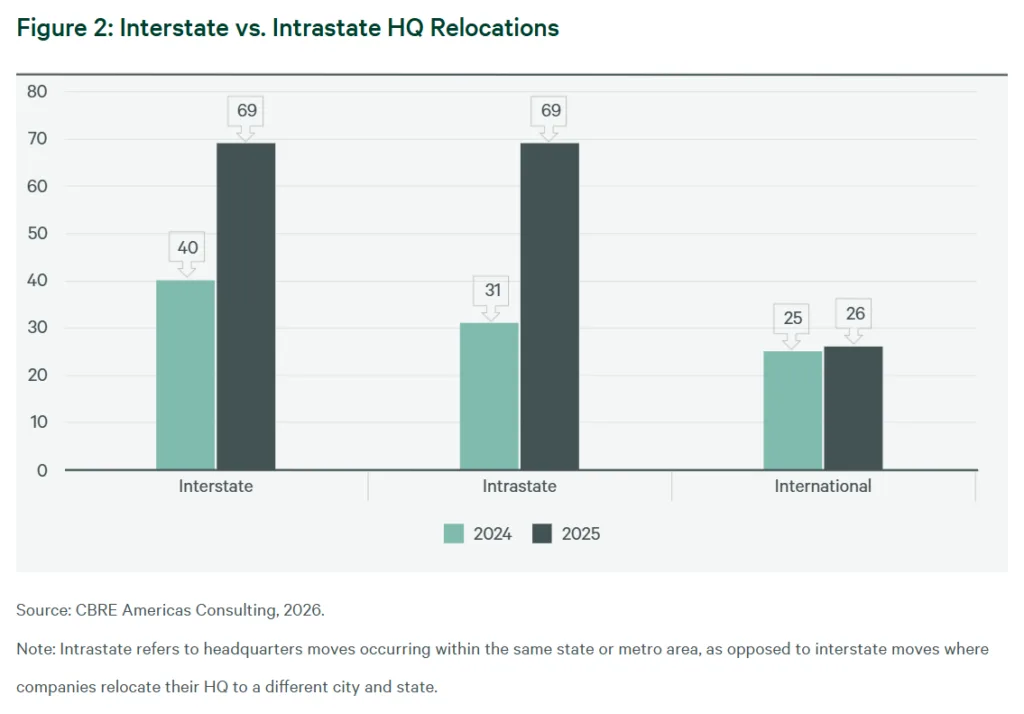
CBRE reports that companies are consolidating and right-sizing office footprints. They are choosing flexible layouts and multifunctional hubs that support hybrid collaboration while reducing total square footage. At the same time, the hub-and-spoke strategy is gaining traction. Tenants are shifting operations away from downtowns into smaller offices. These offices sit across multiple submarkets closer to where employees live.
Key Markets Experience the Largest HQ Shifts
Texas metros, led by Dallas–Fort Worth, continue to attract HQ relocations from higher-cost cities. These include San Francisco, Los Angeles, New York, and Chicago. DFW led the nation with 11 interstate or international HQ arrivals in 2025. It also recorded seven intrametro moves, as companies sought consolidation and modern amenities.
Other rising cities include Charlotte, Miami, Nashville, and Phoenix, buoyed by business-friendly policies, diverse talent, tax advantages, and better quality of life. In some Sun Belt markets, relocation momentum is also being reinforced by rising office demand tied to incoming corporate tenants and expanding regional headquarters footprints. Meanwhile, California’s major metros are net losers in HQ count, driven by high costs and regulatory burdens.
Get Smarter about what matters in CRE
Stay ahead of trends in commercial real estate with CRE Daily – the free newsletter delivering everything you need to start your day in just 5-minutes
Drivers Behind Headquarters Relocations
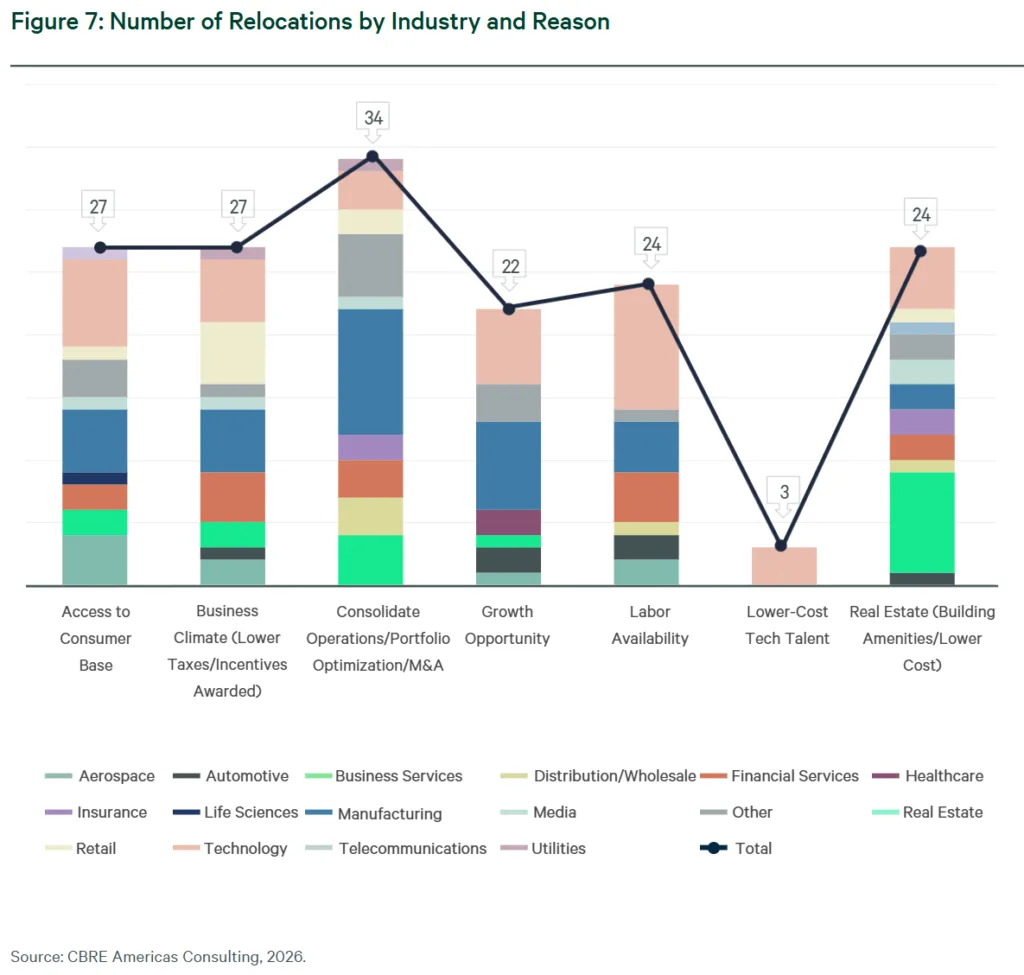
The top reasons for headquarters relocations in 2025 shifted toward consolidation, cost optimization, and business climate factors. Portfolio right-sizing, lower taxes, improved building amenities, and growing access to consumer bases rank as leading motivations, reflecting a focus on cost efficiency and talent strategy over simple tax arbitrage alone.
Hybrid work and labor availability—rather than purely lower-cost tech talent—now influence decisions, as firms seek markets with a skilled workforce and flexible real estate options.
Industry and Globalization Trends
Technology and manufacturing led HQ moves, followed by business and financial services. Many tech and manufacturing firms are escaping coastal hubs in favor of stable, affordable markets offering easier expansion and robust labor pools.
Twenty-six international companies established or relocated their headquarters to the US in 2025. The trend spanned finance, technology, and manufacturing, with New York, Dallas, Atlanta, and other major cities capturing new North American footprints for firms from Asia, Israel, and the UK.
Implications for CRE and Company Strategy
With 725 public HQ announcements tracked since 2018, the data shows a market actively redefining post-pandemic office needs. Companies are scrutinizing location strategies, office configurations, and talent access as hybrid work becomes entrenched. Cost efficiency, proximity to employees, and access to high-quality space are guiding the new era of headquarters relocations.