





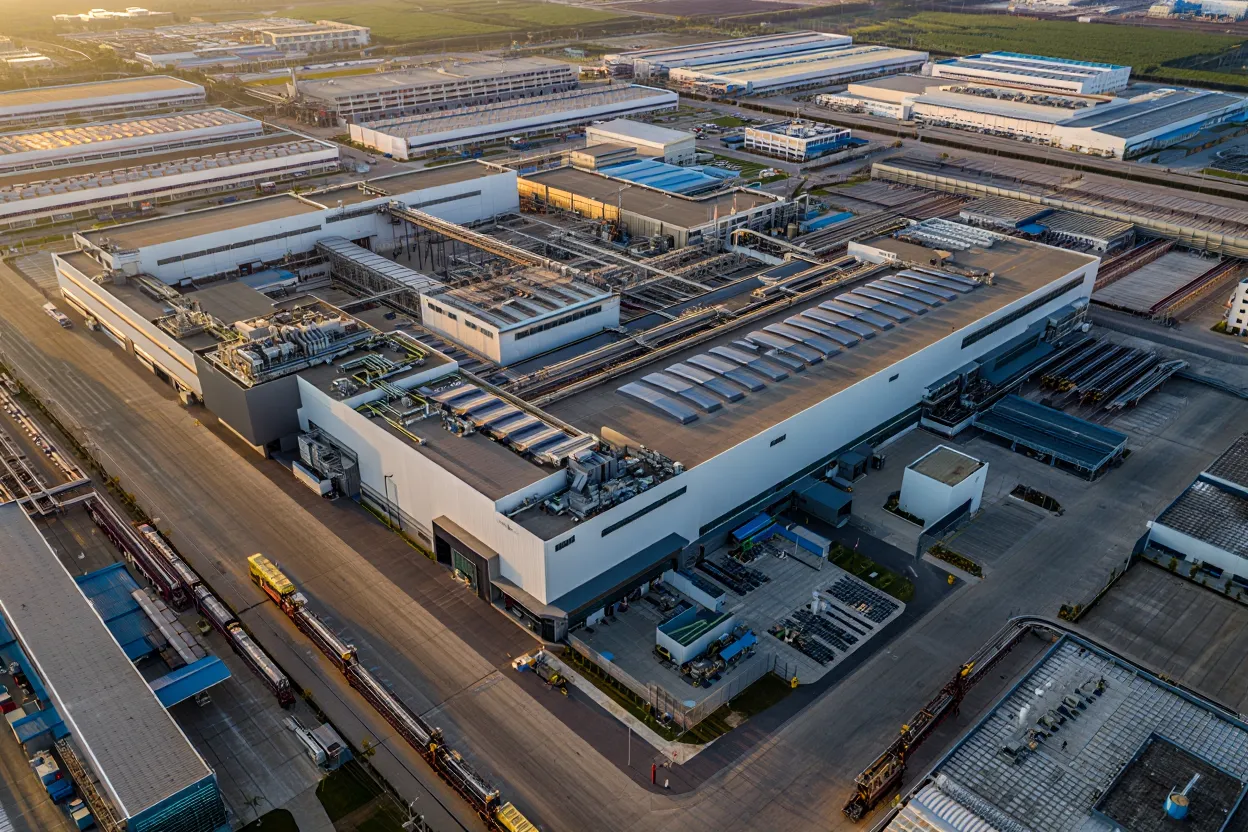



- Manufacturing boom sees US factory output rise 2.3% since January 2025 despite a 0.6% drop in factory jobs.
- AI-related demand drives growth, with strong gains in semiconductors and aerospace, while imports of related goods also surge.
- Tariffs have mixed effects, benefiting some sectors like metals but not spurring automotive or furniture output.
- Long-term gains depend on sustained investment and tapping into sectors aligned with market demand, not protectionism alone.
Factory Output Rises
The US is experiencing a manufacturing boom characterized by higher factory output despite declining jobs, reports The WSJ. Since January 2025, US manufacturing jobs have dropped by about 100,000, yet manufacturing production has risen 2.3% and shipments are up 4.2%. The increase is propelled by strong demand for products linked to artificial intelligence and aerospace, areas where the US maintains a competitive edge.
Demand, Not Tariffs, Drives Growth
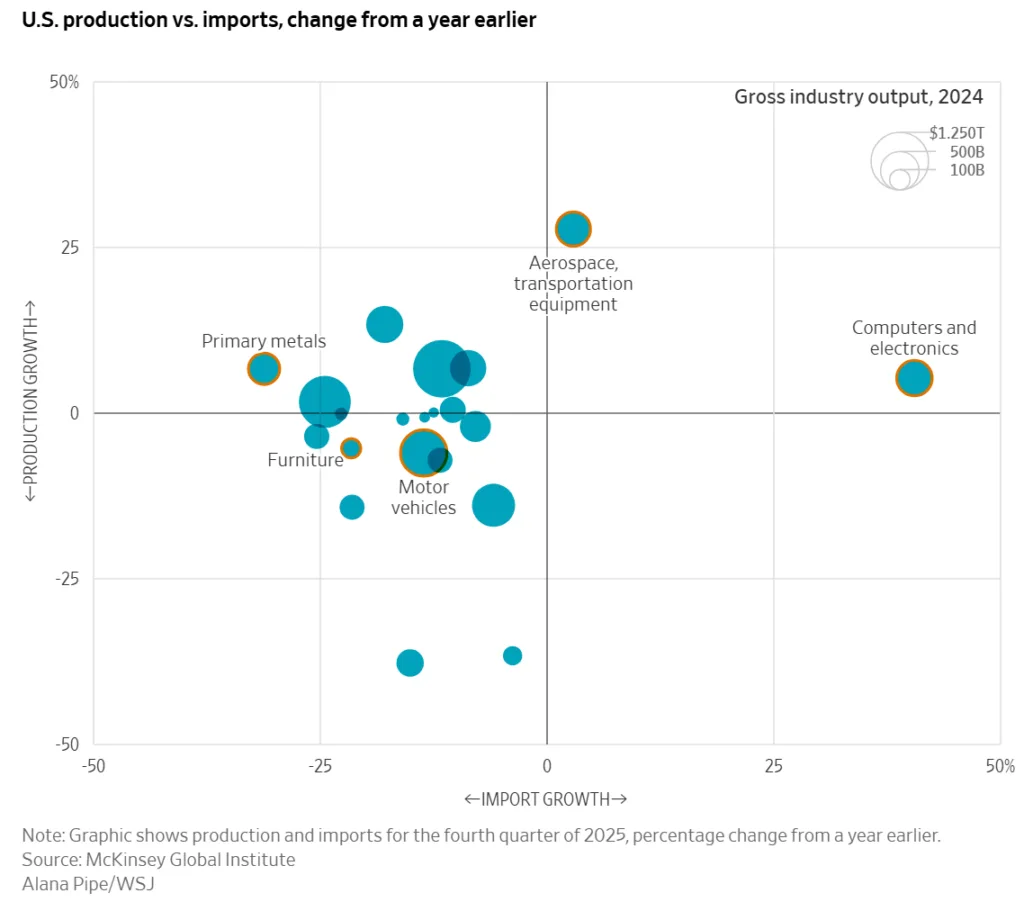
Recent gains are not directly attributable to tariffs or reshoring policies. Analysis by the McKinsey Global Institute shows that surging demand for AI-linked products. Such as semiconductors, cooling equipment, and power systems—has resulted in higher domestic production and imports alike. For example, domestic production of computer and electronics products increased 7.7% last year, but imports in that category grew even more, up 40.5%. A trend that mirrors how output gains are increasingly concentrated in select regions benefiting from advanced manufacturing investment.
Sectors Benefiting Most
Aerospace and AI-linked manufacturing stand out. Aerospace output—excluding trucks and cars—jumped 28% in 2025, supported by companies like SpaceX and a resurgence in jetliner deliveries. Vertiv, which manufactures data center infrastructure, saw its US regional sales climb by 42% in the Americas. These sectors benefited from demand and technology advances rather than direct tariff protection.
Mixed Results from Tariffs
Tariffs provided some industries, like primary metals, with a marginal advantage. Steel and aluminum production rose, but such protection also raised input costs for other manufacturers. For automotive and furniture, tariffs reduced imports but failed to drive domestic production higher. Ultimately, the US manufacturing boom highlights the value of aligning policy with market demand and investing in technology-driven sectors poised for long-term growth.
Get Smarter about what matters in CRE
Stay ahead of trends in commercial real estate with CRE Daily – the free newsletter delivering everything you need to start your day in just 5-minutes