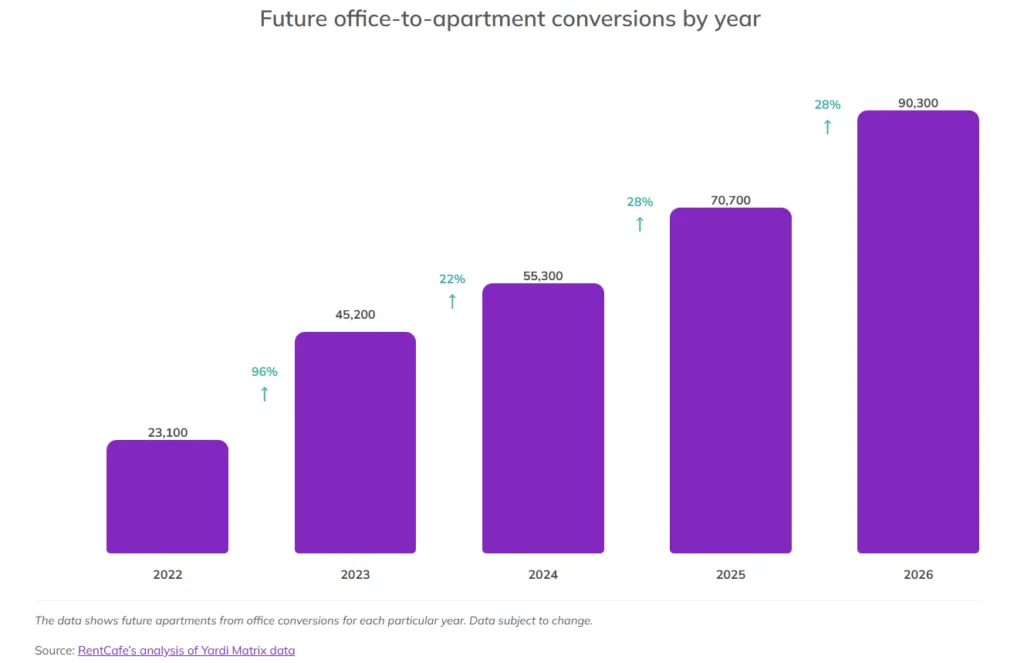




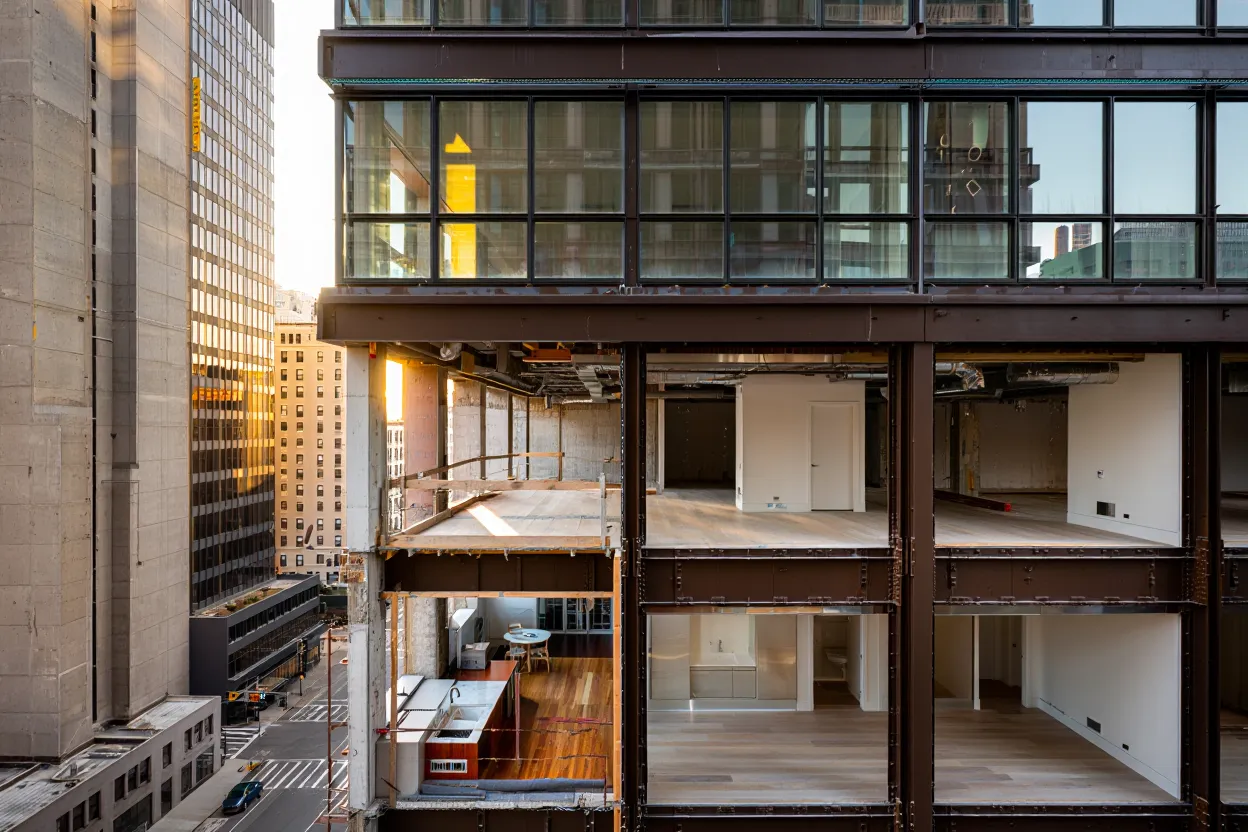
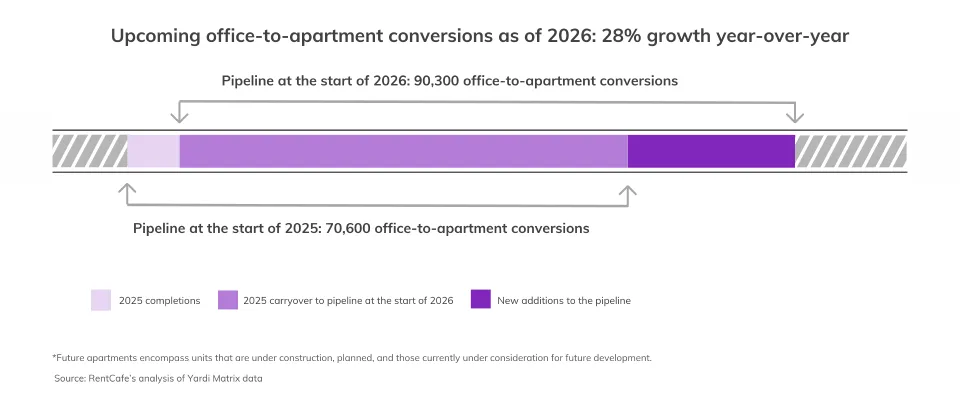
- Office-to-apartment conversion pipeline reached 90,300 units in early 2026, up 28% year-over-year.
- Conversions now account for 47% of all future adaptive reuse units nationwide.
- New York, Washington D.C., and Chicago lead in office conversions; Denver and Philadelphia see fastest growth.
- Conversion feasibility varies by building age, structure, and local policy incentives.
Office Conversions Set New Records
Office-to-apartment conversions are accelerating nationwide. Developers have 90,300 units underway as of early 2026, up 28% year over year, per RentCafe. These projects now anchor adaptive reuse and turn underused offices into needed housing, especially in dense urban markets. They also help ease shortages where demand remains strong.
The surge comes as office vacancy remains high, with physical occupancy in many buildings at just 50%–55%. Large metros like New York City, which added 143,000 residents in 2024, are seeing older office towers repurposed to meet housing demand.
Geographic Leaders and Growing Markets
New York leads the office conversions pipeline with 16,358 rental units, followed by Washington, D.C. (8,479) and Chicago (4,360). Newcomers Denver and Philadelphia posted gains over 100% year-over-year, signaling broader national momentum.
- In Dallas and Minneapolis, office conversions represent roughly 82% of adaptive reuse activity.
- Los Angeles, Atlanta, Cleveland, and Cincinnati round out the top 10 for pipeline size.
- The Northeast region leads with 28,552 future conversions; the South is closing in with 26,527 as activity spreads beyond traditional coastal centers.
Get Smarter about what matters in CRE
Stay ahead of trends in commercial real estate with CRE Daily – the free newsletter delivering everything you need to start your day in just 5-minutes
What’s Driving Office Conversions
Financial pressure—including $213B in office loans maturing by 2027—paired with government incentives, is spurring owners to repurpose surplus office space. At the same time, developers are exploring other reuse paths, including converting properties into infrastructure supporting artificial intelligence growth. Local interventions such as tax benefits, zoning reform, and expanded adaptive reuse ordinances in cities like New York, D.C., and Los Angeles further accelerate the trend.
Almost one-quarter of US office inventory—roughly 1.9B SF—is considered suitable for conversion, though actual feasibility depends on building age, structure, and location. Nationally, future conversions are increasingly targeting newer office stock, suggesting a shift away from only redeveloping historic assets.
Challenges and Outlook
While office conversions are growing, projects remain complex. Structural hurdles, high construction costs, financing issues, and unclear regulations can slow progress. Only buildings with the right layout and proximity to transit and amenities are viable candidates.
The ongoing boom shows that office conversions will stay central to urban housing policy. This trend is strongest in markets with limited space for new development. Adaptive reuse is now a mainstream strategy across major cities. As a result, office conversions will continue to reshape US city centers for years.