






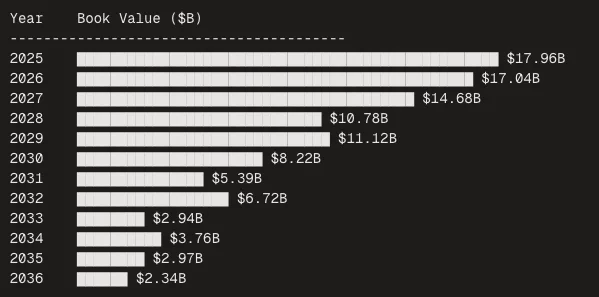
- Insurance companies will face $17B in office loan maturities in 2026, spread across 904 loans.
- Insurers are moving capital from office to multifamily and industrial sectors amid market volatility.
- Most insurer-originated office debt carried low fixed rates, creating refinancing challenges as rates have risen by over 80%.
- Losses are expected to be isolated, with conservative underwriting limiting insurer exposure overall.
Maturity Wall Builds for Insurers
US insurance companies are approaching a critical juncture with $17B in office loan maturities coming due in 2026. These maturities — across 904 loans — represent a decade of aggressive lending during a low-rate cycle. Atrium reports that as the sector faces higher rates, weakening fundamentals, and persistently high vacancies, insurers are navigating both legacy challenges and a rapidly changing market.
Rate Shock and Refinancing Pressure
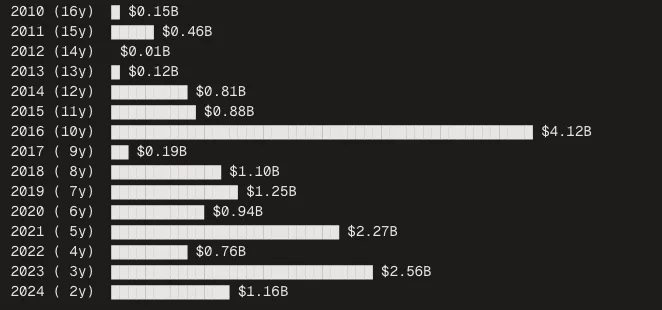
The bulk of maturing office loans were originated between 2014 and 2017 at fixed rates near 3.8%. New originations by insurers in late 2025 were averaging nearly 7%, causing large jumps in annual debt service, adding to broader refinancing pressures across commercial real estate as higher rates reset loan economics. Lower property values and rising vacancies mean many assets, such as Seattle’s Safeco Plaza, face negative equity at maturity, requiring equity injections, discounted payoffs, or extensions to resolve the loans.
Capital Shift to Multifamily and Industrial
Data shows US life insurers have steadily reduced their office exposure — from 25% of commercial mortgage allocations in 2020 to 18% by the end of 2024. Insurers are redeploying capital toward multifamily and industrial loans, responding to shifting credit risk and sector stability. Some loans are being refinanced with alternative lenders or retired early by strong sponsors with sufficient equity, as seen at Kilroy Realty’s Westside Media Center in Los Angeles.
Loan Extensions and Loss Mitigation
Insurers resolve some office loans through note sales or refinancing with new lenders. They also extend loans to manage exposure when debt markets remain tight. These extensions give borrowers more time to stabilize properties or raise equity.
Conservative loan-to-value underwriting protects most insurers from severe losses. As a result, experts expect losses to concentrate in weaker assets and struggling markets. They do not expect broad, systemic damage across insurer portfolios. Select properties benefiting from strong sponsors or regaining tenant demand may ultimately navigate the office maturity wall successfully.
Get Smarter about what matters in CRE
Stay ahead of trends in commercial real estate with CRE Daily – the free newsletter delivering everything you need to start your day in just 5-minutes