




- New York City has converted nearly 30M SF of office space into homes over the past two decades. The pace has accelerated since the pandemic.
- Developers are using design strategies like notches, light wells, and core reconfigurations to make previously unworkable buildings livable.
- 750 Third Avenue, one of the largest recent conversions, will bring 680 new apartments by 2029 through a major redesign led by Gensler.
- State and city policies are driving more conversions, with 8.8M SF of projects now in planning.
A Housing Solution Hidden in Office Space
After the pandemic, demand for office space fell sharply, per The WSJ. New York developers saw an opportunity in underused buildings. Instead of leaving them empty, they began converting them into housing.
Many office towers seemed unsuitable for apartments. Their wide layouts blocked natural light, and complex cores left little room for residential units. But architects started solving these issues using new design approaches.
A Second Wave of Conversions
New York’s first wave of office-to-residential conversions happened in the 1990s, mainly in Lower Manhattan. Falling property values and generous tax incentives helped fuel that transformation.
From 1995 to 2006, developers converted around 100 buildings. A second wave added another 125 projects between 2005 and 2019, especially in the downtown area. Conversion activity slowed between 2015 and 2019 as demand for office space rebounded.
That changed in 2020. The pandemic pushed vacancy rates over 20%, up from just 11.1% in 2019. The city responded with zoning changes, and the state passed new tax abatements to encourage more conversions.
Developers now have plans for 25 future projects totaling 8.8 M SF. Half of these conversions are in Midtown, including major sites like 5 Times Square, the former Pfizer headquarters, and 135 East 57th Street. As the market shifts, some are also reassessing how conversion projects fit into broader commercial real estate strategies amid rising uncertainty.
Get Smarter about what matters in CRE
Stay ahead of trends in commercial real estate with CRE Daily – the free newsletter delivering everything you need to start your day in just 5-minutes
The 750 Third Avenue Overhaul
SL Green, a major New York landlord, owns 750 Third Avenue, a 35-story office building from 1958. After Covid-19, its occupancy rate dropped to 17%. The company brought in Gensler, a global architecture firm, to explore a residential conversion.
Gensler found that the building’s podium was too wide for apartments to get enough light and air. The solution? Remove 25,000 SF from floors 4 through 17, creating a vertical notch facing Third Avenue.
That demolition freed up floor area. City rules allowed the team to shift that square footage to a new residential tower built on top. When completed in 2029, the project will include 680 apartments and resident amenities like a sundeck, fitness center, party room, and screening room.
Inside, the redesign relies on strategic layout choices. Bedrooms line the exterior walls, pulling in sunlight to meet building codes. Bathrooms sit near the interior core, where daylight isn’t needed. Beams stay hidden within the inner walls to preserve open layouts.
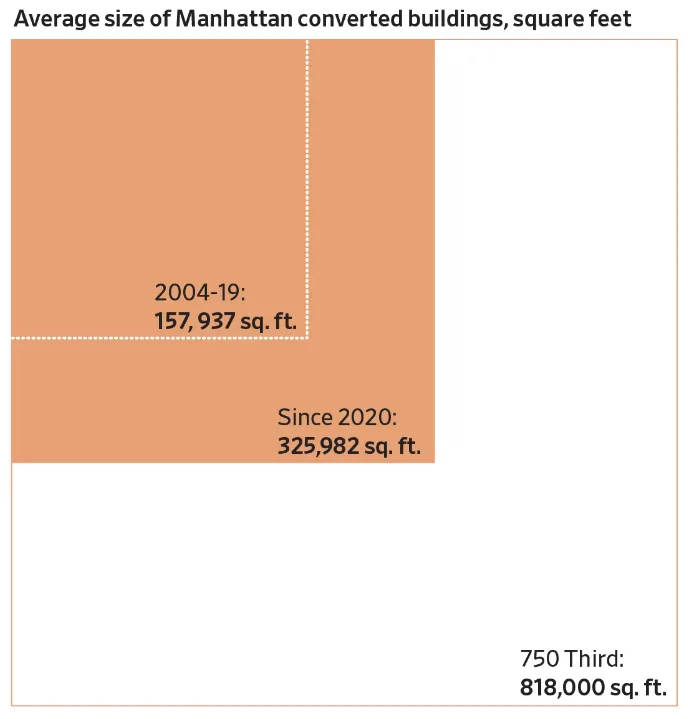
Just one notched floor creates space for 38 apartments. The building, now at 818,000 SF, ranks among the largest office-to-residential projects in Manhattan.
A Blueprint for the Nation
Even with this surge in conversions, New York’s 75 M SF of surplus office space remains a major challenge. But Manhattan’s unique advantage is its high rental demand. A one-bedroom apartment rents for a median of $4,500 per month, making these projects financially viable even when complex.
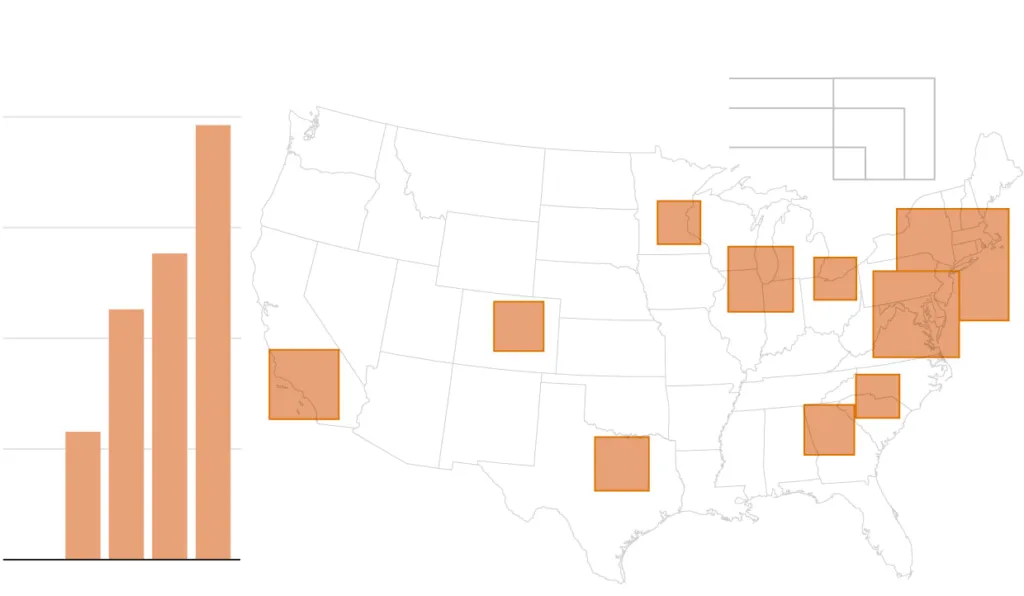
New York’s design strategies may soon spread nationwide. RentCafe reports that the US pipeline for office-to-residential units has grown from 23,000 in 2022 to 78,500 in 2025. Cities like Chicago, Los Angeles, Washington, and Denver are following New York’s lead.
Developers now have more real-world case studies that prove conversions can work. As architect Robert Fuller of Gensler said, “There are more case studies that prove the naysayers wrong.”
What’s Next
Expect more cities to borrow from New York’s evolving playbook. As office buildings lose relevance, developers will continue pushing design boundaries to solve the housing crisis and reshape downtown skylines.