



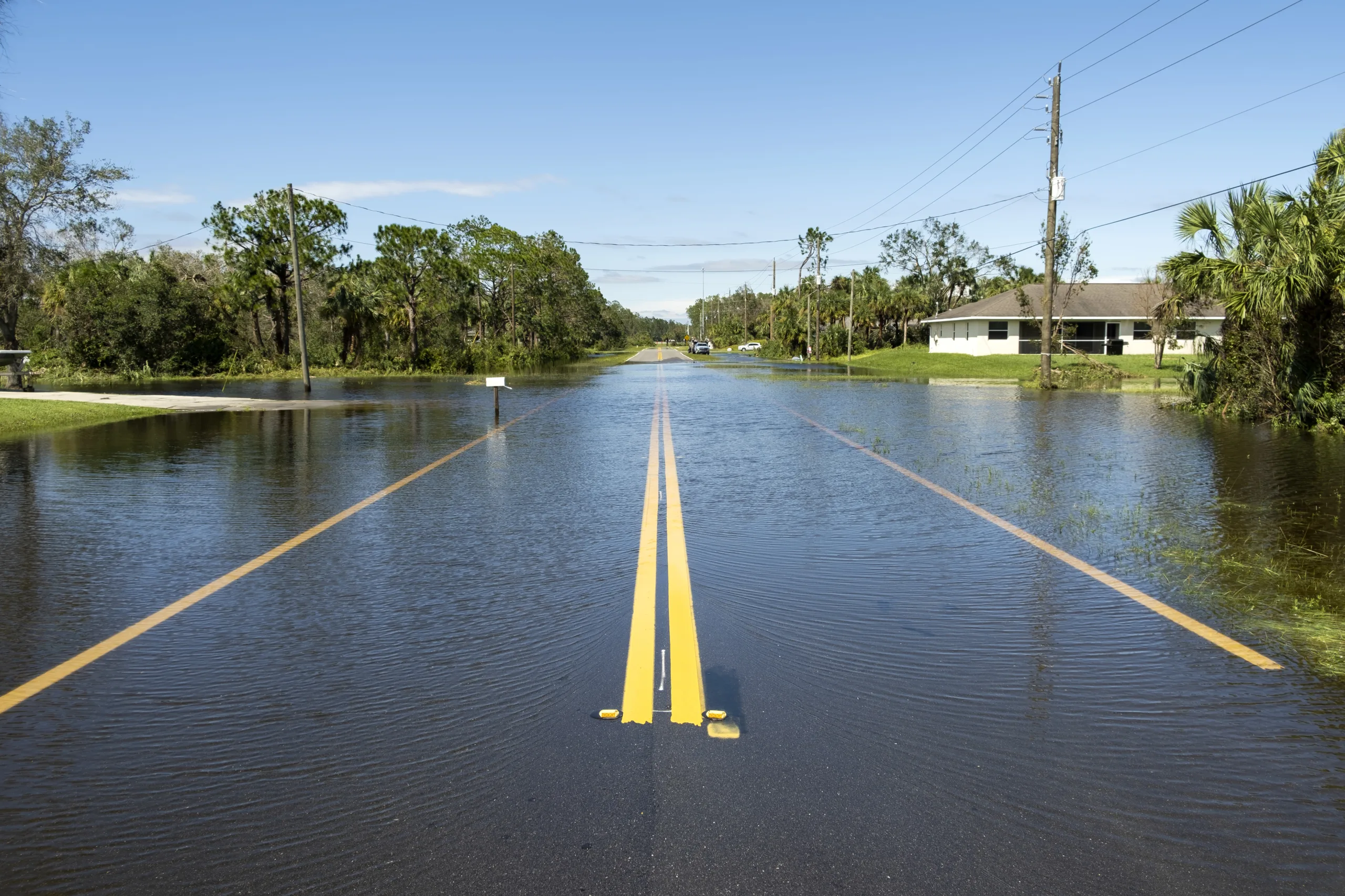
- The federal government canceled FEMA’s BRIC program, pulling back $882M in unspent grants and threatening over $4.5B in projects.
- Cities must now fund climate defenses on their own, delaying projects and driving up costs for developers and property owners.
- Real estate in high-risk areas faces rising insurance costs and reduced coverage as hazard mitigation efforts stall.
Federal Reversal Creates Major Funding Gap
Bisnow reports that the federal government has abruptly canceled the Building Resilient Infrastructure and Communities (BRIC) program. FEMA had awarded over $4.5B through BRIC since 2020 to help communities prepare for floods, wildfires, and other climate risks. However, the Trump administration now calls the program “wasteful” and has withdrawn $882M in unspent grants.
As a result, local governments are left scrambling. Many had already begun planning projects under the assumption that federal support would arrive.
Cities and CRE Owners Left to Absorb the Fallout
The change impacts projects in cities large and small. For instance, New York has 31 open BRIC-funded projects worth $224M. Seven more projects, valued at $138M, are at risk of losing their funding.
One of the most significant is the Seaport Coastal Resilience Project in Lower Manhattan. The city was counting on a $50M BRIC grant to protect the historic neighborhood from flooding. Without it, both public and private properties—including 91 buildings—could face higher insurance premiums and greater long-term risk.
Real Estate Faces Higher Costs and Less Coverage
The consequences stretch far beyond infrastructure. As extreme weather events become more common, commercial real estate insurance has become costlier and harder to obtain. NASA reports that the frequency of major weather events doubled in 2024 compared to previous decades.
J.P. Morgan estimates premiums will rise 80% by 2030. In unmitigated markets, insurance providers are tightening terms or leaving entirely. For example, South Florida already faces red-hot insurance conditions. Without hazard mitigation, the situation is expected to worsen.
Get Smarter about what matters in CRE
Stay ahead of trends in commercial real estate with CRE Daily – the free newsletter delivering everything you need to start your day in just 5-minutes
Local Governments Search for Alternatives
Some cities are trying to keep projects alive. In High Point, North Carolina, officials had applied for a BRIC grant to upgrade a century-old sewer system. The system regularly overflows during storms, leaking wastewater into local waterways.
High Point spent $2.7M in in-kind work and hired a consultant for its proposal. Yet the city received no official FEMA award before the program was scrapped. Now, leaders are exploring private partnerships and alternative financing to fill the gap.
Developers Brace for Delays and Added Risk
The uncertainty is also disrupting private investment. High Point’s Downtown area, near the planned sewer project, has seen more than $267M in public-private investment over the past four years. That growth may slow if infrastructure improvements stall.
David Becker of Time Equities said developers are now building higher insurance costs into their financial models. In Florida, landlords have seen insurance expenses climb 10% per unit annually since 2017. This trend is likely to continue.
Communities Rethink Funding Models
With federal dollars drying up, cities and their partners are testing new funding approaches. Rachel Collins of Business High Point is working with Duke University to explore options like state bond sales and braided capital stacks. These strategies combine public, private, and philanthropic funding into a single financing model.
Although promising, these alternatives are still in early stages. For many communities, solutions remain out of reach. Collins emphasized that without federal support, equitable climate development will be much harder to achieve.
Why It Matters
Climate risk is growing. Yet the loss of federal resiliency funding means many real estate markets are now more exposed. A 2024 US Chamber of Commerce study found that every $1 spent on mitigation saves $13 in post-disaster recovery.
Still, many communities are left empty-handed. “Climate change is still here,” said a spokesperson for New York’s Economic Development Corporation. “The funding to protect our neighborhoods should be too.”.
What’s Next
FEMA claims it has made $2B in other funding opportunities available. However, the agency has not confirmed how much has been allocated—or where. In the meantime, developers, insurers, and municipalities must adjust to a new reality: one where resilience comes at a higher cost, and federal help is no longer guaranteed.