



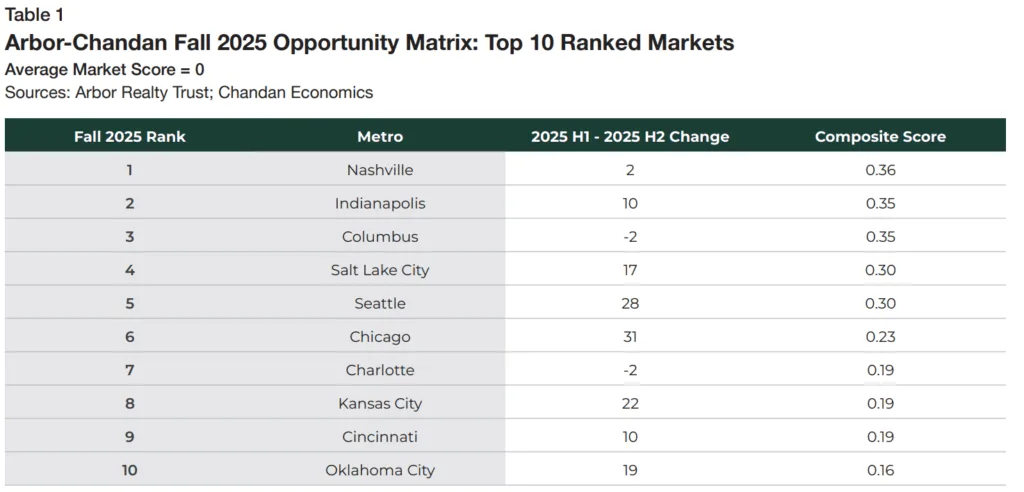
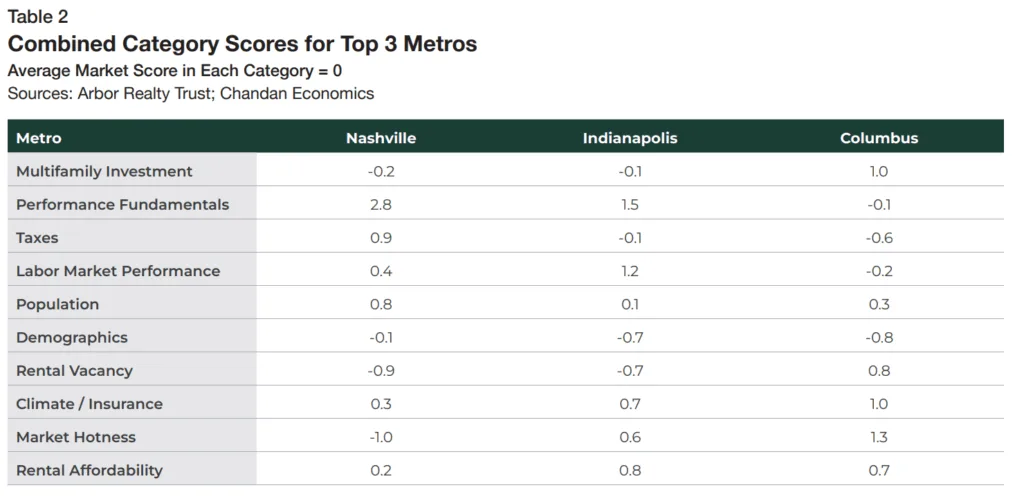
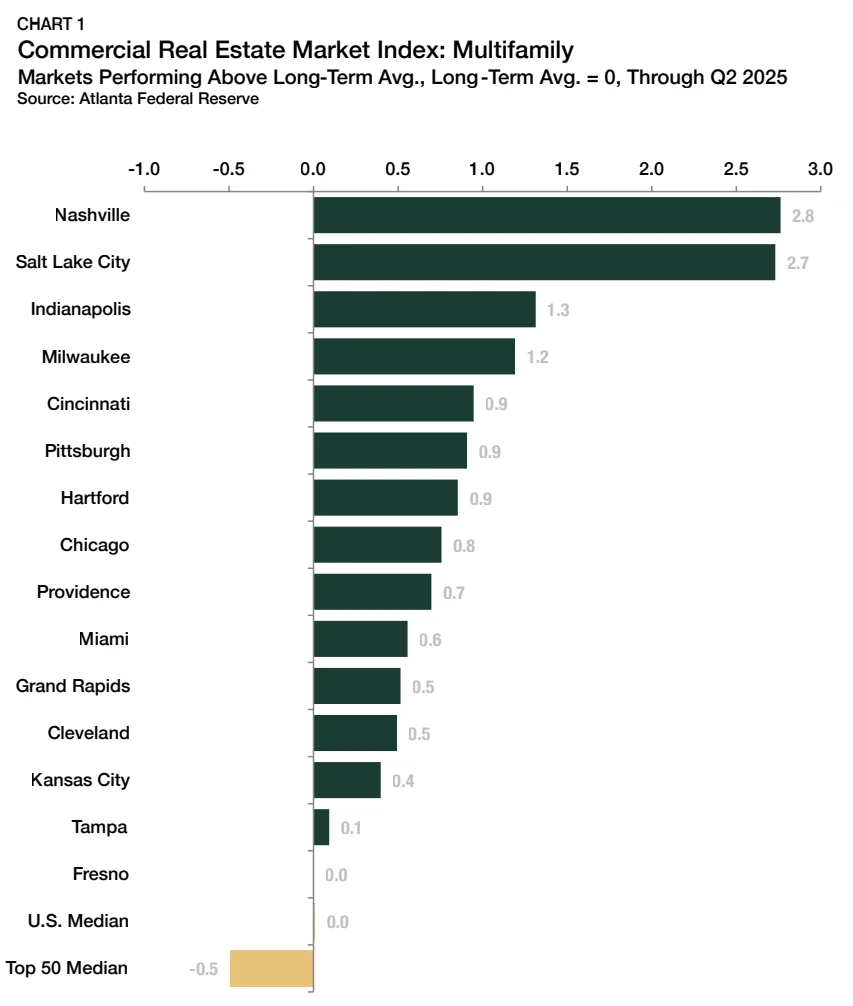
- Nashville, TN, is the top-ranked metro for multifamily investment in Fall 2025, due to strong job growth, population gains, and favorable tax policies.
- Midwest cities dominate the top 10, including Indianapolis (#2) and Columbus (#3), thanks to a mix of affordability, economic diversity, and rising rental demand.
- Multifamily pricing is recovering after a two-year dip, supported by steady rent growth and easing interest rate concerns.
- Rental affordability and tax climate are now key investment factors, with cities like Louisville and Oklahoma City offering strong value and upside.
Multifamily Momentum Builds
Multifamily real estate is regaining strength in 2025. After two years of declining values, prices are trending upward. This shift is driven by rising rents and a more favorable interest rate outlook. As a result, investors are returning to the market — especially in affordable and stable metros.
The Fall 2025 Arbor-Chandan Multifamily Opportunity Matrix evaluates the 50 largest US metros. It considers key factors such as cap rates, migration, affordability, and demographics. This season, smaller markets in the Southeast and Midwest are leading the pack.
Nashville Leads the Pack
Nashville ranked #1 overall in the latest Matrix. The city’s low unemployment rate, business-friendly tax policies, and young population make it highly attractive. Tennessee ranks eighth in tax competitiveness, which has fueled both job and population growth.
Moreover, Nashville’s economic base has diversified. While healthcare remains strong, tech, logistics, and finance sectors are rapidly expanding. Major firms like Oracle, Amazon, and Bridgestone have all invested in the region. Consequently, demand for housing continues to climb.
Midwest Markets Gaining Ground
Midwestern metros are proving to be high-performing, cost-effective alternatives to coastal cities.
- Indianapolis, IN, ranked second. Its economy is supported by healthcare, logistics, and manufacturing. Rental affordability remains high, and wage growth is outpacing regional peers.
- Columbus, OH, came in third. Its diverse job base and large-scale investments — including Intel’s chip plant — are driving long-term growth. Housing demand is rising, especially in suburban submarkets near new job centers.
Other Midwest cities such as Cleveland, Cincinnati, and Kansas City also performed well, boosted by strong fundamentals and lower operating costs.
Cap Rates Favor Secondary Markets
Cap rates — a key indicator of yield — are highest in secondary markets. These cities offer better cash flow potential than many coastal metros.
- Cleveland, OH, posted the highest average cap rate at 6.8%.
- Oklahoma City, OK and Minneapolis, MN followed at 6.6% and 6.3%, respectively.
These elevated yields are drawing increased investor attention.
Affordability Becomes a Driver
Rent affordability is shaping migration and investment trends. Lower-cost cities are attracting both residents and investors.
- Louisville, KY, ranked #1 for affordability. A household needs just $54,750 annually to rent without being cost-burdened.
- Oklahoma City, St. Louis, Birmingham, and Cleveland rounded out the top five.
By contrast, renters in New York, San Francisco, and San Jose must earn over $125,000 to avoid rent stress — more than twice the income needed in Louisville.
Tax Climate Shifts Capital Flows
State tax policy remains a critical influence on housing demand and investment. States with no income tax, such as Florida and Texas, remain top destinations for both people and capital. Meanwhile, New York and California continue to see outmigration due to higher tax burdens.
Spotlight: Nashville’s Growth Story
Nashville has transformed into one of the most dynamic metros in the US. Over the past 10 years, its population grew by 21.5% — over three times the national average.
The city’s youthful population and strong job market are key drivers of housing demand. In fact, Nashville has the third-highest share of renters under 35 in the sample. Employers like HCA, Vanderbilt, and Oracle are expanding, and infrastructure upgrades are reshaping the skyline.
New developments, such as Oracle’s East Bank campus, are accelerating investment across the metro. With rising rental demand and stable fundamentals, Nashville offers long-term appeal for investors. Its combination of yield, stability, and growth potential makes it one of the top multifamily opportunities in the country.
Looking Ahead
As 2025 winds down, optimism is returning to the multifamily sector. Rent growth has resumed in 70% of national markets. Interest rates are stabilizing. For investors, metros that balance affordability, growth, and livability will be best positioned in the next cycle.
Going into 2026, competition for renters will likely intensify. Therefore, understanding local dynamics will be essential. Cities like Nashville, Indianapolis, and Columbus could lead the way.
Get Smarter about what matters in CRE
Stay ahead of trends in commercial real estate with CRE Daily – the free newsletter delivering everything you need to start your day in just 5-minutes