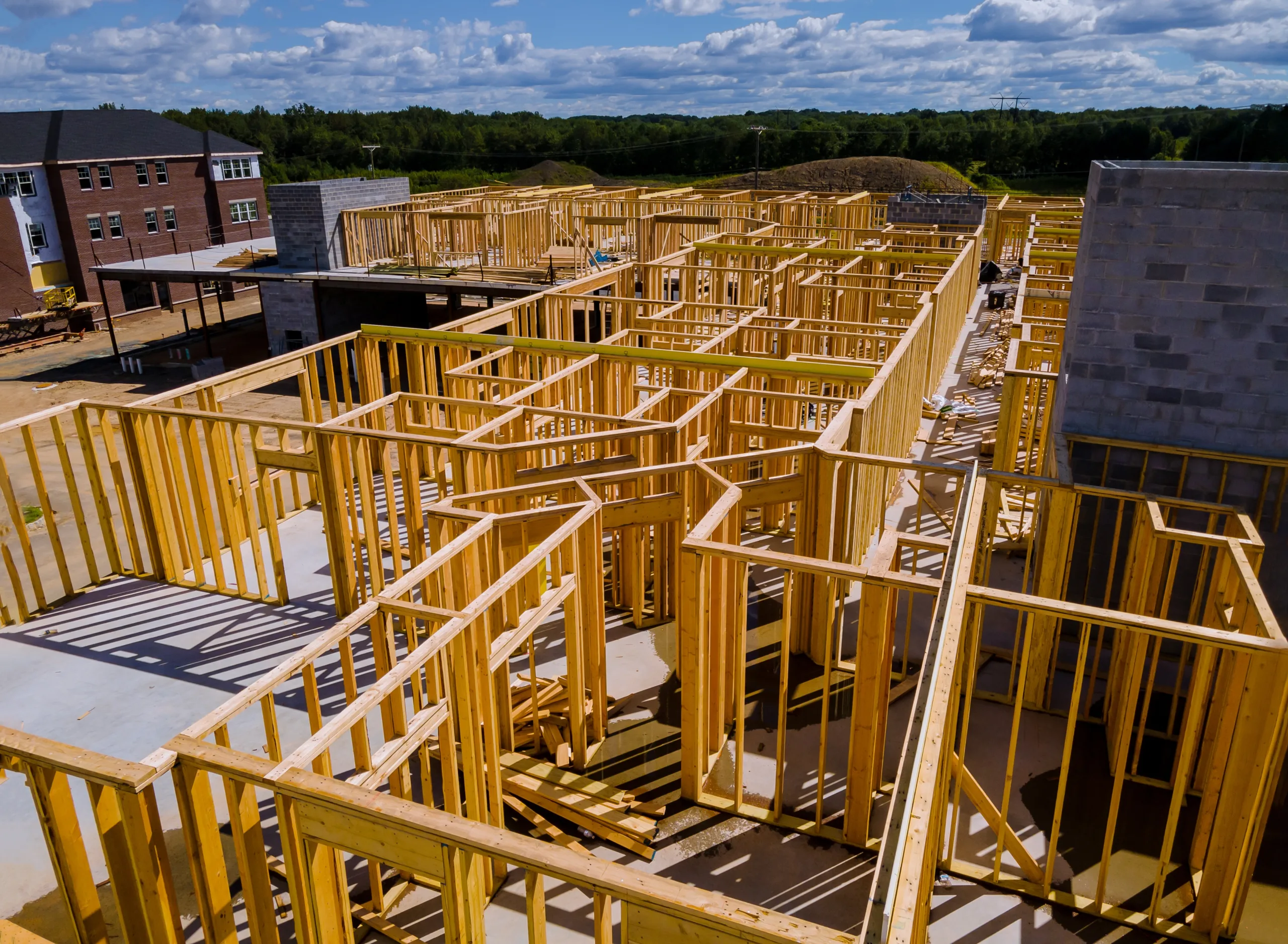


Sun Belt Vacancies Surge as Multifamily Market Shows Geographic Splits
National vacancy reached 7%, but submarkets reveal a widening gap between strength and softness.

Jordan B.
December 17, 2025
Together with

Good morning. While the U.S. multifamily market appears stable at first glance, fresh Q2 data reveals mounting vacancy risks in key Southern and urban submarkets.
Today's issue is sponsored by InvestNext—Tap into the $7T retail capital opportunity by learning what investors expect, and how to win them.
🚨Join CRE Daily + JBREC for a free webinar TODAY at 2:00 pm ET breaking down the 4Q25 Fear and Greed Survey. We’ll unpack what’s driving investor sentiment, where capital’s flowing, and what to watch next.
CRE Trivia 🧠
Which large U.S. metro has the lowest median home price?
(Answer at the bottom of the newsletter)
Market Snapshot
|
|
||||
|
|
*Data as of 12/16/2025 market close.
Regional Divide
Sun Belt Vacancies Surge as Multifamily Market Shows Geographic Splits
The national rental vacancy rate may be holding steady, but beneath the surface, regional imbalances are redrawing the multifamily investment map.
Regional vacancy divide: According to Q2 Census data, the U.S. rental vacancy rate edged up to 7.0% from 6.6% a year earlier, signaling slow normalization rather than a sharp decline. Nationally, things look steady, but sharper divides are emerging between urban, suburban, and regional markets.
Sun Belt slowdown: The South posted a 9.0% vacancy rate—the highest in the country—signaling the Sun Belt boom may have overshot demand. Years of aggressive building and capital inflows are now outpacing absorption, with operators facing slower lease-ups, more concessions, and softer rent growth.

Urban pressure points: Vacancy in principal cities rose to 7.6%, ahead of suburbs (6.7%) and non-metro areas (5.8%). Heavy new supply and Class A competition are squeezing urban operators, while suburban and rural assets—especially workforce and garden-style—are holding up better.
Steady in the Midwest: The Midwest’s 6.6% vacancy sits below the national average, reinforcing its role as a defensive play for investors. The Northeast (5.2%) and West (5.7%) remain tight, supporting stronger rents but with higher costs and political risk—offering a clear contrast to oversupplied Sun Belt markets.
➥ THE TAKEAWAY
Time to rebalance: The Sun Belt’s “can’t-miss” status is fading as investors pivot to a barbell strategy—balancing growth markets with stable plays in the Midwest and on the coasts. With national averages masking local risks, hyperlocal analysis is now key to underwriting.
TOGETHER WITH INVESTNEXT
Raising Capital from Retail Investors

$7 trillion in retail capital is entering alternatives through 2032, and many of these investors are looking to invest in real estate.
Yet most mid-sized GPs are still focused on institutional fundraising.
Here's what the data shows:
-
70% of high-net-worth individuals would invest in alternatives if properly approached
-
Retail investors represent only 16% of alternative AUM despite holding 50% of global investable assets
-
Industry reports show mid-market funds demonstrating stronger momentum with retail investors than mega-funds
The firms that understand retail investor expectations and act accordingly will capture new capital sources while those that don’t will miss out on this massive opportunity to acquire new investors.
Download your copy of How to Capture Retail Investor Capital
*This is a paid advertisement. Please see the full disclosure at the bottom of the newsletter.

✍️ Editor’s Picks
-
Sentiment shift: CRE sentiment dipped in Q4 2025 as investors brace for more distress in 2026, even as capital access improved for the first time.
-
Smart money: AI, domestic capital, and REIT consolidation are reshaping real estate in 2026 as investors prioritize scale, efficiency, and tech-driven strategies.
-
Cost pressure: Builder sentiment ticked up to 39 in December but stayed negative amid high costs and weak buyer demand.
-
Mortgage pipeline: Blackstone is partnering with Harvest Capital on a $1B loan program to acquire small-balance commercial mortgages.
-
Debt bet: Nuveen closed its $650M U.S. Strategic Debt Fund, its first in real estate credit, betting big on transitional assets and floating-rate senior loans.
-
Cancelled capacity: Despite skyrocketing demand from data centers, nearly 2,000 U.S. power projects totaling 266 GW were canceled in 2025.
-
Studio strain: Hackman Capital, the largest independent soundstage owner, faces rising vacancies, stalled expansions, and debt restructuring as Hollywood’s production slowdown deepens.
-
Soft jobs: U.S. payrolls rose just 64,000 in November while unemployment climbed to 4.6%, signaling continued labor market cooling.
🏘️ MULTIFAMILY
-
Zoning reform: A new bipartisan House bill aims to boost housing supply by easing zoning, streamlining reviews, and updating multifamily financing rules.
-
Exit strategy: Aimco is selling a 1,495-unit Chicago-area multifamily portfolio for $455M to LaTerra and Respark as part of its REIT liquidation strategy.
-
Mile-High dip: Denver’s apartment market is cooling fast, with rising vacancies and rent cuts driven by oversupply and slowing demand.
-
Canal comeback: Midwood landed $200M to build a 276-unit tower, joining a surge of residential projects reshaping the Brooklyn neighborhood.
-
Flip flop: Home-flipping profits have plunged to their lowest margin since 2008, with ROI dropping to 23.1%.
🏭 Industrial
-
Smaller wins: Industrial vacancies are rising overall, but smaller properties in low-supply markets are outperforming large-format warehouses.
-
Manufacturing gap: U.S. reindustrialization efforts face delays due to a lack of ready sites, power capacity, and skilled labor—key real estate gaps that threaten national goals.
-
IOS upside: IOS remains a hot asset class with strong demand, tight supply, and growing institutional interest despite broader industrial headwinds.
-
Development dip: Industrial construction has dropped to its lowest level since 2018, setting up a potential rebound in 2026.
🏬 RETAIL
-
Steady spend: Holiday retail sales rose 4.5% in November, staying on pace with NRF forecasts as shoppers focused on value and delayed some spending into December.
-
Dining demand: Food and beverage tenants drove 20% of new retail leases as dining out stays strong despite inflation.
-
Streaming spaces: Netflix is transforming empty department stores into immersive “Netflix House” attractions, blending entertainment, retail, and fandom to help revive U.S. malls.
-
Shopping spree: Space Investment Partners buys Woodland Hills’ Topanga Gateway for $64M, continuing its push into grocery-anchored retail.
-
Legal closure: Whitestone REIT received $33.4M from a bankruptcy settlement with Pillarstone, helping it close a long-standing legal dispute.
-
Delivery shift: Target is revamping its fulfillment strategy to speed deliveries and cut costs amid declining sales.
🏢 OFFICE
-
Recovery rising: San Francisco and New York are driving the office rebound with rising demand, lower vacancies, and renewed tenant confidence.
-
Musical chairs: DraftKings and Wayfair are swapping Boston office spaces in a move that downsizes footprints but signals renewed corporate commitment to the city’s struggling office market.
-
Space reuse: Office-to-residential are slowing D.C.'s vacancy rise, removing over 1.5M SF of inventory and positioning the market as a potential value play for investors.
-
Lease lifeline: The University of Miami signed a 42K SF office lease at Flagler Station, anchoring a distressed property recently acquired by Hamilton Development.
-
Apple anchors: Apple spent $216M to buy two Cupertino buildings it has long leased, reinforcing its $1.1B investment spree and long-term commitment to Silicon Valley office space.
-
Office climb: Office visits hit a post-2019 high in November, led by Miami and rebounding tech hubs.
🏨 HOSPITALITY
-
Casino countdown: New York has greenlit three major casino projects—Metropolitan Park, Bally’s at Ferry Point, and Resorts World—pending independent oversight.
-
Mountain milestone: Hyatt opened its first-ever hotel in Montana's Gallatin Valley, bringing upscale amenities and signature service to the Bozeman airport area.
A MESSAGE FROM CENTERCHECK
Store-Level Sales Data. Powered by Credit & Debit Card Records.

Retail sales is the most important factor when considering the economic performance, and best management direction, of commercial properties, shopping centers, malls and storefronts.
Rely on key economic performance to build a more productive retail real estate portfolio.
*This is a paid advertisement. Please see the full disclosure at the bottom of the newsletter.
📈 CHART OF THE DAY

According to the Q4 2025 Fear & Greed Index, investors indicate that Multifamily values will fall slightly in the first half of 2026.
CRE Trivia (Answer)🧠
Pittsburgh is the large U.S. metro with the lowest median home price, with a median listing price of about $250,000, according to Realtor.com.

You currently have 0 referrals, only 1 away from receiving Multifamily Stress Test Model.
What did you think of today's newsletter? |
1