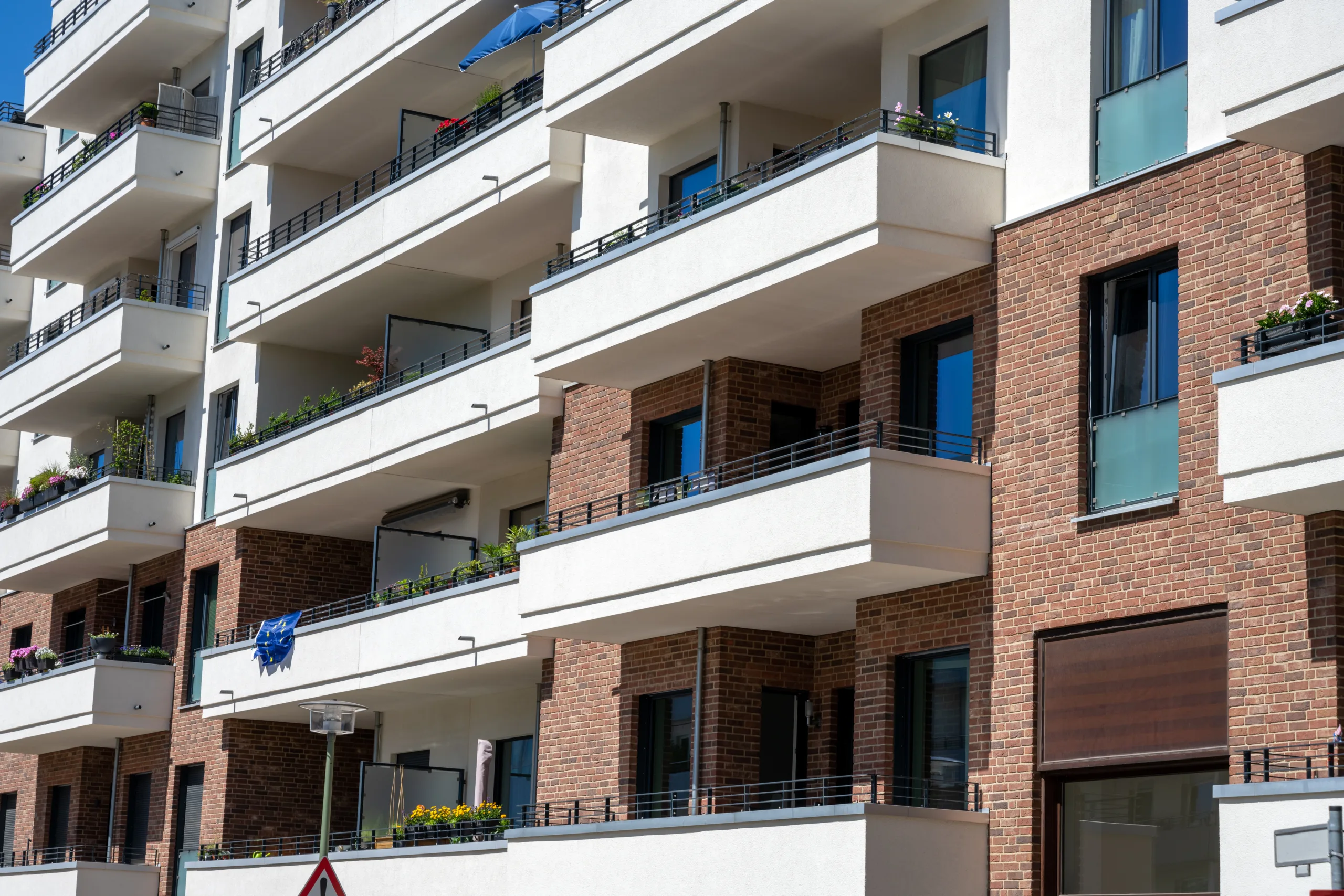


GSE Cap Hike Could Be a Tailwind for Multifamily Investors
New GSE caps raise total multifamily lending capacity to $176B for 2026, marking a 20% increase in available agency financing.

Jordan B.
January 05, 2026
Together with

Good morning. With $176B in lending power now available, GSEs are stepping into 2026 as a stabilizing force in multifamily finance. The focus remains on mission-driven and affordable housing.
Today’s issue is sponsored by Altus Group—the gold standard for CRE valuation, analysis, and insight.
📥 ICYMI: We’re launching two new publications this week: CRE Daily Texas and CRE Daily New York. Sign up for a weekly roundup of local deals, trends, and more.
CRE Trivia 🧠
How long does it typically take for changes in market rents to fully show up in CPI shelter inflation?
(Answer at the bottom of the newsletter)
Market Snapshot
|
|
||||
|
|
*Data as of 1/2/2026 market close.
Mission Money
GSE Cap Hike Could Be a Tailwind for Multifamily Investors
Fannie Mae and Freddie Mac just got a $30B boost in lending power, and it's already shifting how deals get done in the multifamily market.
The numbers: FHFA raised 2026 multifamily caps for Fannie and Freddie from $73B to $88B each—totaling $176B, a 20.5% increase. At least half must support mission-driven housing, while workforce housing remains uncapped.
Not so new: Both agencies have been operating near the $88B pace since mid-2025, making the cap hike more formalization than shift. The added $30B is seen as real, deployable capital amid rising deal flow.
Two models: Freddie Mac’s in-house approach allows faster execution, especially for affordable, stabilized deals. Fannie Mae relies on its DUS network, offering broader reach but slightly slower processing.
Who benefits: Deals with clear affordability—rent-restricted or income-limited—gain the most. Stabilized and late lease-up assets also benefit, though in oversupplied Sun Belt markets, life companies and debt funds may still offer more competitive terms.
Timing still matters: A Las Vegas lease-up initially struggled to gain agency traction but closed on better terms once affordability targets were met—showing how timing can determine agency interest.
Unlocking a bottleneck: Although the cap increase won’t fix the sales slowdown on its own, it eases a key bottleneck by reducing the risk of agencies hitting year-end limits. With pipelines full and demand strong, the added capacity could help push more deals across the finish line in 2026.
➥ THE TAKEAWAY
Lending with purpose: The cap hike isn’t just about numbers—it’s about predictability. For affordable deals, it adds certainty and eases year-end pressure. For others, it signals that capital is flowing and GSEs are staying competitive where they perform best.
TOGETHER WITH ALTUS GROUP
Transform how you model, monitor and manage your CRE portfolios and funds

ARGUS Intelligence combines ARGUS Enterprise, the industry standard for commercial real estate valuation and cash flow modeling, with powerful tools to enhance CRE performance management, analytics and benchmarking.
This platform allows you to:
-
Build detailed cash flow and valuation models across all asset types
-
Run sensitivity analysis on various inputs such as yield rates, growth rates and other modeling assumptions
-
Track income, expenses, validate assumptions, and drill from property to lease level to uncover the factors driving change in value
Hear from leading CRE professionals on how ARGUS Intelligence has improved their investment decision-making.
*This is a paid advertisement. Please see the full disclosure at the bottom of the newsletter.
✍️ Editor’s Picks
-
Underwrite deals in minutes: Eliminate hours of manual modeling — AI underwriting that helps you parse, analyze, and identify the most promising multifamily deals in record time. (sponsored)
-
Rebound year: After a year of economic headwinds, 2026 is shaping up for unexpected growth, fueled by tax cuts, strong consumer spending, looser Fed policy, and even a boost from weaker tax enforcement.
-
Breaking records: Private wealth investors have propelled alternative investments past the $1T mark, with 2025 setting a new annual fundraising record.
-
Stability surprise: Despite fears of an exodus under NYC's new socialist mayor, strong leasing, retail, and luxury housing data show the city’s commercial real estate market is holding firm.
-
Policy standoff: The Fed’s December rate cut exposed deep internal divisions over whether to fight inflation or support a weakening labor market, highlighting a growing clash over its dual mandate.
-
Capital comeback: CRE markets are set for a busier 2026, with more liquidity, extended loans, renewed foreign investment, and office assets regaining momentum amid stable pricing and rising sales volume.
🏘️ MULTIFAMILY
-
Mission money: A $30B boost to Fannie and Freddie’s 2026 multifamily caps is already reshaping deal flow, favoring affordable and stabilized assets.
-
Texas trade: Related Cos. sold a four-property multifamily and BTR portfolio in Midland, Texas, part of a larger $300M 2014 acquisition.
-
Investor confidence: Senior housing cap rates declined in 2025 as investor interest deepened, with most expecting further compression in 2026.
-
Price slide: Condo prices saw their biggest drop since 2012, hit by rising fees, weak demand, and tighter financing, while single-family homes remain more resilient.
🏭 Industrial
-
Sunbelt growth: EastGroup Properties is riding strong demand for last-mile industrial space in high-growth Sun Belt markets.
-
Midwest magnet: Indianapolis' industrial market saw construction slow and vacancy rise in 2025, but investor appetite surged, with sales nearly doubling YoY.
-
Storage spree: Alterra IOS expanded its national footprint with the acquisition of 11 industrial outdoor storage properties.
-
Scaling up: Toyo Co. is ramping up its solar module production at its new U.S. flagship plant in Humble, Texas, where it recently launched operations with plans to expand from one to five assembly lines.
🏬 RETAIL
-
Retail hotspots: NYC’s prime retail corridors like SoHo and Madison Avenue are seeing strong demand and rising rents, but tight supply is making quality space harder to secure.
-
Lease leverage: Retailers are rethinking lease strategies in 2026, using tools like kick-out clauses, sales-based rent, and bankruptcy renegotiations to gain flexibility and reduce risk.
-
Retail reinforced: Brand Street and Barings acquired The Shops at Evergreen Walk in South Windsor, CT, with plans to enhance the center through upgrades and community-focused events.
-
Mall momentum: Rising occupancy and renewed investor interest are driving a mall rebound, signaling a broader retail recovery in 2026.
-
Powered by caffeine: Coffee chains outpaced the broader dining sector in 2025 by blending convenience, regional expansion, and cultural hype.
🏢 OFFICE
-
Office reset: The office sector showed early signs of stabilization in 2025, but experts predict a slow, uneven recovery in 2026.
-
Houston rising: Houston’s top five office projects under construction total nearly 1.6M square feet, led by MD Anderson’s medical expansion and anchored by mixed-use and corporate developments.
-
Selective strength: U.S. office development slowed sharply in 2025, but coworking gained ground, adding 22M SF and topping 2% market share.
🏨 HOSPITALITY
-
Beach buy: Hyatt has sold its $2B Playa Hotels real estate portfolio to Tortuga Resorts, retaining long-term management deals and preferred equity.
-
Expansion backed: The Oneida Nation secured a $440M revolving credit facility to fund its $370M Turning Stone Resort expansion, fast-tracking new hospitality, events, and medical amenities set to debut in 2026.
📈 CHART OF THE DAY

A widening gap between public and private valuations is setting the stage for rising apartment cap rates and falling private asset values in 2026.
CRE Trivia (Answer)🧠
About 12–18 months, due to annual leases, landlord rent smoothing, and the CPI’s built-in six-month measurement lag.

You currently have 0 referrals, only 1 away from receiving Multifamily Stress Test Model.
What did you think of today's newsletter? |