


Chicago, Miami and Wichita Are the Hardest Places to Rent in America
Nationally, apartment competition cooled slightly to start 2026. In a growing list of cities, it's moving the other direction fast.

Jordan B.
April 10, 2026
Together with

Good morning. The national rental market technically cooled in early 2026 — but with 13 renters competing for every available apartment in Miami and Chicago posting its biggest competitiveness jump in years, the headline number isn't telling the whole story.
Today’s issue is sponsored by Real Property Captive. Turn your insurance expense into an asset by using the same Fortune 500–backed structure to build equity in your own captive, secured by A-rated carriers.
With over 100M SF in shopping centers and mixed-use assets, Kimco Realty Corporation continues to be the biggest grocery-anchored landlord in America.
Ross Cooper joins Jack Stone and Alexander B. Gornik to pull back the curtain on how Kimco Realty builds long-term relationships with the biggest grocers.
CRE Trivia 🧠
What U.S. city has the highest percentage of renters versus homeowners among major metros?
(Answer at the bottom of the newsletter)
Market Snapshot
|
|
||||
|
|
*Data as of 4/8/2026 market close.
rental competitiveness
RentCafe: Chicago, Miami and Wichita Are the Hardest Places to Rent in America
Nationally, apartment competition cooled slightly to start 2026. In a growing list of cities, it's moving the other direction fast.
By the numbers: RentCafe's Rental Competitiveness Index dipped from 75.7 to 75.4 — technically an improvement. But 92.7% of apartments are still occupied, six renters are competing for every vacancy, and 62.8% of tenants are renewing rather than moving. The slight loosening at the national level is masking some very tight local markets.
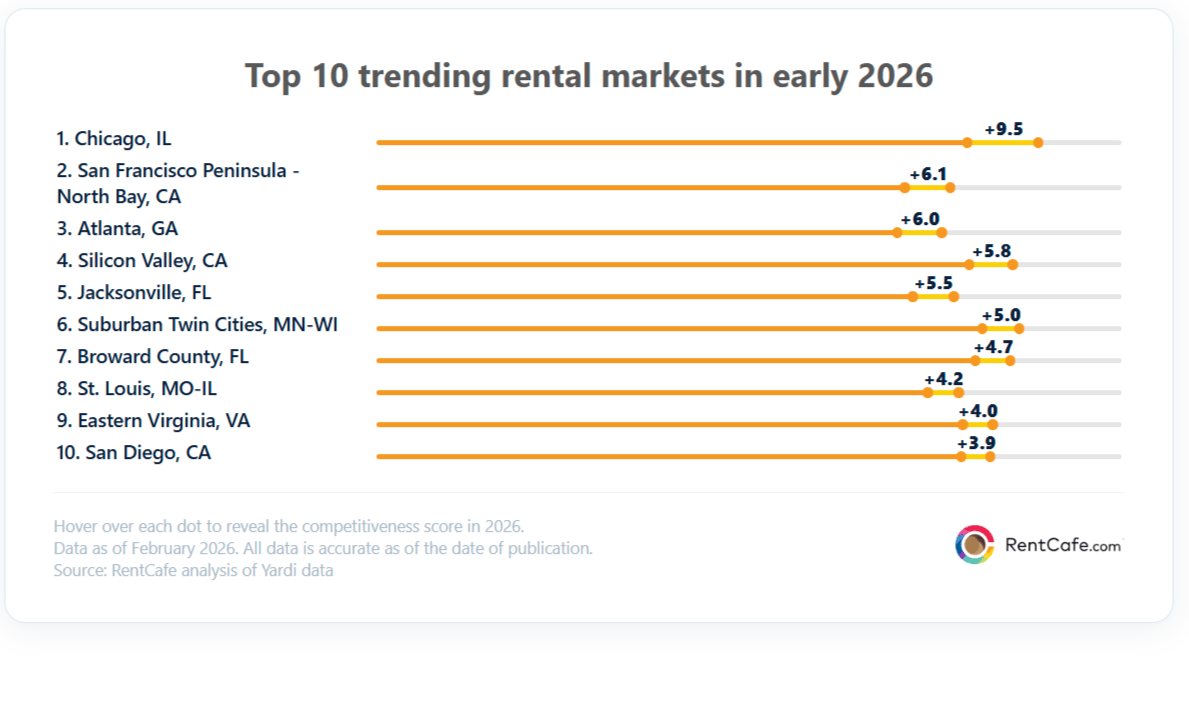
Chicago is the story: The Windy City posted the largest year-over-year competitiveness jump of any major metro — a 9.5-point surge — pushing it to the second-hottest large rental market in the country behind Miami. Nine renters are now competing for every available unit, apartments are filling in 38 days, and new construction has nearly disappeared with only 0.06% of stock newly built. Atlanta and San Francisco are also heating up fast, both driven by supply slowdowns colliding with demand rebounds.
Miami remains in a league of its own: Thirteen renters per vacancy. 96% occupancy. A 71.4% lease renewal rate. Even with 1.51% new construction — the highest of any competitive market — Miami can't build its way out of the squeeze. High-income relocations, international buyers testing the rental market, and a chronic shortage of mid-priced product have locked the city into the top spot for over a year.
The Midwest continues to gain traction: Six of the top 10 most competitive large markets are in the Midwest, led by Chicago and Suburban Chicago. The region's average RCI of 81.2 outpaces every other part of the country including the Northeast and Florida. Low construction, affordable rents relative to coastal markets, and a 68.1% lease renewal rate — second only to the Northeast — are combining to make Midwestern apartments some of the hardest to find in America.
Texas's small markets are heating up fast: Amarillo gained 10.6 RCI points to reach 89.7, with apartments filling in just 27 days and zero new units added. El Paso jumped 10.5 points with 11 renters now competing per vacancy. And Wichita — the biggest mover of any market in the country — surged 14.6 points to an RCI of 91.0, higher than every large market in America, with apartments filling in 32 days and a 72.1% renewal rate.

➥ THE TAKEAWAY
Why it matters: The national rental market cooling narrative is real but incomplete. Underneath the modest improvement in the headline number is a bifurcated market — where Sun Belt cities that overbuilt are genuinely loosening, and supply-constrained markets from Chicago to Miami are tightening in ways the averages don't capture.
TOGETHER WITH REAL PROPERTY CAPTIVE
Institutional Owners Have Used Captive Insurance For Decades

Institutional owners don't buy insurance the way you do. They own it through a captive insurance structure and turn unused premiums into retained profit.
Until now, that access stopped at $2B AUM.
Real Property Captive opens the same lender-approved structure to portfolios between $100M and $2B—a first of its kind.
Tired of your carrier and broker circling every renewal? They shouldn't be profiting from your clean record. That money belongs to you.
*This is a paid advertisement. Please see the full disclosure at the bottom of the newsletter.
✍️ Editor’s Picks
-
Deal of the day: Ares Management is acquiring Whitestone REIT in a $1.7B all-cash deal at $19/share (12% premium), taking the 56-property, 4.9M SF retail portfolio private.
-
Save on your taxes: Real estate investors choose Cost Segregation Guys for IRS-defensible studies that maximize depreciation deductions and slash tax liability. Get 25% off your next study today! (sponsored)
-
Olympic boost: Downtown LA investment is ramping up ahead of the 2028 Olympics, with developers targeting billions in new projects to capitalize on long-term demand.
-
Tech funding: Construction firms are backing startups with capital and workspace, accelerating innovation across a sector historically slow to adopt new technology.
-
Nothing slips through the cracks:Tenant requests. Maintenance. Owner questions. When communication gets scattered, things get missed. Cardinal keeps everything tracked in one place, so nothing gets lost. (sponsored)
-
Data backlash: Wisconsin voters approved a referendum with ~66% support, requiring public approval for major development incentives amid rising opposition to large-scale data centers
🏘️ MULTIFAMILY
-
Bridge financing: MF1 Capital provided $81.4M in bridge debt to acquire and refinance a two-property multifamily portfolio in suburban Baltimore, supporting upgrades and expansion into the Mid-Atlantic.
-
Loan shift: Multifamily loans at 55% LTV may soon price like a different asset class, as widening spreads reflect growing lender caution and evolving risk profiles.
-
Harlem plan: NYCEDC unveiled a long-awaited East Harlem proposal expected to deliver hundreds of new housing units, including affordable housing, as part of a broader neighborhood redevelopment push.
🏭 Industrial
-
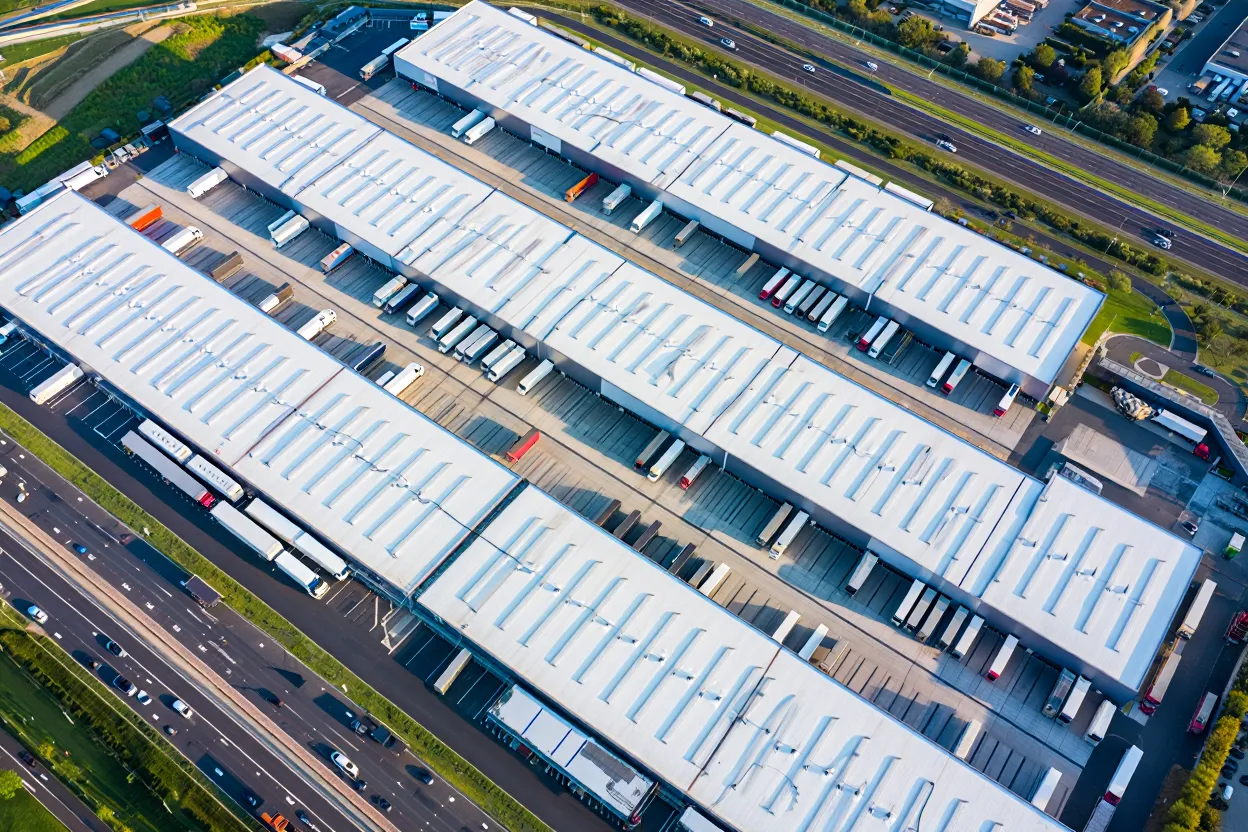
Leasing outlook: U.S. industrial leasing is projected to hit nearly 1B SF in 2026 (+5% YoY), with renewals making up 35%+ of activity as occupiers prioritize flexibility and efficiency.
-
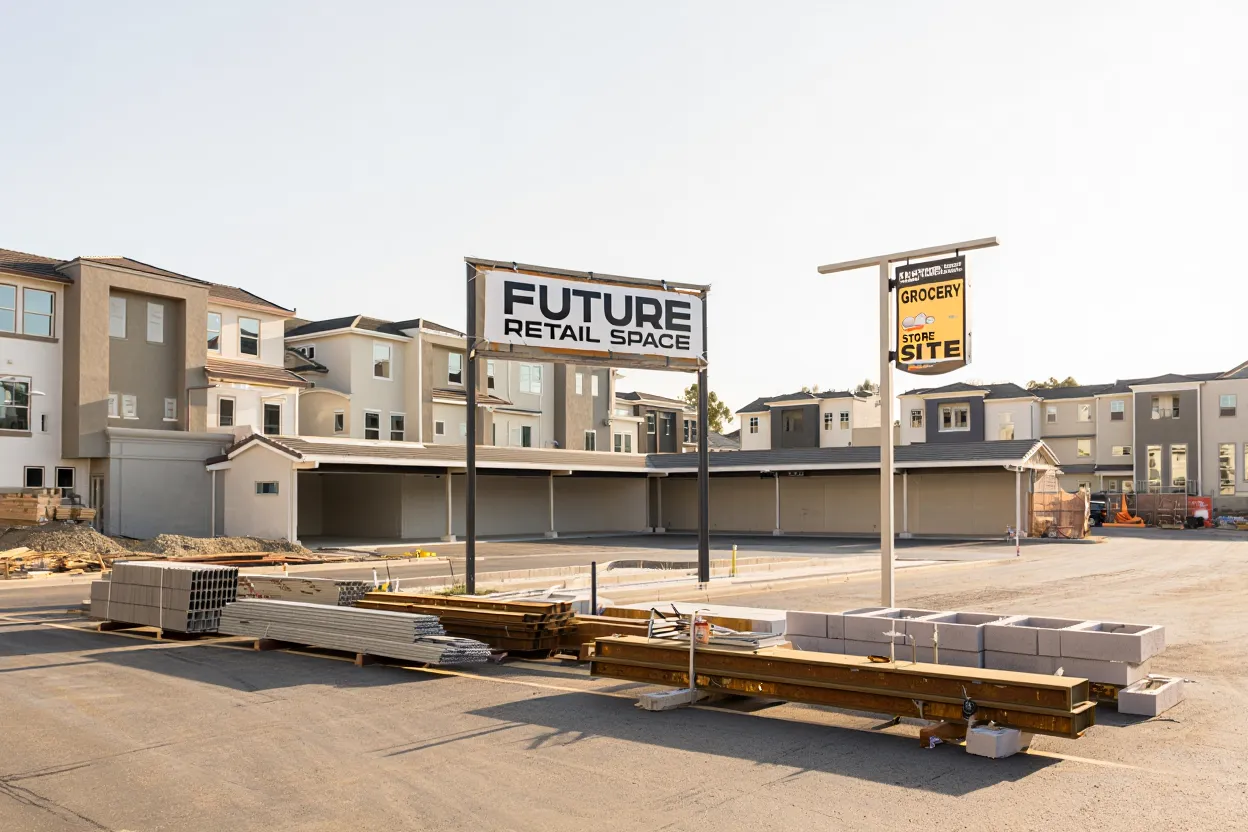
Policy clash: A proposed California bill could force grocery stores into underserved areas, drawing pushback from industry groups warning it may distort development economics.
-
Logistics JV: Prologis and Caisse de dépôt et placement du Québec formed a $1B European logistics joint venture, underscoring continued institutional demand for global warehouse assets.
-
Warehouse fire: A massive blaze destroyed roughly 1.2M SF of industrial space in the Inland Empire, tightening supply in one of the nation’s most critical logistics hubs.
-
SLC financing: A joint venture secured construction financing for a new Salt Lake City industrial project, adding to growing development pipelines in secondary logistics markets.
🏬 RETAIL
-
Brooklyn trade: SYU Properties sold three Bed-Stuy retail buildings at 1101–1123 Myrtle Avenue for $35.5M, nearly tripling its $11.4M purchase price, in a long-awaited exit.
-
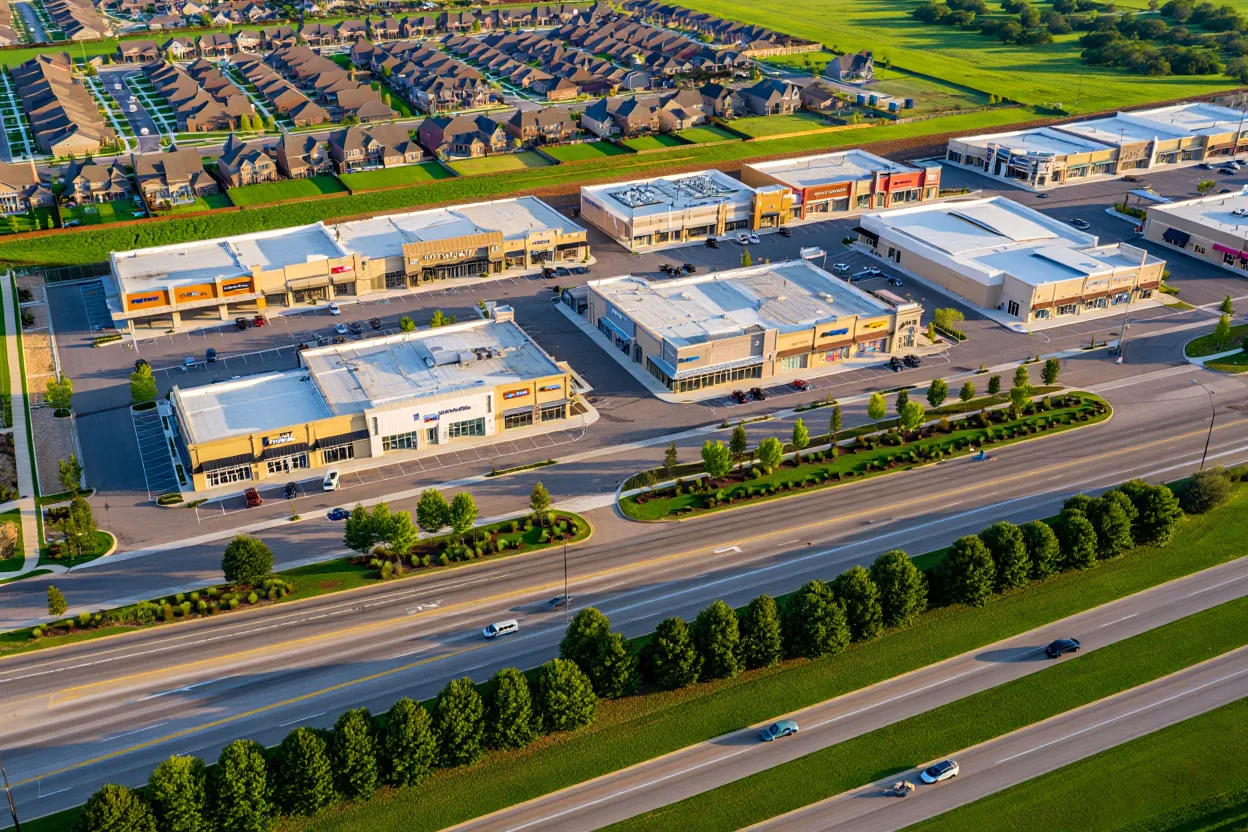
Retail leader: Dallas leads the nation with nearly 7M SF of retail under construction—~5M SF already pre-leased—accounting for ~10% of the U.S. pipeline.
🏢 OFFICE
-
Cost pressure: Office fit-out costs rose roughly 5.5% YoY to $149/SF, even as construction activity slows, with 79% of contractors expecting further increases.
-
Office underuse: Federal agencies are widely underutilizing office space, with most failing to meet the government’s 60% occupancy benchmark.
-
SEC probe: Paramount Group is facing a deepening SEC investigation tied to accounting and disclosures, adding pressure to an already challenged office landlord.
-
Conversion bet: Metro Loft and Quantum Pacific are planning a $100M office-to-resi conversion at 1 Whitehall Street, continuing the Financial District’s adaptive reuse push.
🏨 HOSPITALITY
-
Hotel refresh: A former Holiday Inn near Universal Orlando was converted into a 390-room Courtyard by Marriott with 134 suites and 11K+ SF of meeting space following a multimillion-dollar renovation.
-
Refi deal: A 160-key Residence Inn in Walnut Creek secured a $26M, 5-year fixed-rate refinancing, replacing a floating-rate bridge loan as hospitality fundamentals improve.
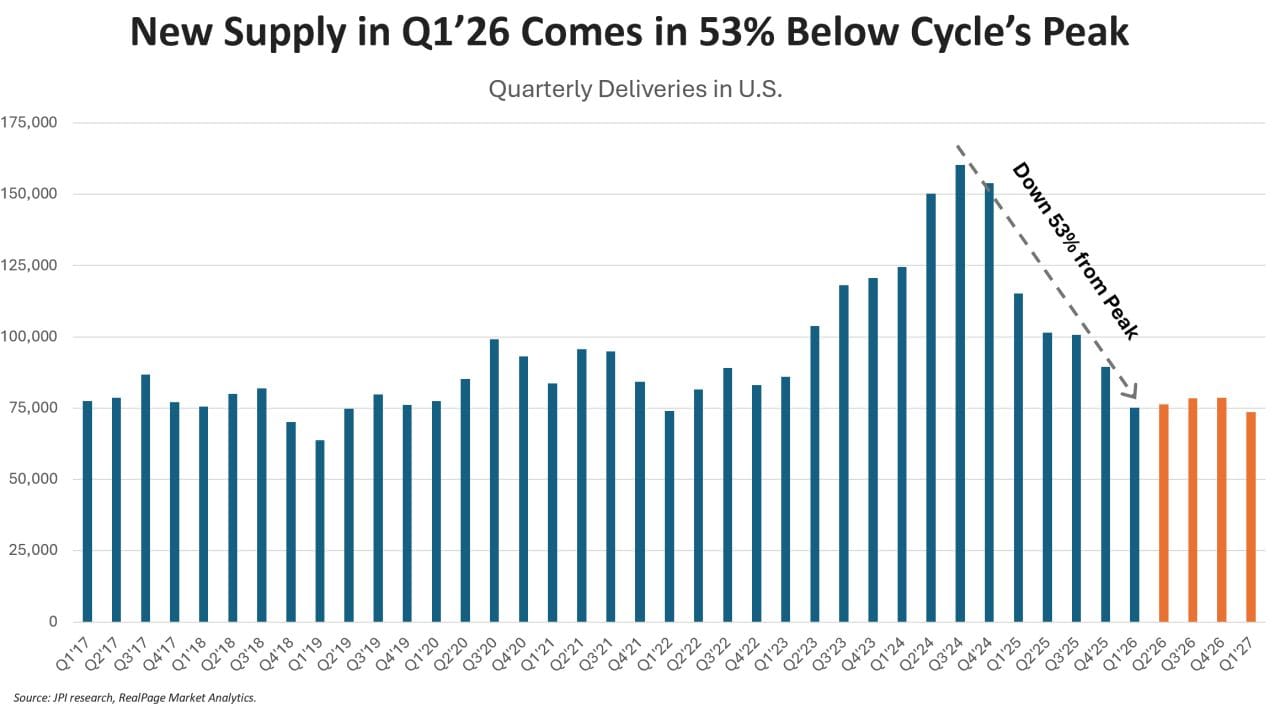
📈 CHART OF THE DAY
CRE Trivia (Answer)🧠
New York City — where approximately 68% of residents rent their homes, making it one of the least owner-occupied major cities in the country. By comparison, the national homeownership rate hovers around 65%, meaning New York essentially flips the national ratio on its head.
More from CRE Daily
-
📬 Newsletters: Stay ahead of the market with local insights from CRE Daily Texas and CRE Daily New York.
-
🎙️Podcast: No Cap by CRE Daily delivers an unfiltered look at the biggest trends—and the money game behind them.
-
🗓️ CRE Events Calendar: The largest searchable calendar of commercial real estate events—filter by city or sector.
-
📊 Market Reports: A centralized hub for brokerage research and market intelligence, all in one place.
-
📈 Fear & Greed Index: A fully interactive sentiment tracker on the pulse of CRE built in partnership with John Burns Research & Consulting.

You currently have 0 referrals, only 1 away from receiving Multifamily Stress Test Model.
What did you think of today's newsletter? |