



2025 Rental Market Recap: Demand Soars, Availability Shrinks Across Major Metros
RCI scores climbed across major metros as renters stayed put and supply lagged behind demand.

Jordan B.
December 08, 2025
Together with

Good morning. In 2025, more renters stayed in place while fewer new units came online in several major markets. The result was intensified competition across both large cities and small metros.
Bad diligence kills good deals. That’s why leading CRE teams rely on Blew for nationwide surveying, environmental, and property assessments—so surprises don’t show up at closing.
CRE Trivia 🧠
Which company operates the largest number of retail stores in the U.S.?
(Answer at the bottom of the newsletter)
Market Snapshot
|
|
||||
|
|
*Data as of 12/05/2025 market close.
Competitive Markets
2025 Rental Market Recap: Demand Soars, Availability Shrinks Across Major Metros
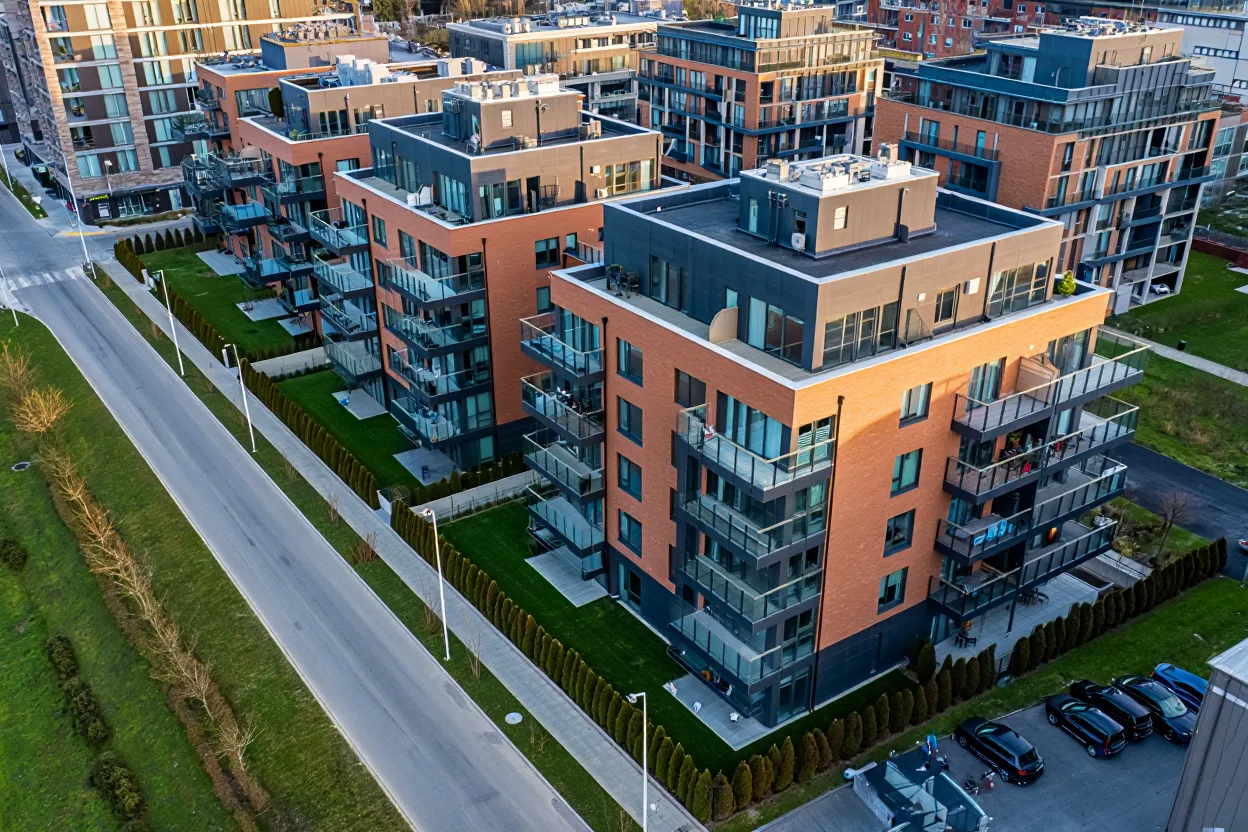
Renters faced stiffer competition than ever in 2025, with Miami, Chicagoland, and Manhattan emerging as the country’s toughest apartment markets—despite a nationwide boost in new apartment supply.
Renter competition heats up: The U.S. rental market ended 2025 with an RCI of 75.2, up from 74.4 in 2024. Despite 500,000+ new units added, lease renewals rose to 63%, keeping supply tight. Vacant apartments filled in 41 days on average, with nine renters competing for each one.

Miami holds the crown: Miami (RCI Score: 92.9) remains the nation’s most competitive rental market, driven by its rise as a tech and finance hub. Despite a 4.2% boost in supply, 73% of renters renewed, keeping vacancies under 4%. Each unit drew 19 applicants and leased in just 33 days.
Chicagoland isn’t far behind: With new construction down, Chicago hit an RCI of 88.2 as renewals rose to 61.1% and occupancy reached 95.1%. Apartments leased in just 32 days. In the suburbs (RCI 88.1), towns like Naperville and Evanston saw renewals top 70% despite limited new supply.
Manhattan’s first top 5 spot: Fueled by the return to office, Manhattan reached an RCI of 84.5 and ranked as the nation’s 4th most competitive market. With just a 0.84% supply bump and a 66.3% renewal rate, occupancy hit 95.9%. Each unit drew 11 applicants, and apartments leased in 36 days—down from 40 last year.
Rising markets: Suburban Twin Cities saw the biggest RCI jump, rising 9.2 points to 82.1 amid slowed construction and 67.8% renewals. San Francisco climbed 7.4 points to 72.8 as tech demand rose and supply fell. Port St. Lucie led small metros, jumping 12.5 points to 86.9 on low new supply and a 75.1% renewal rate.
➥ THE TAKEAWAY
Looking ahead: Early 2026 may offer a breather with 51-day vacancies, but a summer squeeze looms. A midyear 1.29% supply boost will be short-lived, as construction slows to 0.47% by year’s end.
TOGETHER WITH BLEW
The nation’s leading provider of ALTA Surveys

With the 2026 ALTA/NSPS standards update approaching, our team will ensure your surveys meet their closing deadlines with the latest requirements through our in-house network of professionals.
Our integrated approach provides clients with reliable due diligence support across every asset type, market, and transaction.
Accurate and consistent solutions every time, Blew is your one-stop shop for CRE transaction services nationwide.
*This is a paid advertisement. Please see the full disclosure at the bottom of the newsletter.

✍️ Editor’s Picks
-
Real estate tax alert: The One Big Beautiful Bill brings major changes in 2026. CSSI helps investors navigate new deadlines and maximize benefits from reinstated depreciation. (sponsored)
-
Fed focus: The Fed is closely monitoring office and multifamily lending risks at smaller banks, citing elevated rates and growing refinancing challenges.
-
Stability returns: CRE heads into 2026 with renewed confidence as fundamentals stabilize and investor activity picks up, per Colliers.
-
Retirement hotspots: Florida still leads for retirement, but rising costs are pushing retirees toward affordable, healthcare-rich metros like Madison, Boise, and Durham.
-
Selective recovery: CRE prices are inching upward in Q3 2025, with office leading the slow recovery.
-
Choppy outlook: CRE’s year-end mood has soured as economic uncertainty, delayed deals, and value resets stall the postpandemic recovery.
-
CMBS strain: CMBS distress rose to 11.6% in November, with office and multifamily loans under pressure and maturity defaults accounting for the bulk of troubled debt.
-
Rebrand fallout: Yieldstreet, now Willow Wealth, faces at least $208M in investor losses from failed real estate and marine deals.
🏘️ MULTIFAMILY
-
Policy pressure: Rent control talks are intensifying as regulated multifamily properties see rising costs, delinquencies, and declining valuations.
-
Mixed signals: Multifamily is entering 2026 with economic headwinds slowing short-term absorption, especially in the Sun Belt.
-
Return reversal: CRE returns are now outpacing home prices for the first time since 2022, as housing momentum slows and valuations normalize.
-
Stalled supply: SoCal's housing market faces weak rent growth and deep supply shortages, with new development lagging well behind demand.
-
Buyer's market: Developers are favoring buying existing apartments over building new ones as high costs and limited supply make acquisitions more efficient and strategic.
🏭 Industrial
-
Data grounds: Starwood Capital will convert a former Washington Commanders NFL training site in Herndon, VA, into two large data centers.
-
Value pressure: Jonathan Litt urges First Industrial to sell assets and return capital, citing a sharp discount to its net asset value.
-
Risk shuffle: Morgan Stanley is exploring ways to offload credit risk tied to its data center loan portfolio, including a potential significant risk transfer deal.
-
Mega move: Walmart acquired Arizona’s largest industrial property of 2025, a 1.3M SF warehouse in Glendale, for $152M.
-
Fortune footprint: Lincoln Property Co. and Goldman Sachs closed Arizona’s biggest industrial deal of 2025, selling a 1.27M SF warehouse in Glendale’s Luke Field to a Fortune 500 buyer.
-
Bid dropped: Blackstone has officially walked away from a potential acquisition of UK self-storage firm Big Yellow.
🏬 RETAIL
-
Steady spread: Retail CRE loan spreads held flat in Q3 2025, signaling cautious confidence among lenders.
-
Retail kickoff: Inter Miami CF’s massive Miami Freedom Park project has landed its first retail tenants, signing on for a combined 125,000 SF.
-
Middle moves: Retail landlords are targeting middle-market tenants with curated experiences and AI-driven insights to boost foot traffic and long-term performance.
-
Expansion mode: Kroger plans to boost new store builds by 30% in 2026, riding strong e-commerce momentum and aiming for national growth.
🏢 OFFICE
-
Zen spend: Alo Yoga bought the La Peer Building in Beverly Hills for $90M, setting a city record for price per square foot in 2025.
-
Office uptick: For the first time since 2021, all U.S. Census regions posted positive office demand in Q3 2025.
-
Loan lifeline: After two years of negotiations, Chetrit Organization secured a three-year extension on its $152M CMBS loan tied to 65 Broadway.
-
Refi relief: Paramount Group secured a $175M refinancing for its Midtown Manhattan tower at 900 Third Ave., a move that comes amid leasing challenges and ongoing scrutiny.
🏨 HOSPITALITY
-
Asheville acquisition: Milan Hotel Group acquires two Asheville hotels located near Tunnel Road retail
-
Mag Mile bet: Vinayaka Hospitality has acquired the 752-room Westin Michigan Avenue in Chicago for $72M, marking one of the city's biggest hotel deals of 2025.
-
FIFA forecast: Hospitality America is proactively preparing its hotel portfolio for the 2026 FIFA World Cup.
📈 CHART OF THE DAY

CRE transaction volume in 2025 rose above 2024 levels as stabilized prices and growing buyer confidence signaled the early stages of a market recovery.
CRE Trivia (Answer)🧠
Dollar General has the most stores, with more than 19,000 across the U.S.

You currently have 0 referrals, only 1 away from receiving Multifamily Stress Test Model.
What did you think of today's newsletter? |