





- Warehouse real estate is entering a more balanced phase as new development slows and supply begins to match demand.
- Rent growth is stabilizing, with some markets seeing slight declines due to oversupply and shifting tenant priorities.
- Factors like proximity, power availability, reshoring trends, and supply chain transformation are shaping warehouse demand heading into 2026.
A New Era Of Balance
After a pandemic-driven e-commerce boom and bust, the warehouse real estate market is now showing signs of stability, reports CNBC. Developers are pulling back on new construction, vacancies are approaching cyclical highs, and federal policy is supporting domestic manufacturing. The result? A sector that is finding its footing even as interest rates remain high and economic uncertainty lingers.
“In many markets, industrial rents are showing signs of stabilization,” said Judy Guarino, managing director at JPMorgan Chase, noting that the sector is entering a more balanced environment.
Big-Box Sector: Supply Catching Up With Demand
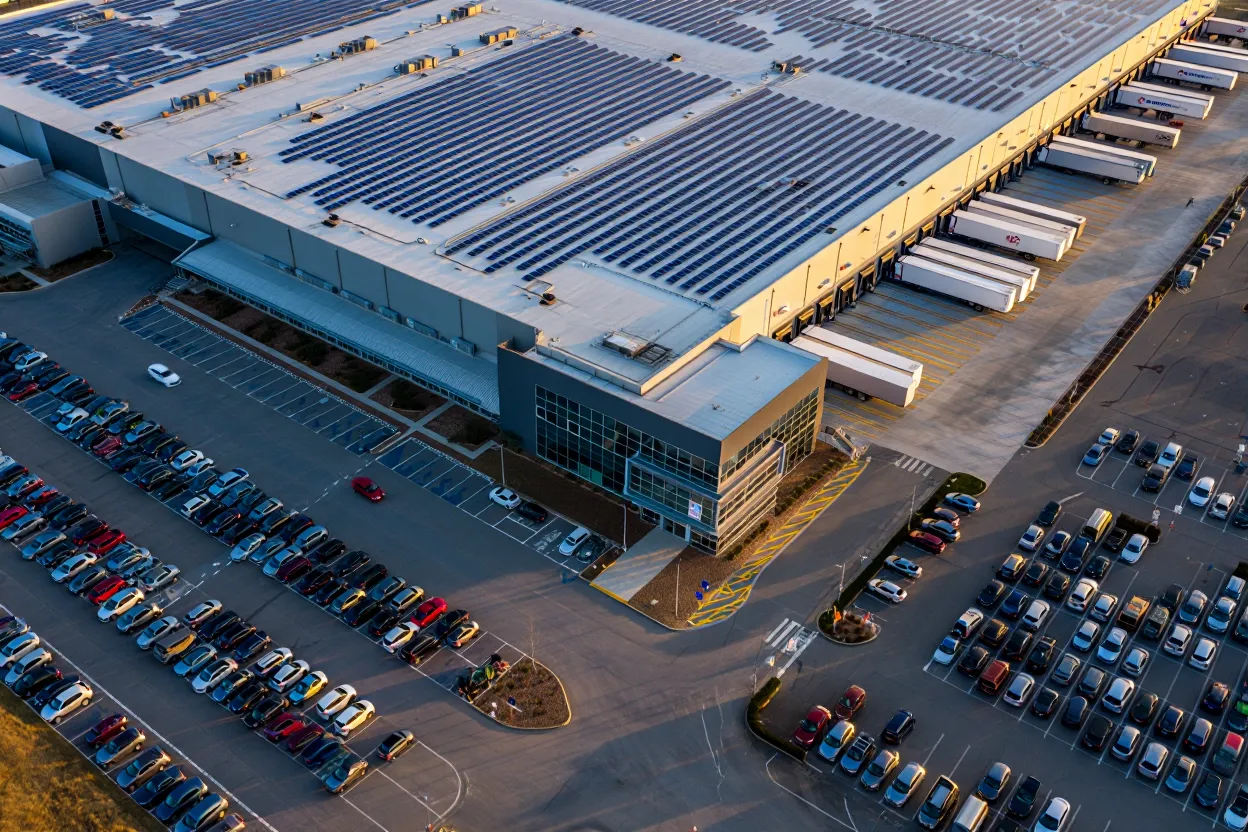
The big-box warehouse segment—large-scale distribution centers—has seen a sharp correction. New deliveries dropped to 48M SF in the first half of 2025, a significant pullback from 2023’s 330M SF. According to Colliers, vacancy rates hit 11% across the top 20 markets, a modest increase of 19 basis points.
Third-party logistics providers like DHL and Ryder are driving demand as Q3 leasing surpasses total activity from the first half. Rent growth is expected to stabilize in the short term, with potential for an uptick once interest rates ease and demand returns.
Supply Chains Get Smarter—And Closer
Evolving supply chain strategies are reshaping demand drivers. Prologis predicts e-commerce tenants will account for nearly a quarter of all new leasing in 2026, with global online sales nearing 20%. But it’s not just about more goods—it’s about smarter logistics.
Shrinking trucking capacity, automation, and energy requirements are turning power access and location into critical differentiators for industrial tenants. Defense-related demand is also reactivating older industrial hubs in the US and Europe, creating new classes of logistics assets.
Get Smarter about what matters in CRE
Stay ahead of trends in commercial real estate with CRE Daily – the free newsletter delivering everything you need to start your day in just 5-minutes
Power And Proximity Take The Lead
Power availability is now a key consideration for warehouse tenants, especially those looking to support automation or light manufacturing. Infill assets with strong power infrastructure are in high demand as companies seek denser, faster networks.
“Where distance once drove advantage, closeness now creates it,” noted a recent report from Hines, pointing to the growing importance of proximity to population centers and transportation infrastructure.
Amazon is a prime example. The e-commerce giant has reduced its large-site leasing, dropping to just 61 logistics property deals this year—down from 100 in 2024. Instead, it’s prioritizing modern, taller facilities near customers, even if that means less square footage overall.
Reshoring And Federal Policy Fuel Long-Term Demand
Government support for domestic manufacturing is adding new momentum. Warehouse absorption is increasingly tied to manufacturing construction, and Hines predicts that reshoring alone could drive a 35% increase in warehouse demand over the next five years.
Despite trade uncertainties and tariff impacts, port-adjacent industrial properties remain essential for global supply chains, offering flexibility and resilience.
AI And Automation Bring New Efficiencies
Artificial intelligence is making its mark on industrial real estate. From optimizing supply chains and managing inventory to predicting maintenance needs, AI tools are improving operational efficiency and site selection. These technologies are not just cost-saving—they’re becoming essential to compete in a tighter, efficiency-focused market.
What To Watch In 2026
- Rent growth is likely to remain muted in the near term, but may rebound if interest rates decline.
- Power-ready and infill sites will be key to capturing next-generation warehouse demand.
- E-commerce, defense, and reshoring will continue to drive tenant activity.
- Automation and AI will reshape how space is used and managed.
As the warehouse sector transitions from boom to balance, the focus is shifting from expansion to optimization. Developers, tenants, and investors alike will need to recalibrate strategies to succeed in this next phase.