




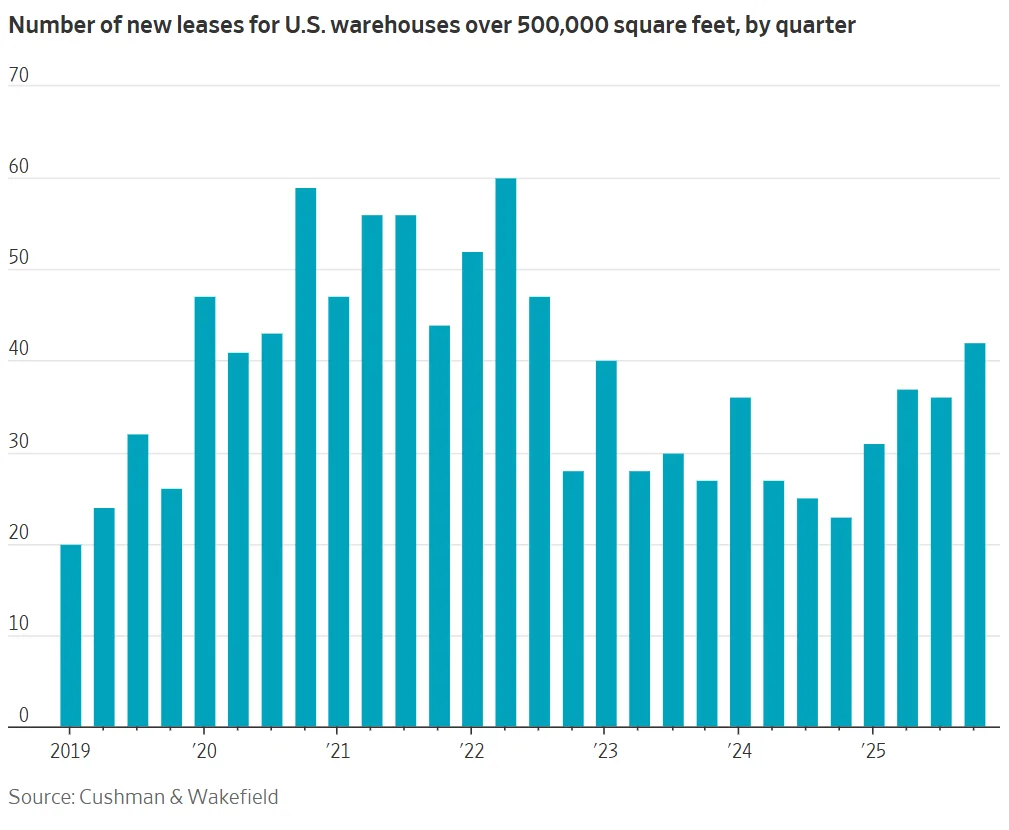
- Warehouse demand for facilities over 500 KSF rose more than 31% in 2025, the highest since 2022.
- Third-party logistics providers, manufacturers, and data-center suppliers are driving leasing activity.
- Vacancy rates for large warehouses dropped to 9.5% by Q4 2025 as absorption increased and new construction slowed.
- Major tenants are reviewing portfolios as lease agreements signed during the pandemic approach expiration.
Leasing Momentum Returns
The WSJ reports that warehouse demand is rebounding after a slower period. Real estate firms tracked 146 leases in 2025 for US warehouses larger than 500 KSF. That total represents a 31% year-over-year increase and the strongest leasing level since 2022. Activity also accelerated in late 2025. During that period, major occupiers secured space to support expanding operations.
Sector Drivers Emerge
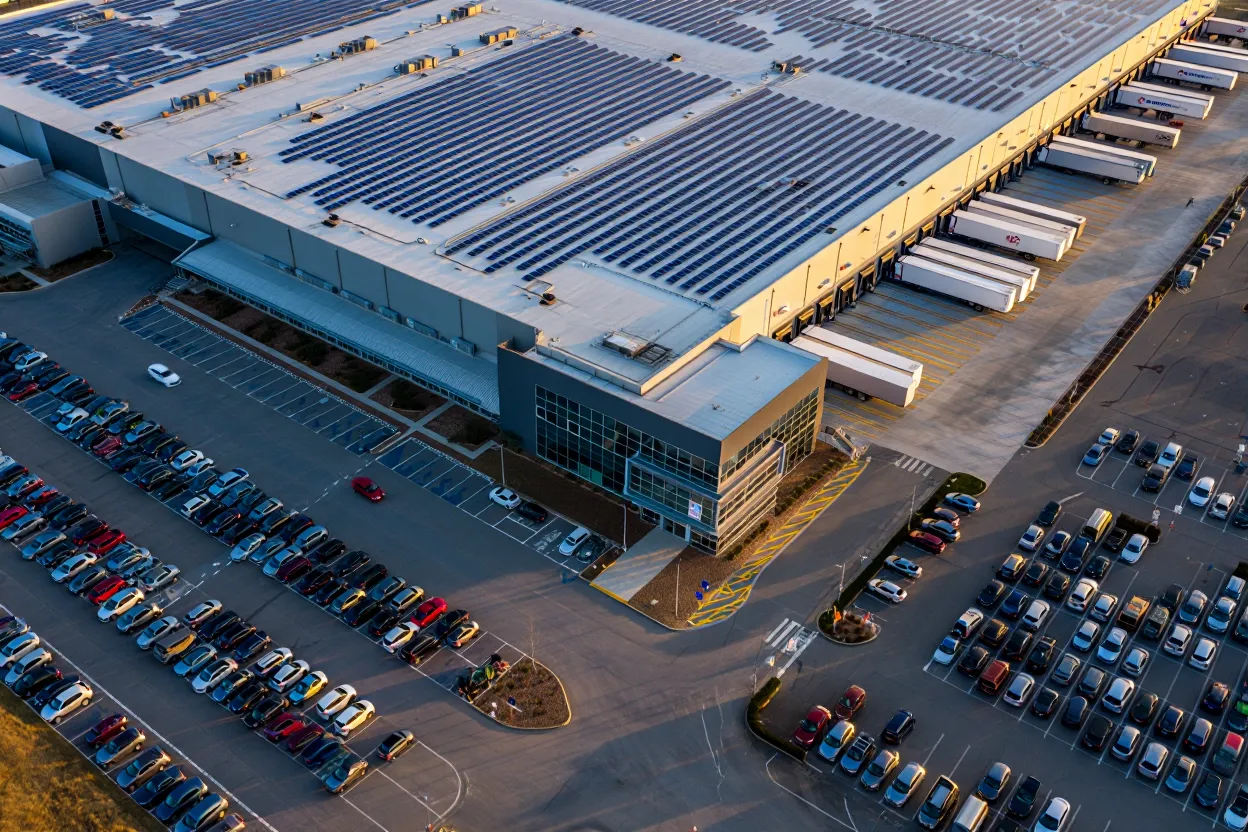
The surge in warehouse demand is being fueled by third-party logistics (3PL) firms, onshoring manufacturers, and suppliers to booming data center developments. These occupiers are absorbing space vacated post-pandemic, particularly as retailers outsource fulfillment and technology firms ramp up hardware logistics. Data center construction is a new demand engine, especially in population growth markets. At the same time, smaller industrial properties remain scarce in many markets, which has pushed some occupiers toward larger distribution facilities.
Get Smarter about what matters in CRE
Stay ahead of trends in commercial real estate with CRE Daily – the free newsletter delivering everything you need to start your day in just 5-minutes
Vacancies Down, Rents Stabilize
The vacancy rate for large warehouses peaked at nearly 11% in Q4 2024 but dropped to 9.5% by end of 2025 as leasing picked up and developers slowed new projects. Increased absorption is putting upward pressure on rental rates, reversing a trend of softening as oversupply is worked through.
Portfolio Decisions Ahead
Many companies now approach the end of leases signed during the pandemic surge. As a result, they will make major portfolio decisions in 2026.
These decisions could reshape warehouse demand trends across the market. Occupiers are reviewing long-term space needs as conditions stabilize. They are also reassessing operational strategies and supply chain footprints.