




- Q3 2025 marked the lowest occupancy levels for self-storage REITs since 2017, though executives say fundamentals are stabilizing, with street rates rebounding and supply tapering off.
- Achieved rates fell year-over-year, but REITs are optimistic heading into 2026, citing softening competition and improved pricing power.
- SmartStop led all REITs in same-store revenue growth at 2.5%, while Public Storage reported the most aggressive acquisition activity, with $814.6M in purchases year-to-date.
A Mixed Quarter With Signs Of Recovery
Q3 2025 was mixed for storage REITs as pricing improved but occupancy fell to its lowest level since 2017. Average same-store occupancy fell for all five major REITs, as reported by TractIQ. National Storage Affiliates (NSA) led the decline, dropping 1.1 percentage points year-over-year to 84.5%.
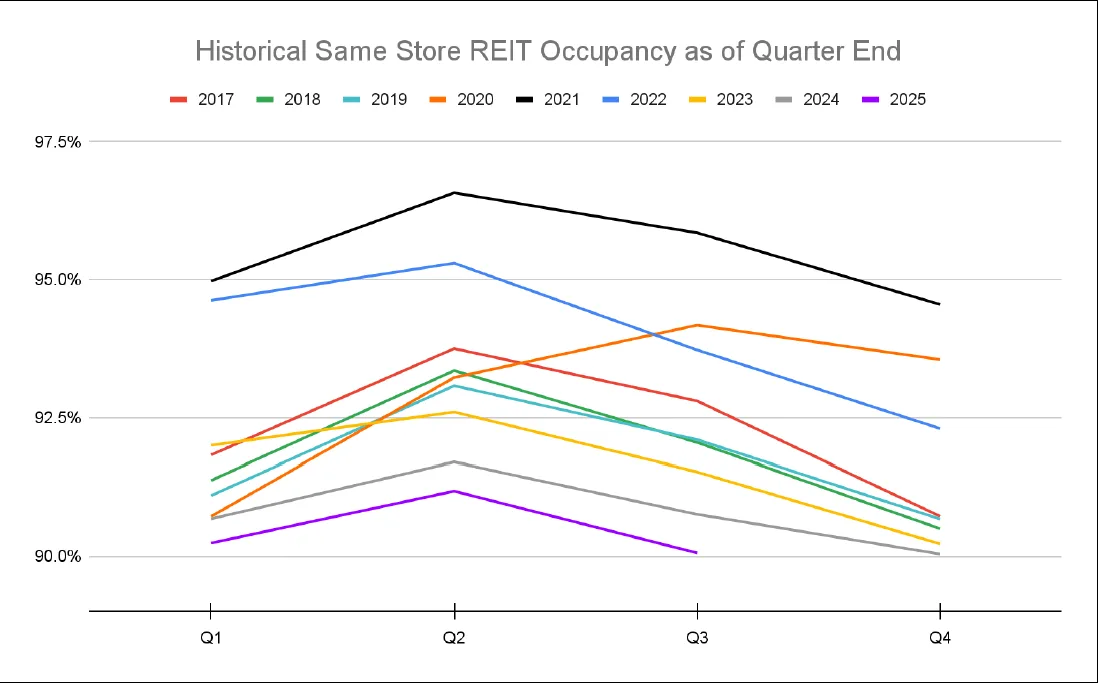
Despite the declines, REITs remained cautiously optimistic. “Fundamentals have found a bottom,” said NSA in its Q3 commentary, adding that 2026 could bring a stronger demand environment as interest rates ease and new supply slows.
Get Smarter about what matters in CRE
Stay ahead of trends in commercial real estate with CRE Daily – the free newsletter delivering everything you need to start your day in just 5-minutes
Rent Trends Show Price Power Returning
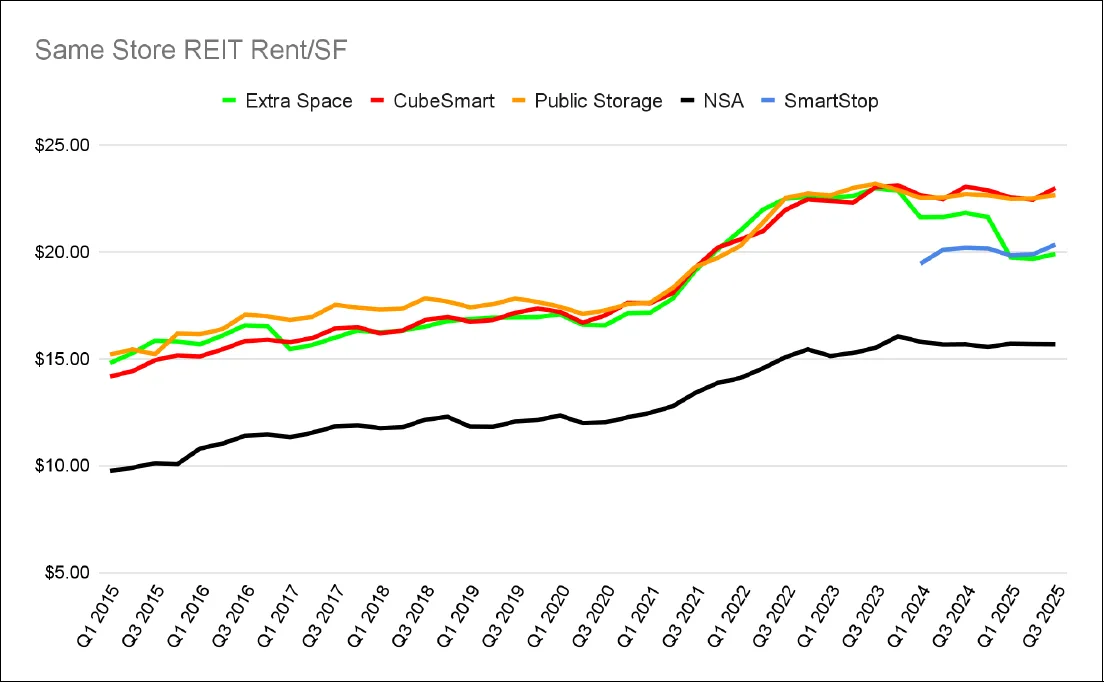
Street rates rose 5.7% to $20.13, while achieved rents fell 3% to $20.90 due to churn from high-rent pandemic-era tenants. The spread between street and achieved rents narrowed to 3.7% in Q3, down from 4.4% last quarter. This suggests improving rate predictability for underwriters.
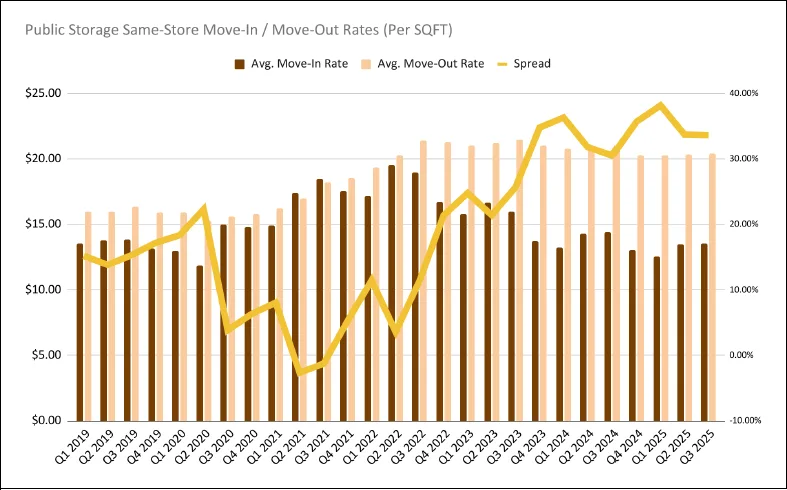
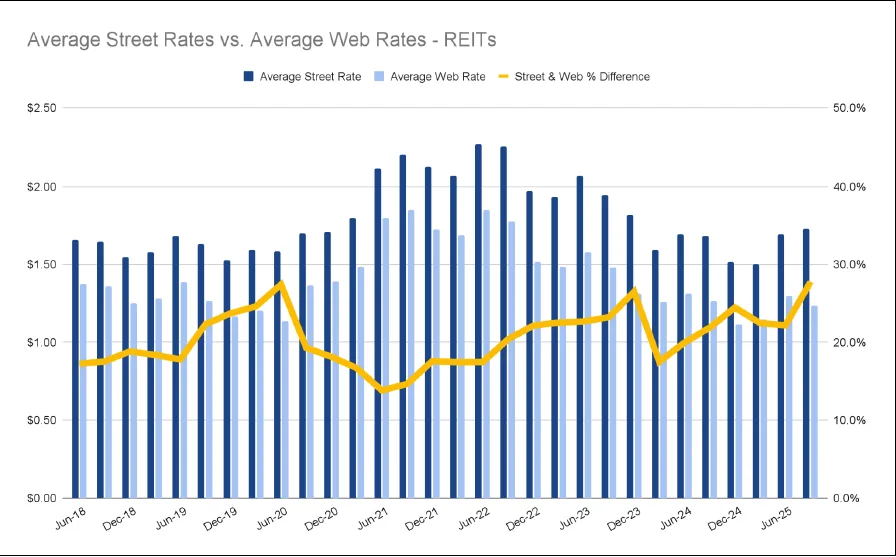
Meanwhile, discounting activity rose significantly. The average REIT discount rate (the gap between street and web rates) hit 27.8%, a 26.8% year-over-year increase, driven by seasonal trends and muted demand.
Individual REIT Performance
SmartStop stood out in Q3, posting 2.5% year-over-year same-store revenue growth and sector-leading occupancy of 92.4%. It made bold moves in Canada by acquiring five properties in Alberta. It also launched a third-party management platform through its acquisition of Argus Professional Storage Management.
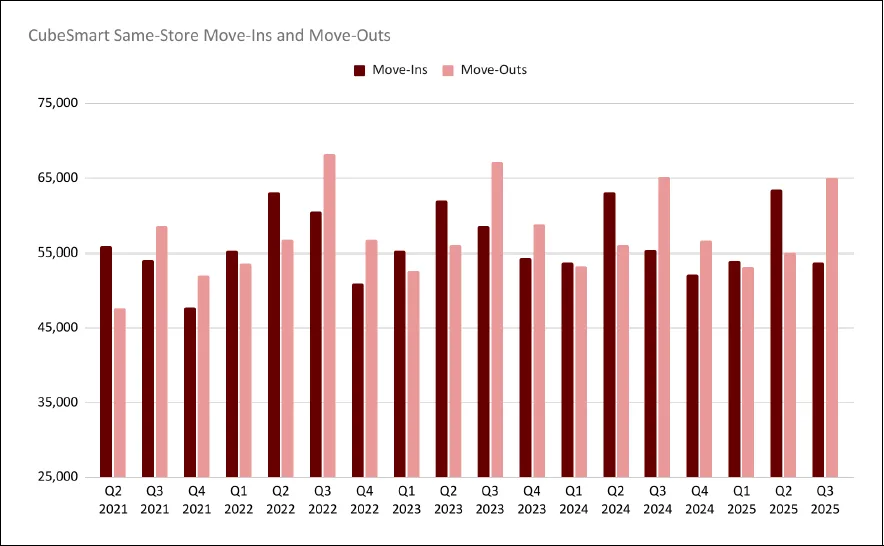
Public Storage remained the most active acquirer, spending $814.6M on 74 facilities YTD. Extra Space, meanwhile, adopted a more conservative approach, with only one acquisition during the quarter and more activity focused on joint ventures and off-market deals.
On the expense side, Extra Space reported a 5.8% YoY increase, with marketing (+27.6%) and insurance (+12.8%) as major drivers. Most REITs expect 2025 same-store NOI growth to remain flat or slightly negative.
Market Outlook
REIT leaders remain optimistic that the worst may be behind the sector. Many are banking on improving housing market conditions and reduced new supply to lift fundamentals. Public Storage noted a “decline in competitive supply,” while CubeSmart pointed to stabilizing coastal markets and better revenue systems.
Looking ahead, TractIQ notes that street rents are increasingly reliable indicators of performance and recommends close monitoring of seasonal trends and discounting activity for accurate underwriting.
Why It Matters
After years of pandemic-driven volatility and new supply, storage REITs may finally be settling into a new equilibrium. While occupancy remains a concern, pricing stability and slower development pipelines suggest that 2026 could be a turning point for the sector.