




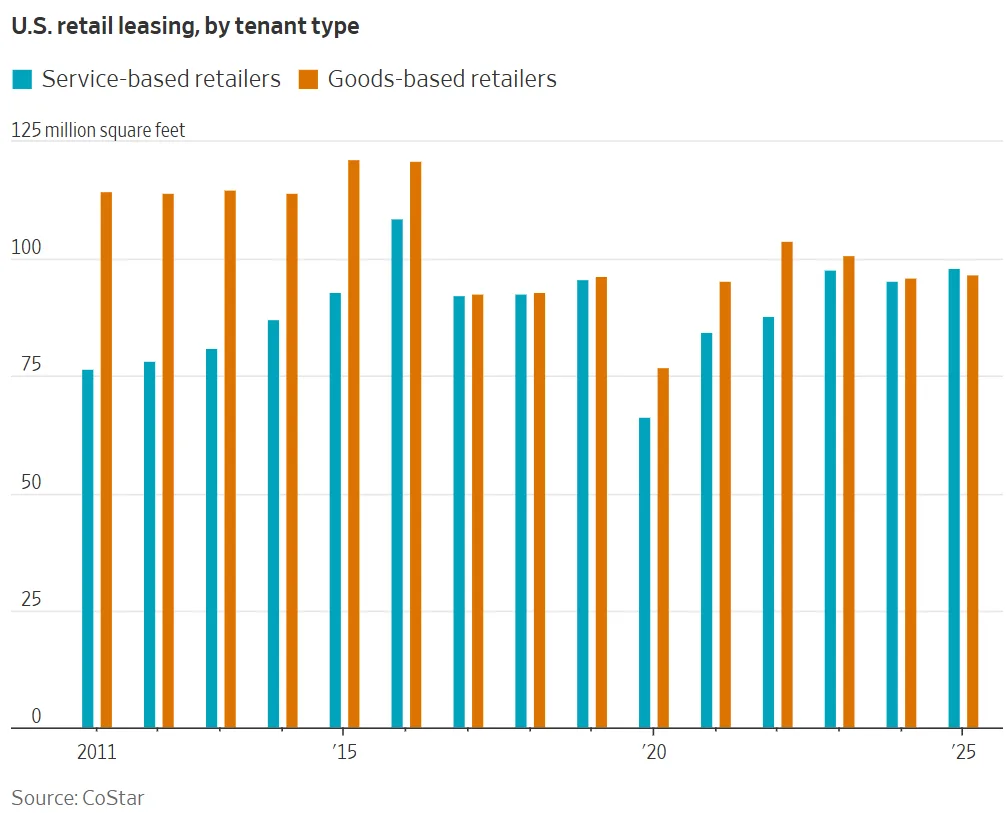
- Service-oriented tenants leased over 50% of US retail space in 2025, outpacing goods-based retailers for the first time.
- Wellness and fitness brands are driving retail expansion, with fitness leases rising to 30% of all service-based leasing.
- Retail vacancy remains near record lows as service tenants absorb space vacated by struggling goods-based retailers.
- The wellness market reached $2.1T in 2024, reflecting shifting consumer focus toward services over physical goods.
Service Tenants Take the Lead
The WSJ reports that service tenants are now the main driver of US retail leasing activity, marking a significant shift from the historical dominance of goods-based retailers. In 2025, just over half of total retail square footage leased went to service-oriented businesses, according to CoStar data. Fifteen years ago, this figure was just 40%.
The transition reflects a broader trend: consumer spending on services—especially in wellness and fitness—has outpaced spending on traditional goods. E-commerce growth has also reduced the need for physical retail space to sell products, accelerating this change.
Wellness and Fitness Fuel Growth
Wellness and fitness have emerged as leading sectors in the service tenant surge. The US wellness market hit $2.1T in 2024, driven by demand for services ranging from salons and facials to boutique fitness studios. Fitness operators now account for nearly 30% of service-based leases, up from 20% in 2016. Brands like Planet Fitness expanded rapidly, opening new locations and attracting entire families and social groups, a trend that has also been fueling retail expansion and leasing momentum in major markets like Dallas–Fort Worth.
Adapting Retail Space
Landlords are subdividing former large retail boxes to accommodate multiple service providers. For example, Brixmor converted a former liquor store in suburban Philadelphia into a mix of an animal hospital, spa, stretching studio, and nail salon, resulting in 20% higher rents and increased foot traffic. In urban markets such as Manhattan’s Flatiron and NoMad districts, wellness and fitness brands have collectively leased 100,000 SF in just two years.
Get Smarter about what matters in CRE
Stay ahead of trends in commercial real estate with CRE Daily – the free newsletter delivering everything you need to start your day in just 5-minutes
What’s Next for Retail Real Estate
With e-commerce now accounting for over 16% of US retail sales, apparel and goods retailers are downsizing store footprints, but overall demand for retail space remains strong. Service tenants are occupying spaces left by failed chains, keeping US retail vacancy at near-record lows of 4.4%. Industry experts expect service tenants to continue leading the retail market as consumer spending stays aligned with experiences, personal wellness, and social fitness activities.