




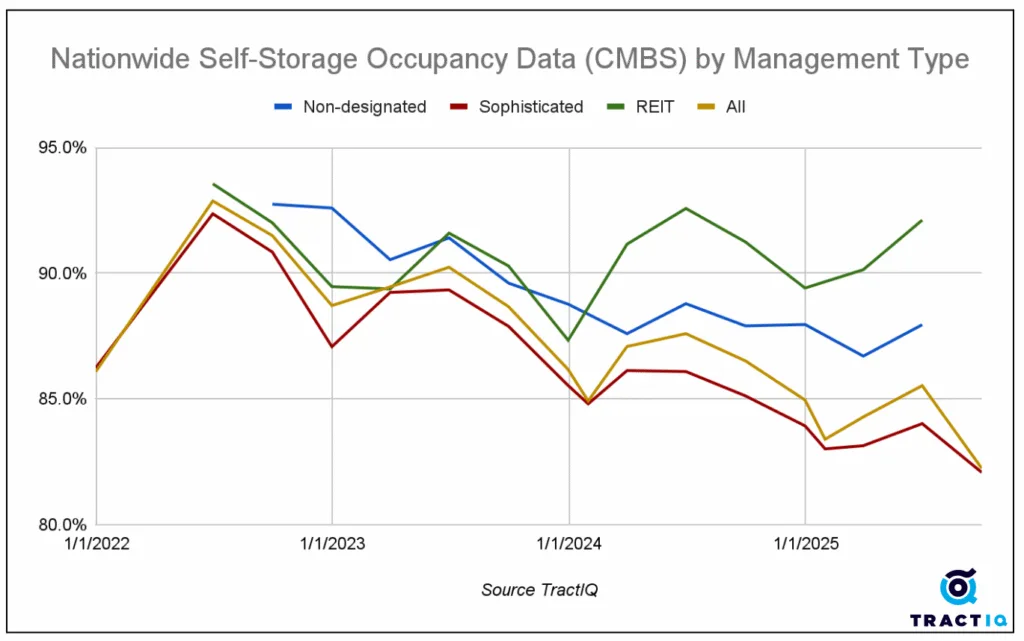
- National self-storage occupancy was 82.2% as of September 2025, with a -4.3% YoY decline.
- REIT-managed facilities reached 92.1% occupancy, while sophisticated operators were at 82.1%.
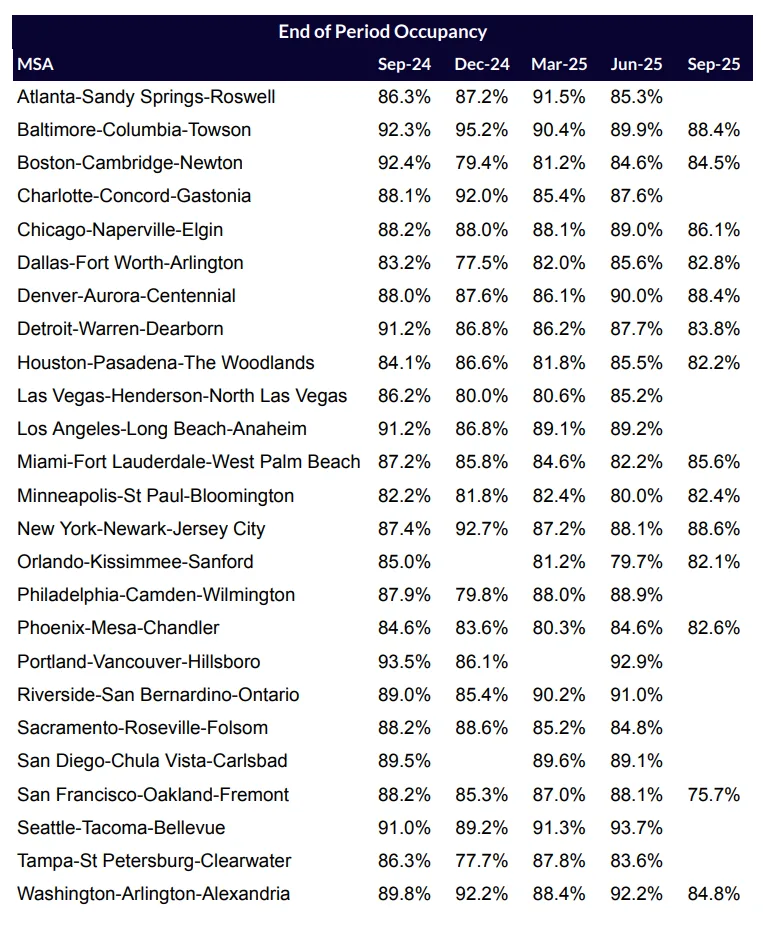
- State and MSA occupancy rates continue to vary, with several states and cities surpassing 90%.
- TractIQ’s verified facility-level reporting introduces new benchmarks for self-storage market analysis.
Self-Storage Occupancy Benchmarks
TractIQ has released the latest self-storage occupancy data for 2025, leveraging verified, facility-level reporting for more than 70,000 properties across the US. The industry now has access to a new level of transparency, with borrowers’ reported occupancy from CMBS facilities offering deep insight into national and regional trends.
Nationwide and Operator Performance
Self-storage occupancy has shifted notably over the past year. As of September 2025, the national end-of-period occupancy rate dropped to 82.2%. This reflects a -4.3% year-over-year decline, marking the steepest YoY decrease since August 2024 and highlighting ongoing demand headwinds.
REIT-managed storage properties reported higher occupancies at 92.1% in Q2 2025. Non-designated operators were at 88.0%, while sophisticated operators—non-REITs managing 15+ facilities—saw 82.1%. These figures underscore the operational variability based on management type. The broader dip in occupancy coincides with market pressures from increased supply and pricing adjustments in many metros, challenging operators to maintain stable performance.
Geographic Variation in Occupancy
Most states tracked by TractIQ reported self-storage occupancy between 80% and 90% over the last year. Exceptionally, states such as Washington, Massachusetts, North Carolina, New Jersey, New York, Oregon, Tennessee, and Virginia exceeded 90%. Conversely, states including Iowa, Louisiana, Missouri, New Hampshire, Oklahoma, Pennsylvania, and Mississippi had sub-80% occupancy.
Among the top 25 MSAs, Seattle stood out with the highest average occupancy of 91.3%. Baltimore also consistently surpassed 90% across multiple quarters. Minneapolis posted the lowest average regional rate, below 82% over the same period.
Why It Matters
The introduction of true facility-level occupancy data by TractIQ changes the self-storage underwriting and investment landscape. The industry is moving beyond assumptions and proxy models towards more precise benchmarks and analytics, aligning self-storage with broader CRE standards.
These insights allow for more informed investment, pricing, and operational decisions as the sector continues to face selective capital and demand challenges in 2025. Self-storage occupancy analysis is now more robust, aiding better decision-making across operators and investors alike.
Get Smarter about what matters in CRE
Stay ahead of trends in commercial real estate with CRE Daily – the free newsletter delivering everything you need to start your day in just 5-minutes