




- Rental demand slowed in late 2025, with a record number of cost-burdened households.
- Asking rents have flattened or declined in most regions, especially where supply surged.
- Multifamily construction has cooled but remains higher than pre-pandemic levels.
- Rising costs and policy efforts drive ongoing shifts in the rental housing market.
Rental Housing Faces Market Headwinds
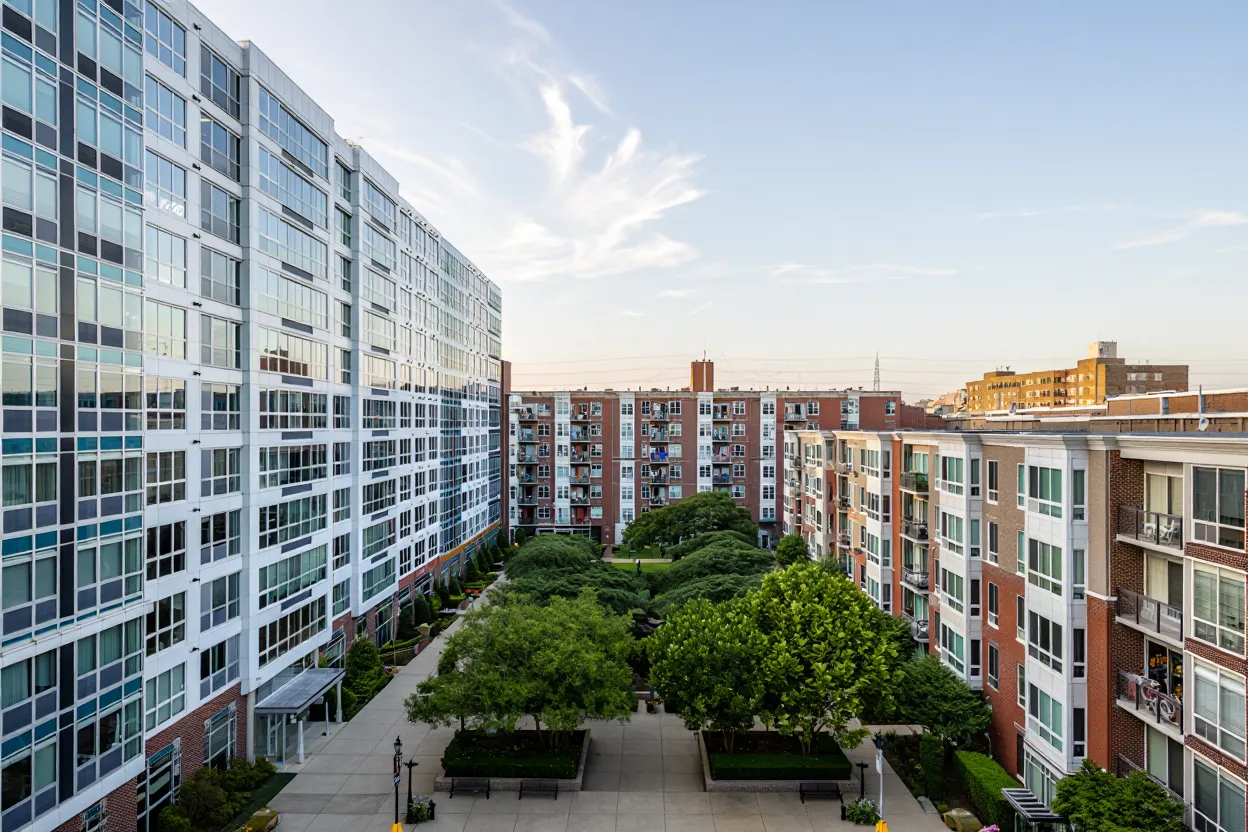
According to Harvard Joint Center for Housing Studies, America’s Rental Housing 2026 report reveals softening demand and mounting affordability pressures for renters. While rapid growth lifted the number of renter households in early 2025, a weak job market and broader economic uncertainty caused demand to slow by year end. Rent growth flattened, vacancy rates climbed, and cost burdens reached new highs.
The data shows a clear transition in rental housing trends. New supply, high construction costs, and shifting household incomes are reshaping the market landscape for both renters and developers.
Rental Demand Slows as Costs Remain High
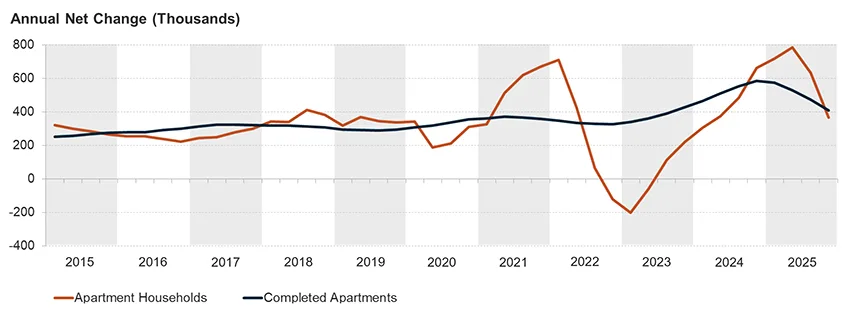
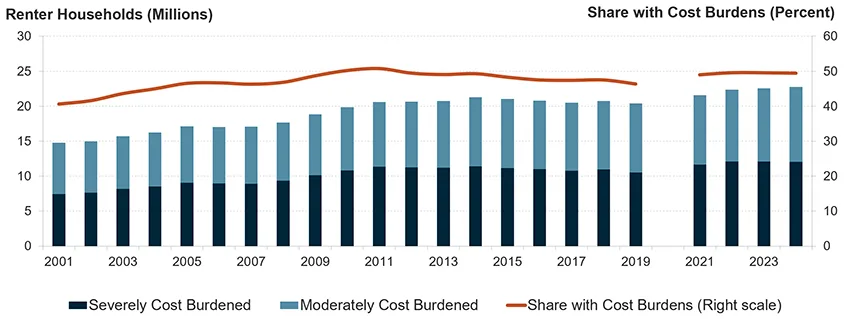
Demand for rental housing surged in early 2025 but slowed sharply in the fourth quarter, with growth dropping to 366,000 apartment households. Higher-income renters continue to make up a growing share of the market, while the total number of cost-burdened households climbed to a record 22.7M in 2024. Nearly 50 percent of renter households now pay more than 30 percent of income on housing costs.
Rent Softening and Construction Adjustments
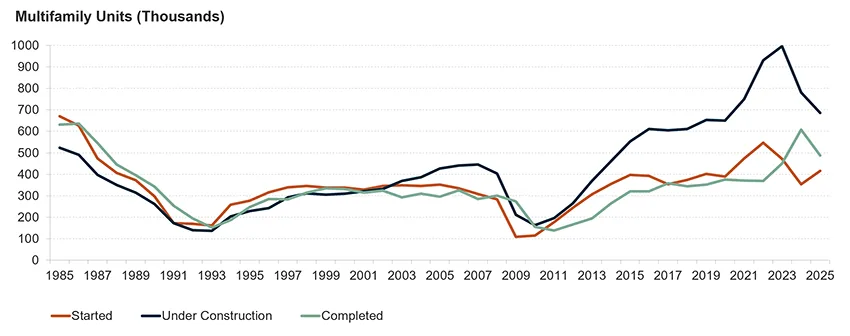
A wave of new multifamily supply and slowing demand led to rent declines, particularly in the South and West. Asking rents for professionally managed apartments dropped 0.6 percent year over year by the end of 2025, reflecting a broader pattern of rent declines seen across several apartment markets in recent months as supply pressures build. Construction, while cooling from peak levels, remained above pre-pandemic trends with 416,000 multifamily starts and 488,000 new units added in 2025.
Affordability Challenges Deepen
The ongoing escalation in development and operating costs pushed the rent distribution upward. From 2014 to 2024, 11.8M more units rented for $1,400 or higher, while the number of lower-cost units shrank. Over 12.1M renter households are severely cost-burdened, spending over half their income on rent and utilities. Rising living costs and recent cuts to SNAP and Medicaid further strain household budgets, especially for lower-income renters.
Policy Responses Gain Momentum
Policy efforts are expanding to address rental housing affordability. Federal initiatives increased Low-Income Housing Tax Credit allocations and boosted HUD’s budget. Key legislation such as the ROAD to Housing Act aims to expand supply and modernize program delivery. State and local governments are adopting new financing, assistance programs, and zoning reforms, including support for mixed-income and social housing. Despite these steps, substantial unmet need remains, highlighting affordability as a critical challenge in rental housing trends.
Get Smarter about what matters in CRE
Stay ahead of trends in commercial real estate with CRE Daily – the free newsletter delivering everything you need to start your day in just 5-minutes