



- Rental housing inventory in Austin is sharply declining after a construction boom.
- Rents may rise in 2025 as apartment supply tightens and population growth remains strong.
- Investors are returning, betting on renewed rent growth after a prolonged dip.
- Austin’s rental market signals a wider Sunbelt rebound as other cities clear excess supply.
Rental Housing Supply Dwindles
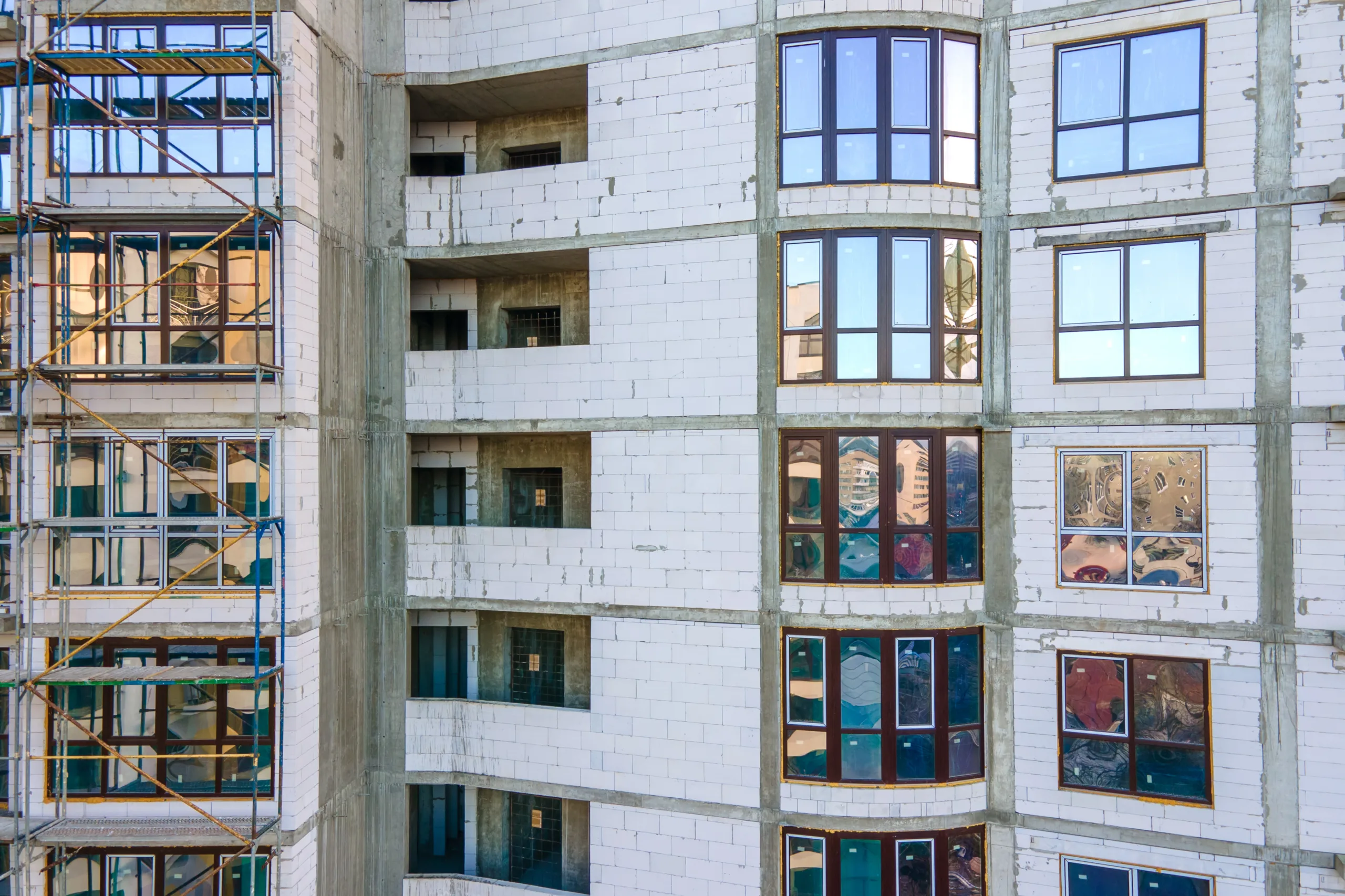
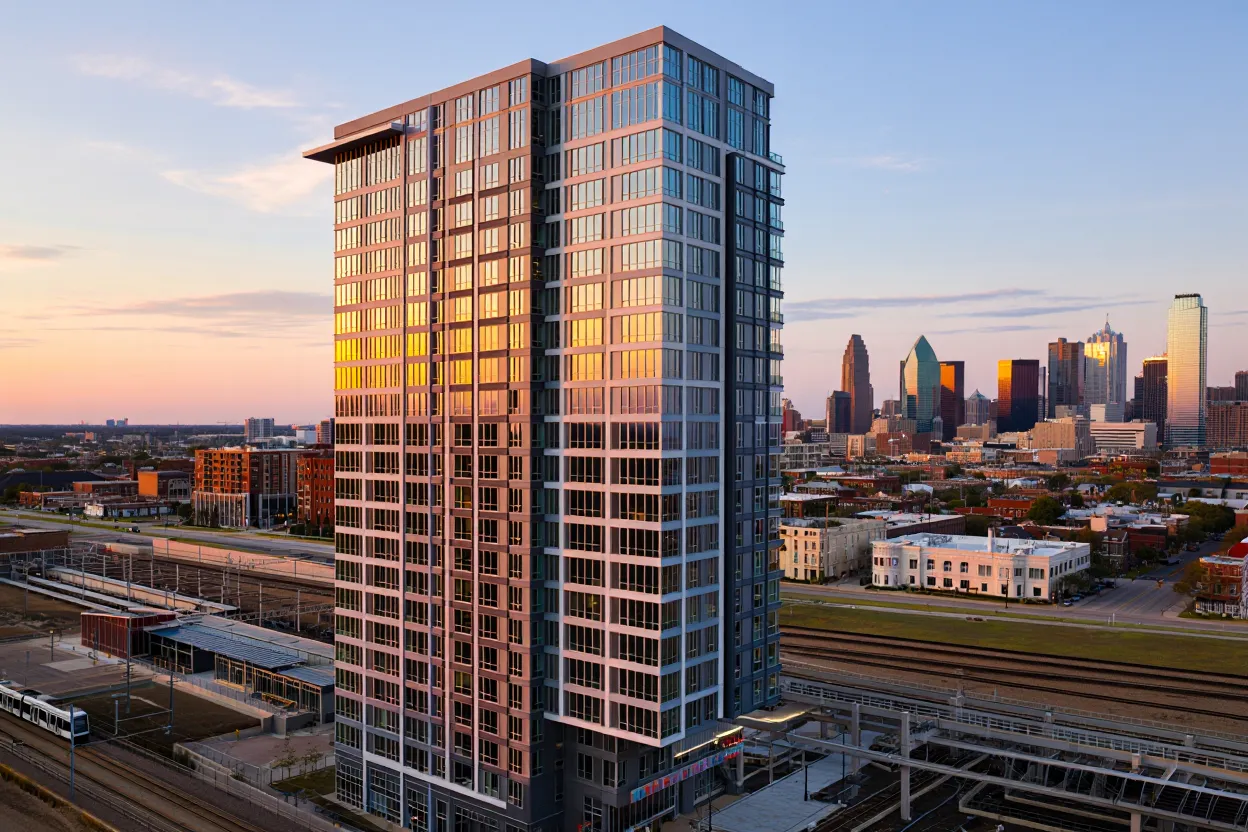
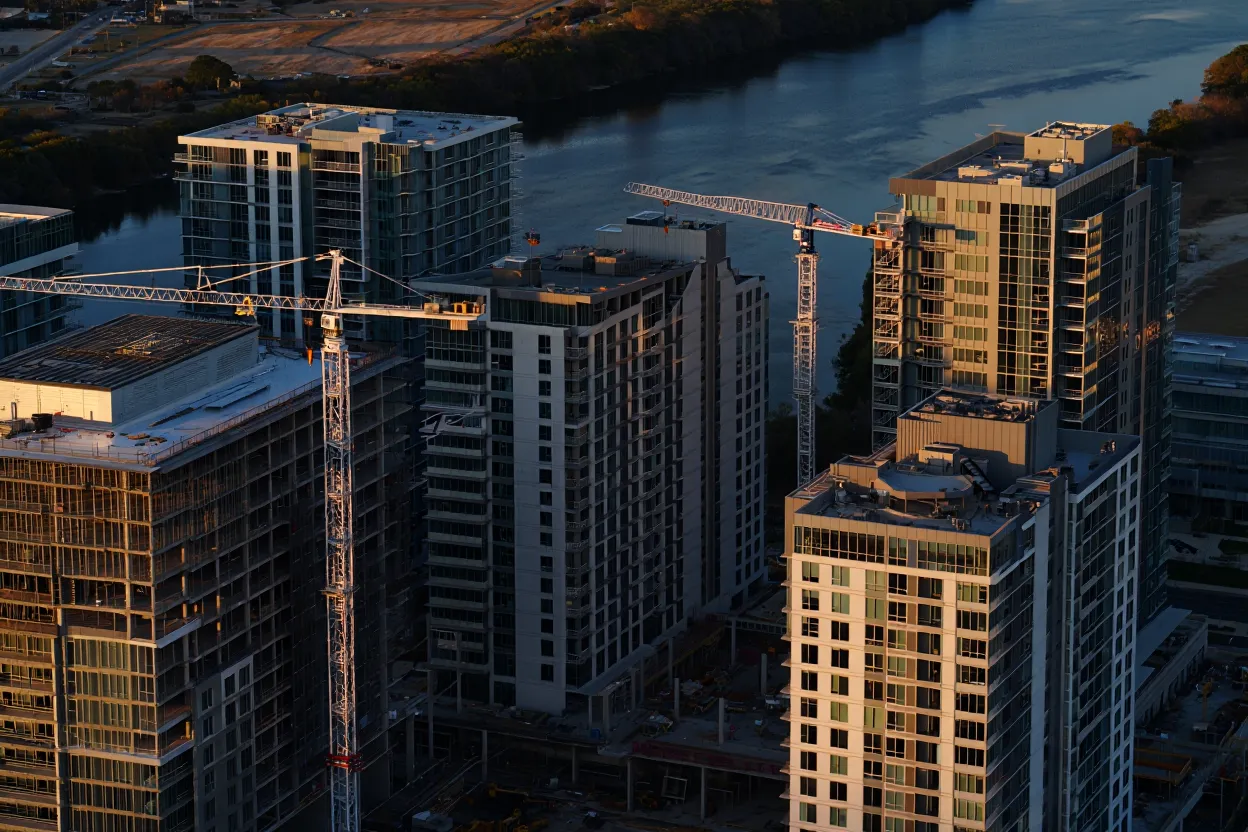
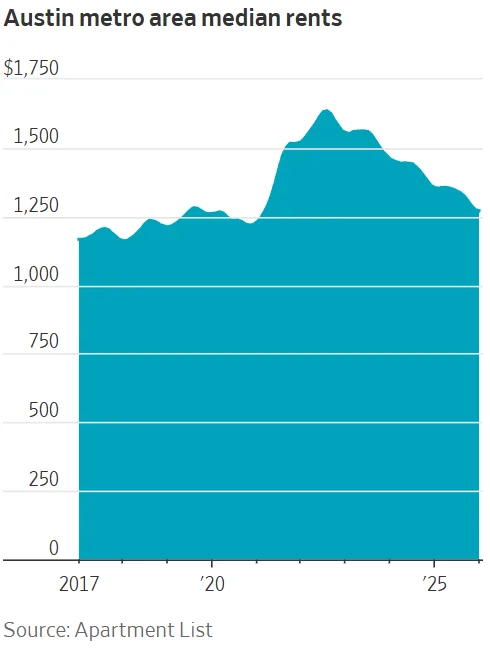
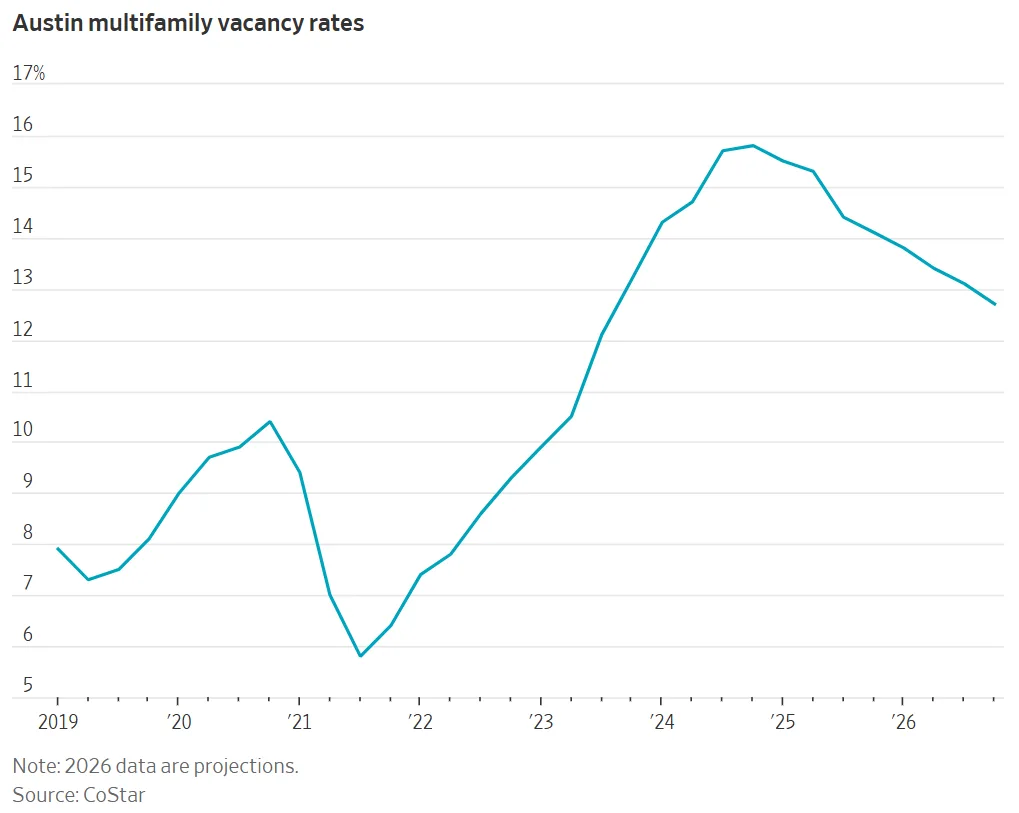
The WSJ reports that Austin’s apartment market is shifting as new construction slows. In 2024, the city saw a peak in apartment deliveries. This year, completions are projected to drop to below 9,000 units—a 72% decline from last year’s high. With fewer new options, existing rental housing is expected to become less available through 2025.
Investor Momentum Returns
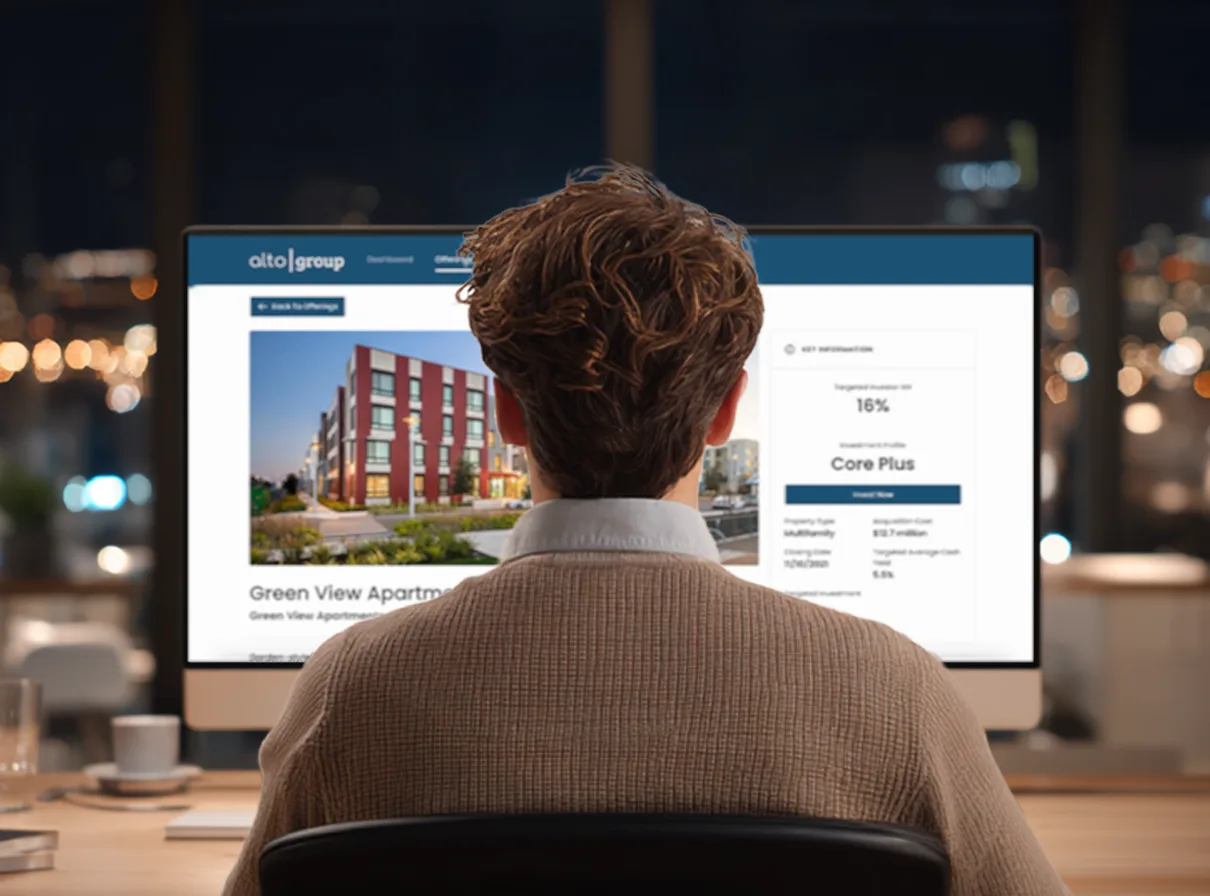
Real estate investors are reentering Austin, acquiring multifamily properties with expectations of future rental housing rent increases. Transaction volume is up 18% year-over-year, according to CoStar, fueled primarily by public REITs and large capital groups. Austin has also ranked among the nation’s most active multifamily investment markets this year, alongside other high-growth Sunbelt metros, underscoring renewed institutional appetite for the sector. Landlords are ending the generous concessions that were common during the recent supply glut.
Population Growth Fuels Demand
Austin continues to attract workers in technology, bio-science, and government, keeping demand for rental housing high. Relative affordability compared to coastal cities sustains migration, despite rising rents. Market observers note Austin had the lowest rental rates among major US cities as recently as last fall but expect this advantage may be short-lived.
What’s Next for Renters and Buyers
Industry experts say the remaining window for bargains in Austin rental housing is closing. A parallel trend is seen in for-sale residential properties, where price reductions are becoming less common as housing supply tightens and interest rates are expected to fall. The market’s strength does depend on ongoing job growth, particularly among entry-level workers who make up a significant share of the city’s population.
Get Smarter about what matters in CRE
Stay ahead of trends in commercial real estate with CRE Daily – the free newsletter delivering everything you need to start your day in just 5-minutes