




- Real estate capital flows are accelerating selectively in sectors like data centers and senior housing.
- AI and operational execution are now core value drivers in real estate trends.
- Vertical integration and industry consolidation are redefining competitive advantages.
- The line between real estate and infrastructure continues to blur amid shifting capital strategies.
Selective Acceleration Defines the Market
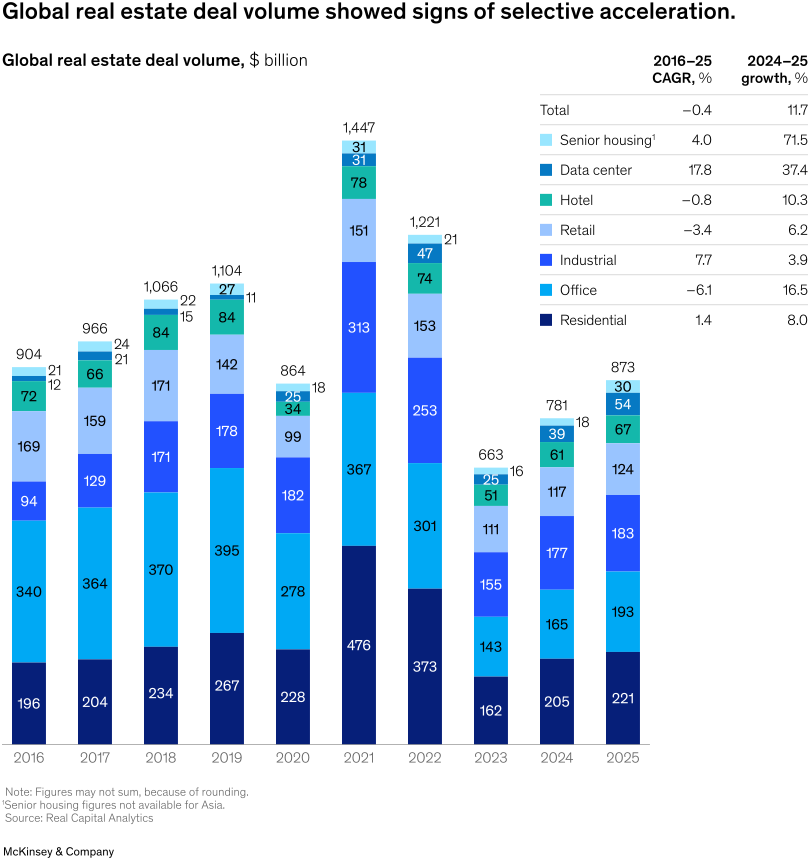
According to McKinsey & Company, real estate trends in 2025 show a shift from market stabilization toward focused growth. Overall investment and deal activity still sit below previous peaks. However, capital is moving into specialty sectors, including data centers, senior housing, and flex industrial properties.
Data center deal volume rose 37% year over year. Meanwhile, senior housing transactions increased nearly 47%. These gains highlight strong investor demand across both sectors.
AI and Asset Selection Take Center Stage
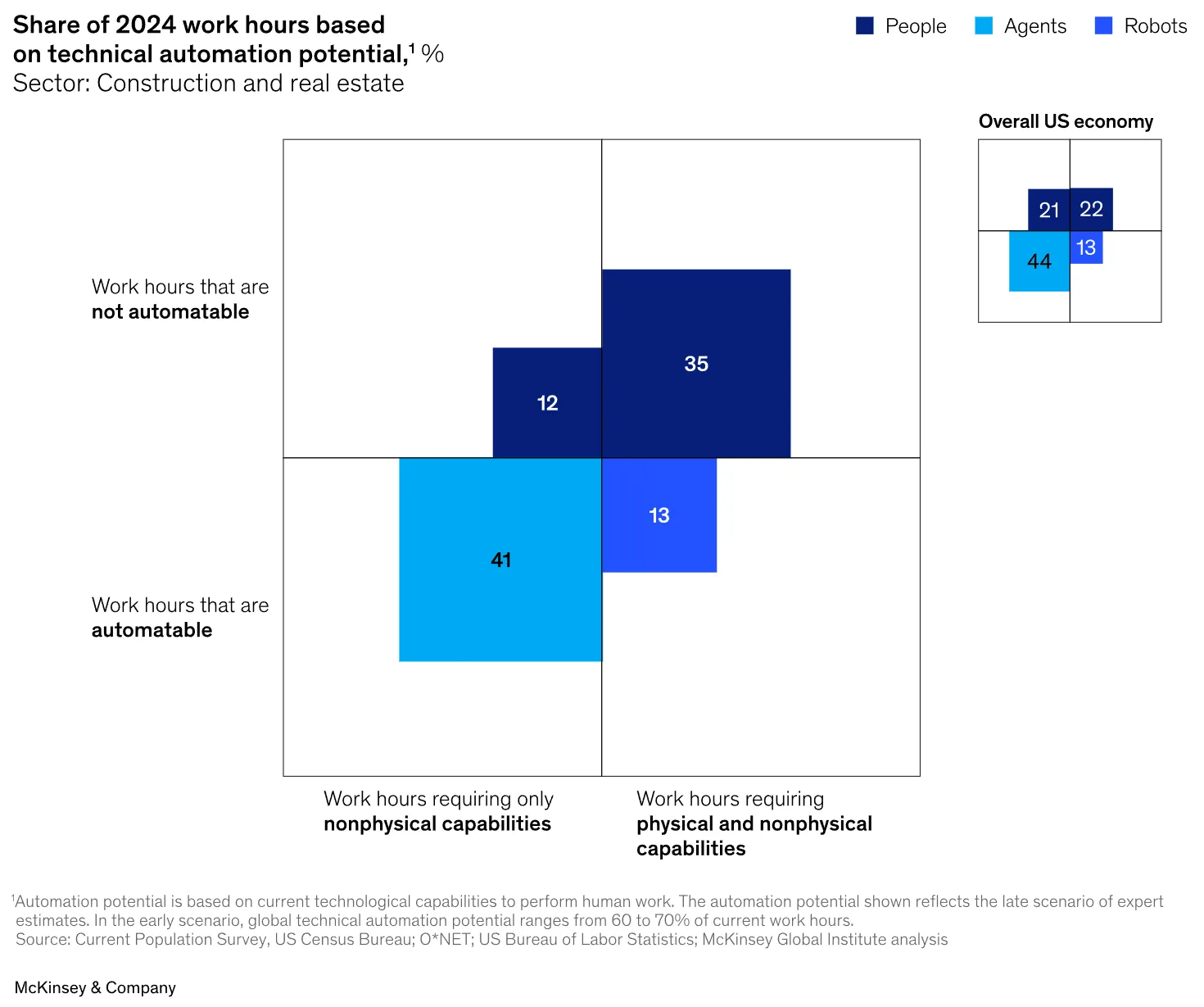
Operational execution is increasingly crucial as real estate trends shift value creation beyond market beta. Firms embedding AI across workflows are outpacing peers in maintenance, leasing, and asset management. Asset selection accounted for around 70% of performance variance in 2025, underscoring the growing importance of picking the right properties, submarkets, and capital structures over broad asset class allocation.
Vertical Integration and Scale
Vertical integration is creating structural advantages as leading platforms absorb property management, development, and asset-level execution capabilities. M&A activity among major players, such as Apollo’s acquisition of Bridge Investment Group and Brookfield’s deal with Peakstone Realty Trust, reflects this drive for tighter operational control. Larger, well-integrated funds have demonstrated enhanced downside protection and performance stability in recent vintages.
Consolidation Reshapes the Industry
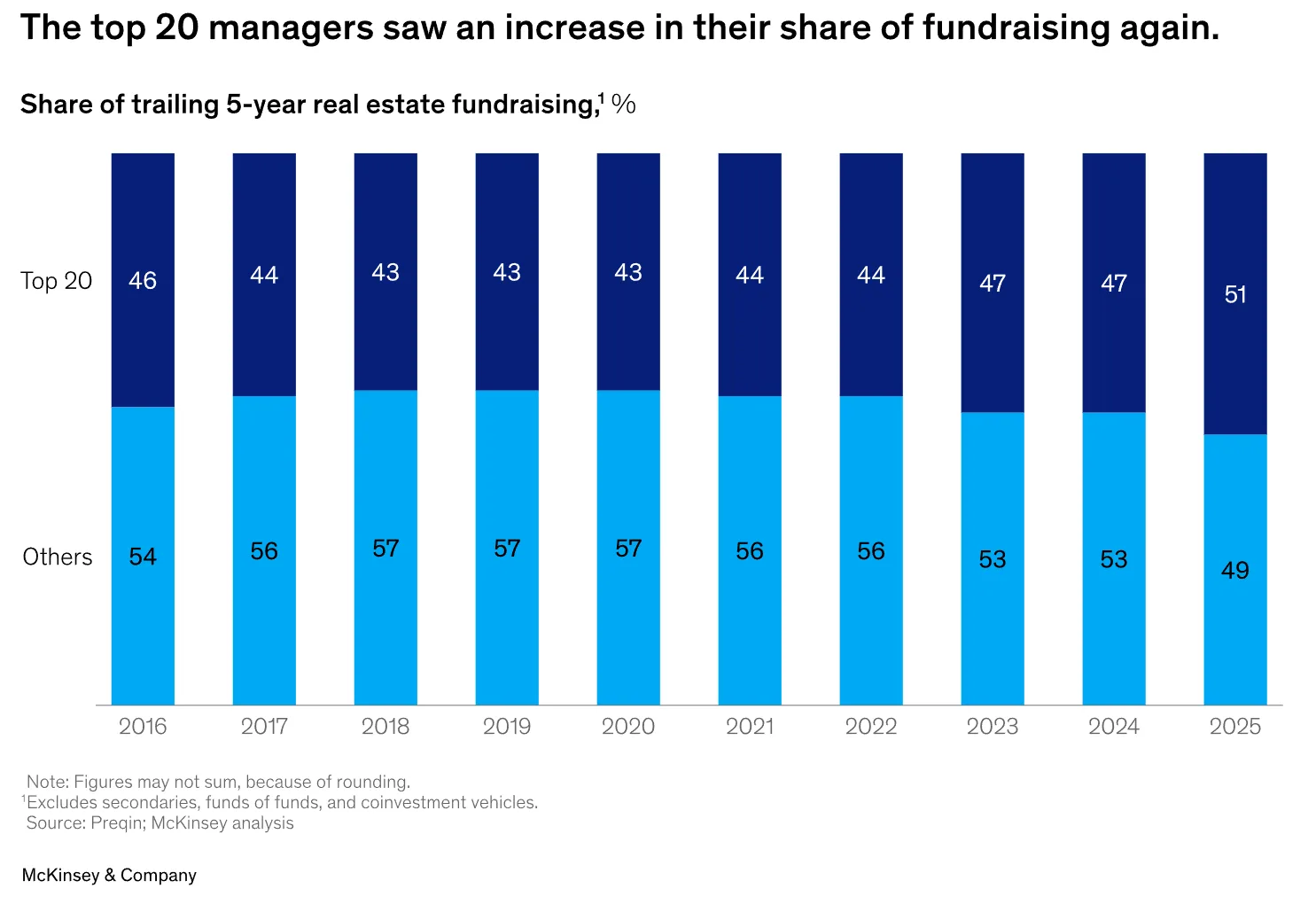
Real estate trends show ongoing consolidation, as managers seek scale and LPs concentrate capital with larger, institutionalized platforms. The top 20 managers account for a rising share of closed-end fundraising, and minority GP stake deals fuel further concentration. Midmarket players face a choice between scaling up or specializing even further by sector or geography.
Blurring Boundaries with Infrastructure
The distinction between real estate and infrastructure continues to erode. Real estate trends now include crossover sectors like data centers and logistics, which are capturing a greater share of infrastructure deal activity. This shift comes as capital continues to navigate higher financing costs across commercial property markets. Institutional allocations to infrastructure have increased and asset managers are forming integrated “real asset” platforms to seize these hybrid opportunities.
What’s Next
As real estate trends evolve, selective sector momentum, AI-enabled operational models, and structural shifts in capital deployment will continue to shape the investment landscape. Success will increasingly depend on execution capabilities, specialized asset selection, and the ability to navigate the confluence of real estate and infrastructure strategies.
Get Smarter about what matters in CRE
Stay ahead of trends in commercial real estate with CRE Daily – the free newsletter delivering everything you need to start your day in just 5-minutes