




- Racial inequities in US housing persist, particularly in affordability and homeownership.
- The White-Black homeownership gap, currently at 28.4 points, is wider than in the 1960s.
- Economic mobility dynamics increasingly favor higher-income households regardless of race.
- Retirement security outcomes are tied to racial disparities in earlier-life wealth accumulation.
Disparities in Housing Affordability
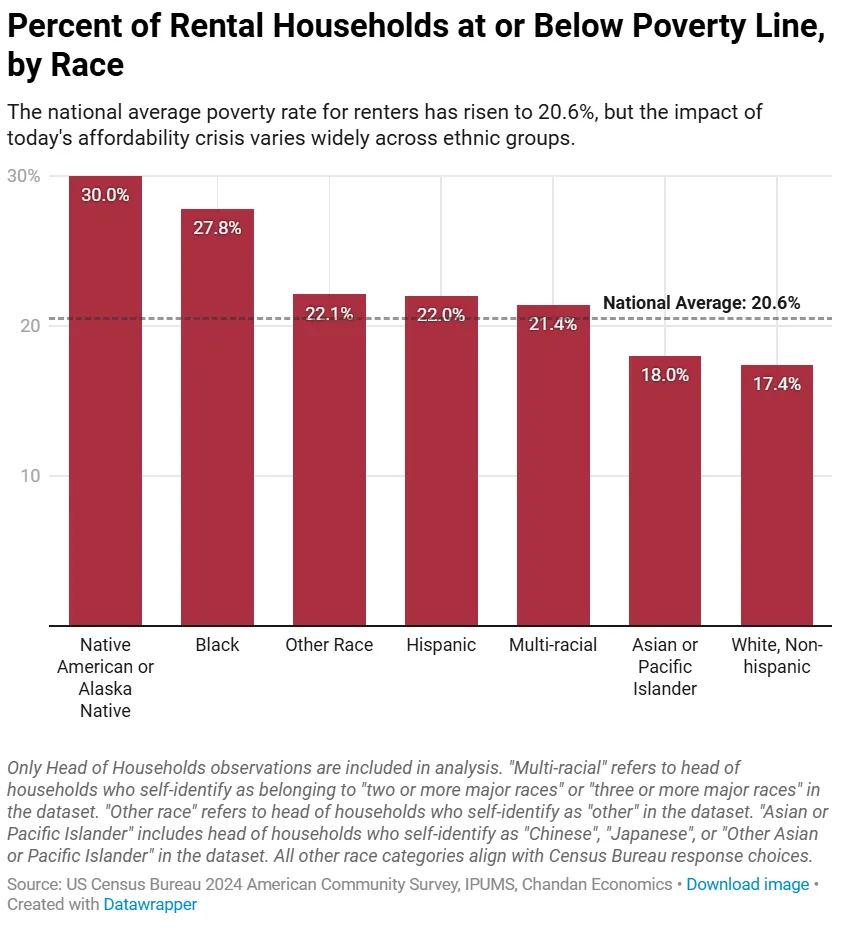
According to a Chandan Economics report, racial inequities in housing affordability remain pronounced, with renter poverty rates highest among Native American/Alaskan Native (30.0%) and Black (27.8%) households. White renter households consistently post the lowest rates, with education significantly improving affordability outcomes across all groups. The gap between renters and homeowners in wealth continues to widen, fueled by post-pandemic market shifts and long-standing socioeconomic divides.
Gaps in Household Wealth
Homeownership, a primary driver of US household wealth, highlights severe racial inequities. White households are the only group with a homeownership rate above the national average (71.6% vs. 64.3%). The homeownership gap between White and Black households stands at 28.4 percentage points, exceeding historical levels. Despite progress in lending practices, these gaps have only modestly narrowed over recent decades.
Get Smarter about what matters in CRE
Stay ahead of trends in commercial real estate with CRE Daily – the free newsletter delivering everything you need to start your day in just 5-minutes
Economic Mobility Barriers
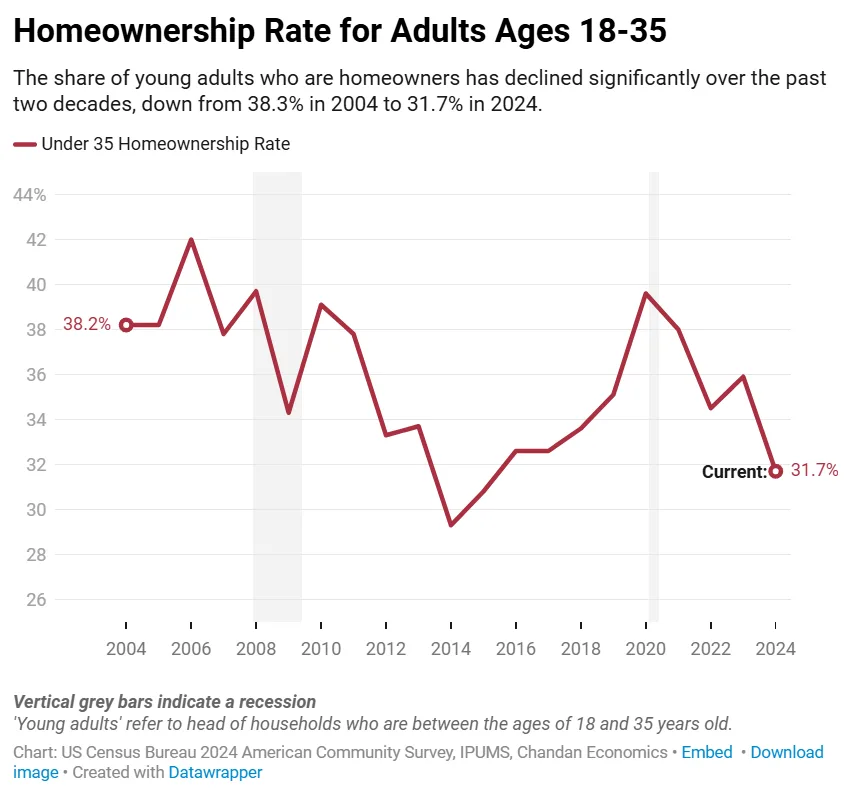
Economic mobility improvements have helped narrow some racial gaps, particularly for Black households, but class-based divides are now more prominent. The divide in homeownership among young adults (under 35) is increasingly influenced by income, making upward mobility and wealth accumulation more challenging, especially for minority groups. This dynamic is unfolding as overall household mobility has fallen to record lows in 2024, limiting opportunities for families to relocate in search of better jobs or more affordable housing. Annual incomes for White children from low-income families are still 41% higher than for Black children from similar backgrounds.
Retirement Security and Senior Housing
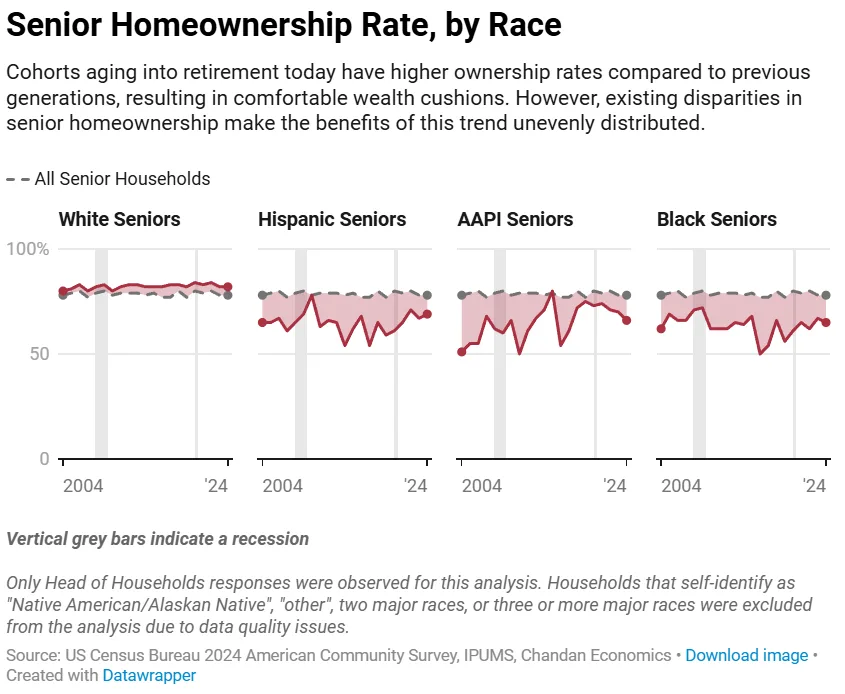
Racial inequities extend into retirement security and senior homeownership. White, multi-racial, and Black seniors are more likely to have retirement income than Native American, Asian, or Hispanic seniors, reflecting earlier disparities in wealth accumulation. As the US population ages, high senior homeownership rates among White households contribute to intergenerational wealth divides, while younger, minority, and lower-income households face greater barriers to entering the housing market.
Long-Term Implications
US housing remains deeply shaped by racial inequities, affecting affordability, wealth, and retirement security. Policymakers face challenges in expanding housing supply and addressing labor market imbalances amid shifting demographics and technological change. Without targeted action, persistent disparities could continue to limit economic progress for minority and lower-income households, amplifying intergenerational impacts.