





- Property fundamentals across office, retail, industrial, and apartments are showing early signs of stabilization.
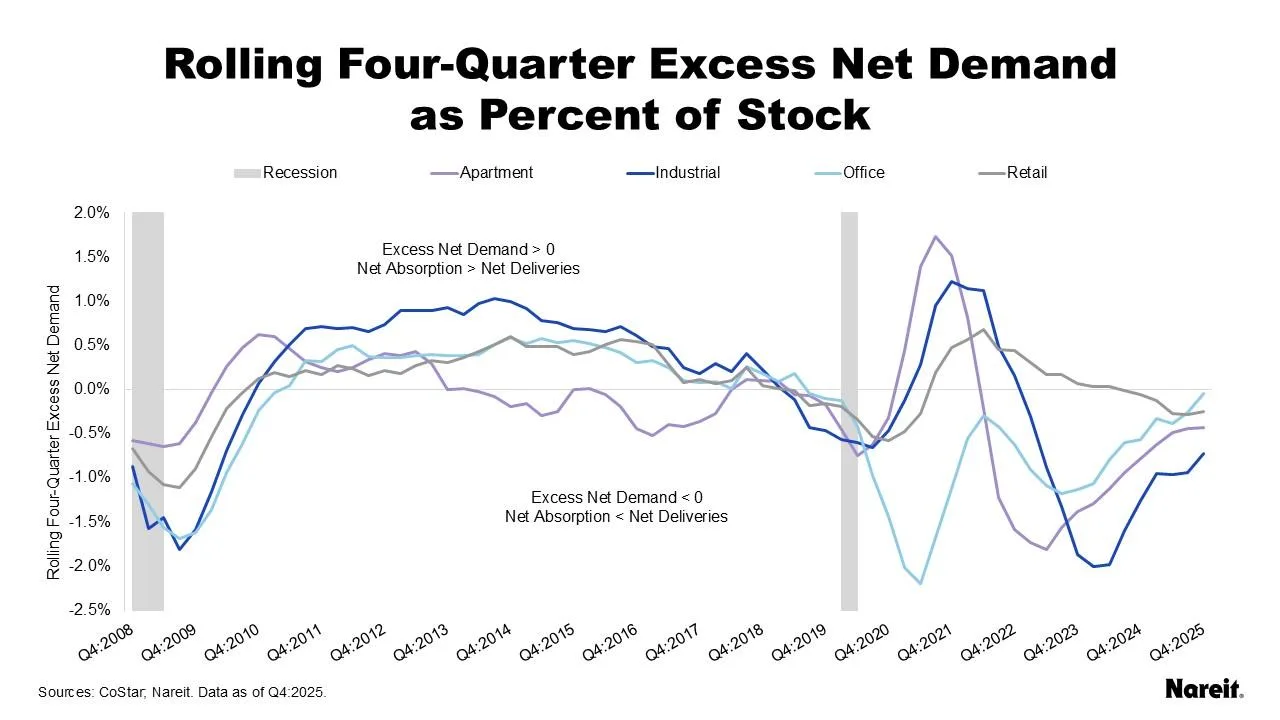
- Supply-demand gaps have narrowed, especially for industrial and apartment sectors, though imbalances persist.
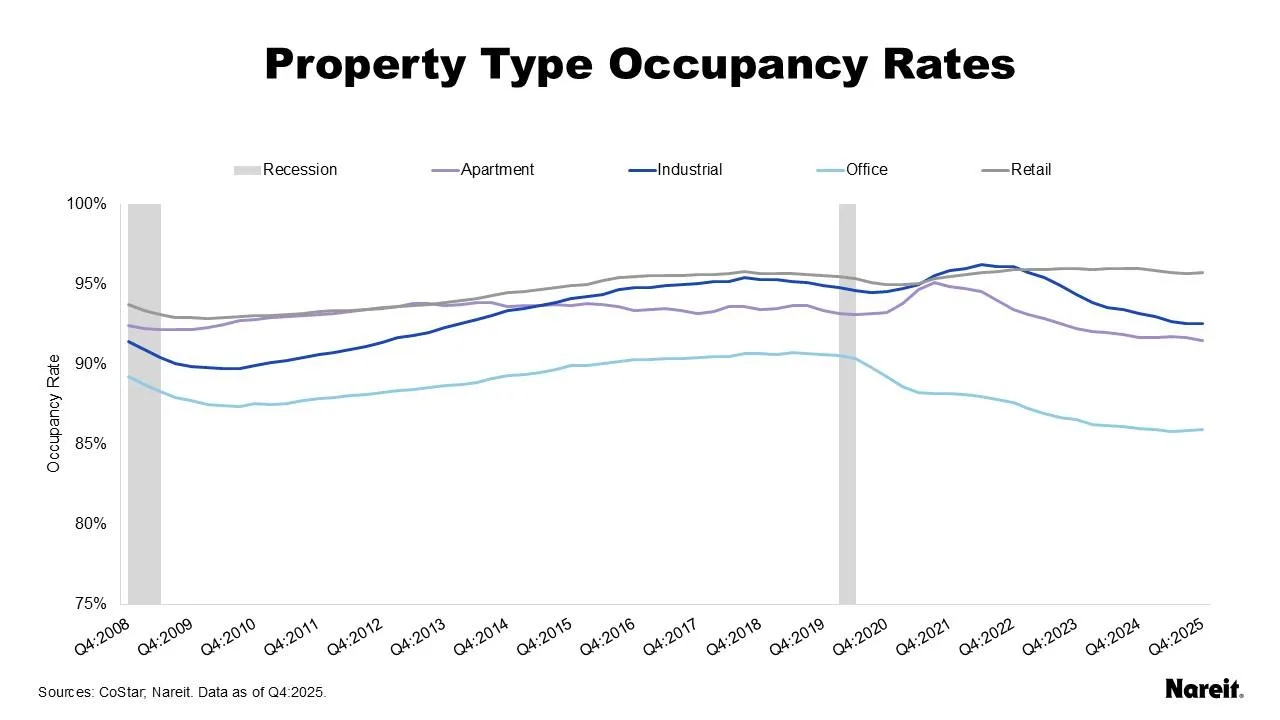
- Occupancy rates appear to be stabilizing, with office and retail posting positive trends in late 2025.
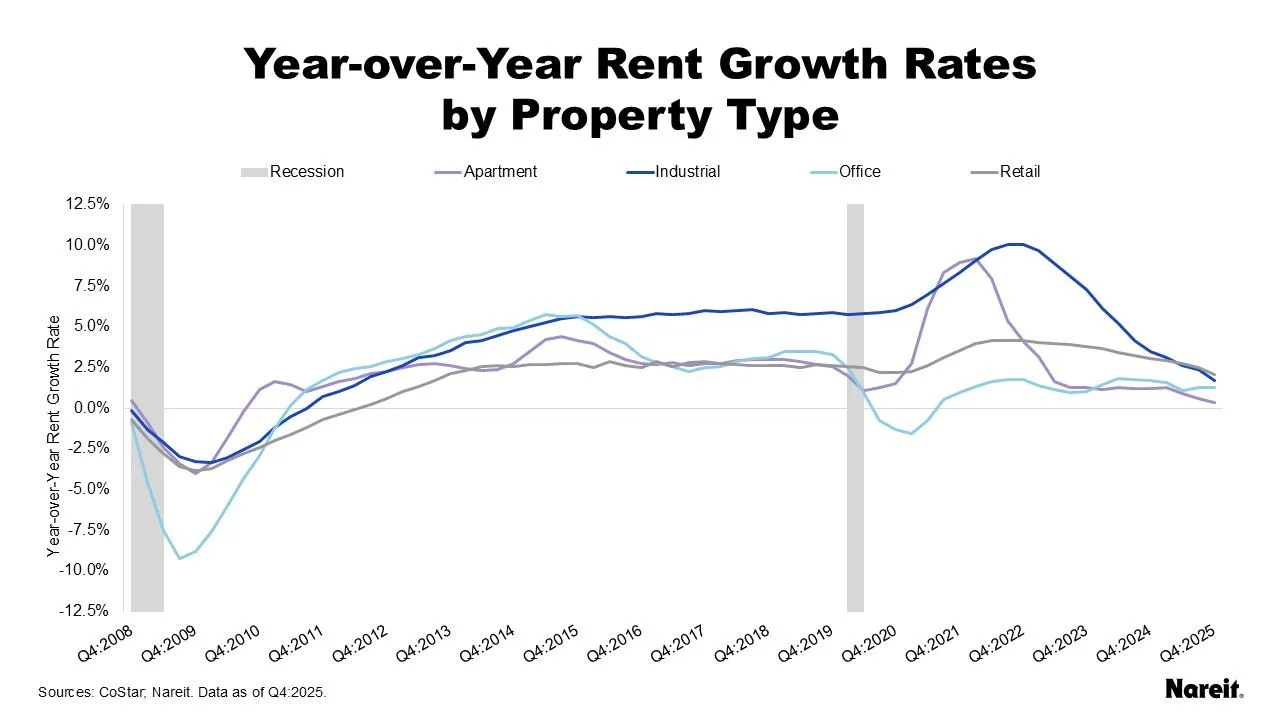
- Rent growth rates have slowed but remain positive across all four traditional property types.
Stabilizing Property Fundamentals
Nareit reports that in late 2025, CoStar data indicated that property fundamentals for office, retail, industrial, and apartments were gradually stabilizing. While each sector faced ongoing supply-demand imbalances, rolling four-quarter net demand figures showed upward momentum, suggesting that operational performance could improve in 2026.
Occupancy Trends Show Improvement
Retail maintained a steady occupancy rate at 95.7% at the end of 2025. Industrial and apartments stabilized at 92.6% and 91.5%, respectively. Office occupancy saw its second consecutive quarter of improvement, reaching 86.0% after a prolonged downturn. These trends in property fundamentals signal an emerging equilibrium across sectors.
Rent Growth Remains Positive
Despite decelerating from previous highs, rent growth stayed positive across major property types. Industrial rents grew by 1.7%, apartment rents by 0.4%, retail by 2.1%, and office by 1.2% year-over-year in Q4 2025. The moderation in rent growth reflects the ongoing balancing of supply and demand fundamentals, a trend also reflected in recent data showing industrial vacancies increasing as rent growth continues to cool across logistics markets.
Outlook for 2026
With signs of property fundamentals stabilizing, both occupancy and rent growth rates are expected to strengthen. This shift in market equilibrium could drive further operational gains for property owners and investors in 2026 as the sector continues to adjust.
Get Smarter about what matters in CRE
Stay ahead of trends in commercial real estate with CRE Daily – the free newsletter delivering everything you need to start your day in just 5-minutes