




- US office vacancy sits at 14.1%, with several major markets at or near 25-year highs, reflecting the lasting impact of hybrid and remote work.
- Office mortgage delinquencies for CMBS loans have hit 11.8%, almost six times higher than in 2019, while banks are slow to mark down bad loans.
- Office property sales totaled $45.4B in the first nine months of 2025—less than half of the $102.6B recorded in 2019.
A Tale Of Two Office Markets
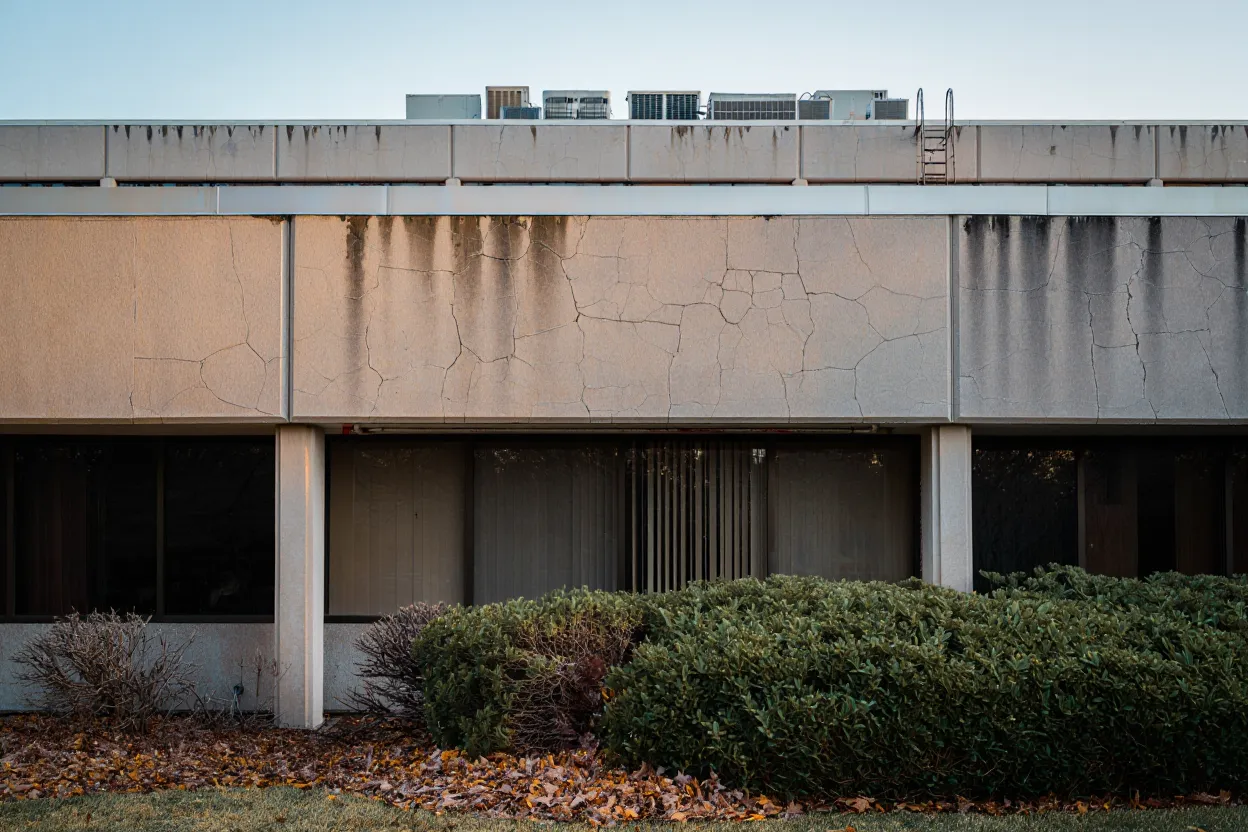
Some areas like Park Avenue and SoMa are stabilizing, but most of the US office market remains in distress, reports WSJ. Vacancy rates hover at historic highs, and rents are flat or declining in most cities despite moderate economic growth.
Unlike past downturns tied to economic cycles, today’s office struggles are structural. Remote and hybrid work have decoupled office demand from GDP growth, fundamentally changing how much space tenants need—and how they use it.
Not A Typical Recovery
From 2023 to 2024, the US economy grew at a healthy 2.7% annual rate. Yet office demand failed to rebound, signaling a long-term shift. Companies like Amazon, Meta, and Target are cutting jobs despite strong performance, with many firms downsizing or rethinking office needs.
More than half of white-collar workers now operate without assigned desks, compared to one-third pre-pandemic. New offices, like Mutual of Omaha’s upcoming Nebraska HQ, are designed for flexibility rather than headcount growth, trading in SF for amenities like sky lobbies and shared workspaces.
Get Smarter about what matters in CRE
Stay ahead of trends in commercial real estate with CRE Daily – the free newsletter delivering everything you need to start your day in just 5-minutes
The Financial Fallout
Vacant buildings are dragging down property values and gutting tax revenues for major cities. In DC, commercial valuations are down by nearly $8B for the 2026 tax year. San Francisco, still recovering, faces a $1B budget deficit by FY 2027–28 as office values plunge 50% from their peak.
Office loan delinquencies are spiking. CMBS delinquency rates hit 11.8%, while bank-held office loans show distress in only 5%–7% of cases—suggesting deeper losses may be delayed. As cities grapple with falling tax receipts, many could shift the burden to residential property owners.
Investment Lags, Distress Mounts
Though office investment volume ticked up slightly from last year, the $45.4B in deals through Q3 is far below pre-pandemic levels. Owners are increasingly offloading properties at losses or returning them to lenders.
Examples include BentallGreenOak surrendering a Manhattan tower to its lender. Irvine Co. also sold its last downtown San Diego building at a steep discount, shifting focus to higher-growth submarkets like La Jolla.
What’s Next? A Sector In Flux
Limited new construction and office-to-residential conversions are tightening supply in some markets. However, the long-term outlook remains uncertain, especially as AI adoption drives job cuts across corporate America.
Even if AI leads to net job growth, it’s unclear whether those roles will require office space. As CoStar’s Phil Mobley puts it: “Will that work be the kind that’s done in offices? That’s a huge uncertainty.”
Bottom Line
The US office market is stabilizing in pockets, but the broader picture is still grim. With structural shifts driving down demand, values plummeting, and local governments scrambling for revenue, a full-scale recovery may remain elusive—especially for cities on the wrong side of the trend.