




- Large tenants are locking leases in new office towers years before completion due to limited prime space.
- AI companies now account for the majority of Midtown South office leasing demand.
- Renewal activity is up as tenants face few high-quality alternatives until more office developments finish.
- Landlords are modernizing space and raising rents to attract top-tier tenants amid fierce competition.
Why Tenants Are Moving Early
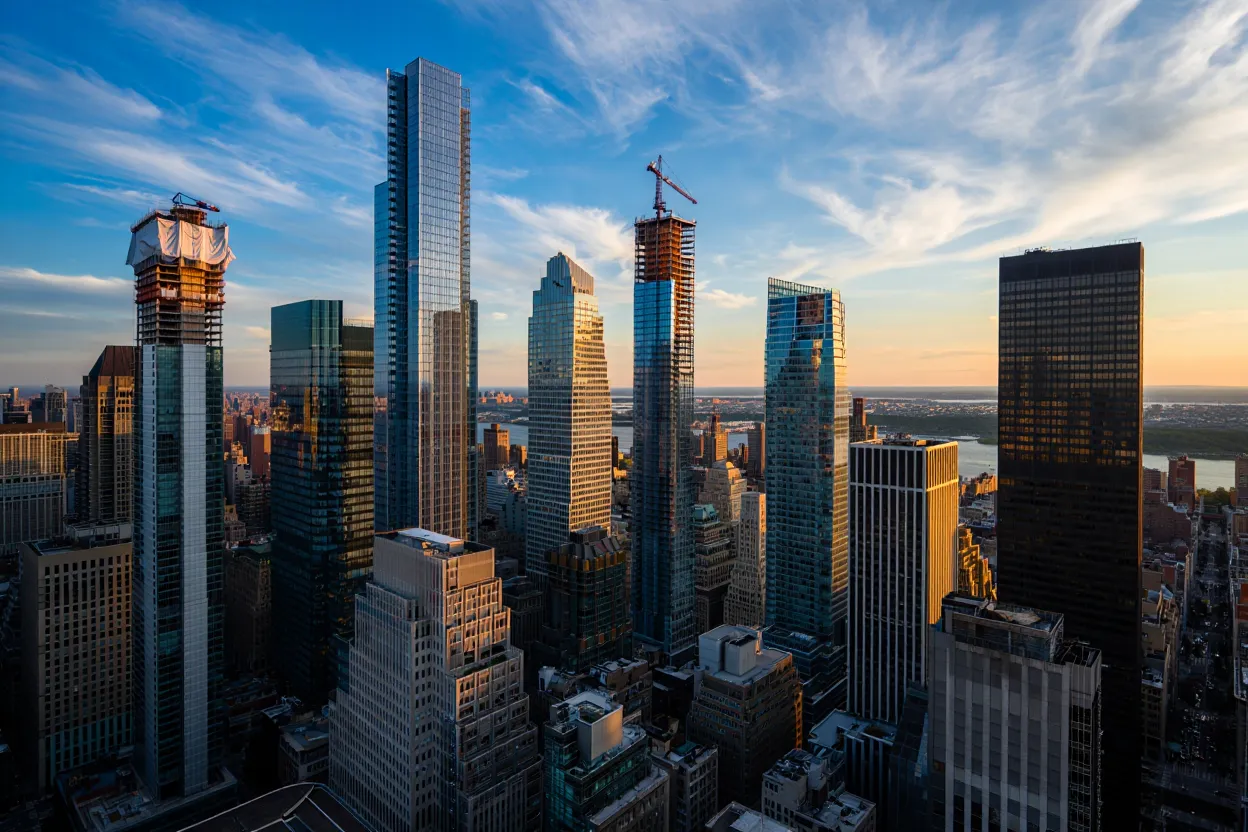
According to the NY Post, as prime Midtown availability shrinks, major firms are pre-leasing space in buildings set to open as late as 2031. Notable deals include Citadel at the planned 350 Park Ave., Deloitte at 70 Hudson Yards, and C.V. Starr at the future 343 Madison Ave. According to Newmark’s Jonathan Mazur, competition is intense among large tenants seeking flagship addresses amid new development.
AI Tenant Surge Boosts Office Leasing
AI firms are driving a fundamental shift in office leasing patterns. Recent data shows AI tenants comprise 59% of all Midtown South leasing, representing 2M SF of active requirements for 2026, according to Savills. With these firms favoring high-end, amenitized Class A space, demand in NYC’s office leasing market has sharply rebounded from pandemic-era lows.
Get Smarter about what matters in CRE
Stay ahead of trends in commercial real estate with CRE Daily – the free newsletter delivering everything you need to start your day in just 5-minutes
Landlords Adapt, Rents Rise
To meet demand, landlords are unveiling renovated spaces with modern amenities. RXR is updating 1211 Sixth Ave. with a tenant-only lounge and upgraded lobby, listing space at $130 PSF. The new Rolex Building and Barry Diller’s IAC Building both have high-profile, previously unavailable blocks of space now coming to market. Limited options and the “beauty pageant” dynamic are pushing rents higher across top locations.
Long-Term Strategy Takes Priority
With so few options in core submarkets, many tenants are opting to renew or expand in place. CBRE’s Mary Ann Tighe and Cushman & Wakefield’s Bruce Mosler both observed a rise in large tenant renewals. More companies are locking in current spaces while exploring future office deals. With limited top-tier availability, many tenants choose to stay put rather than risk losing prime locations.
The race for trophy office space now defines New York City’s leasing market. Landlords and tenants are placing long-term bets on the city’s continued market strength. Major developments like BXP’s $2B Midtown tower underscore this momentum, as more tenants seek high-end space ahead of delivery.