








- CMBS distress rate across the top-50 US metro areas reached 12.2% in April 2026.
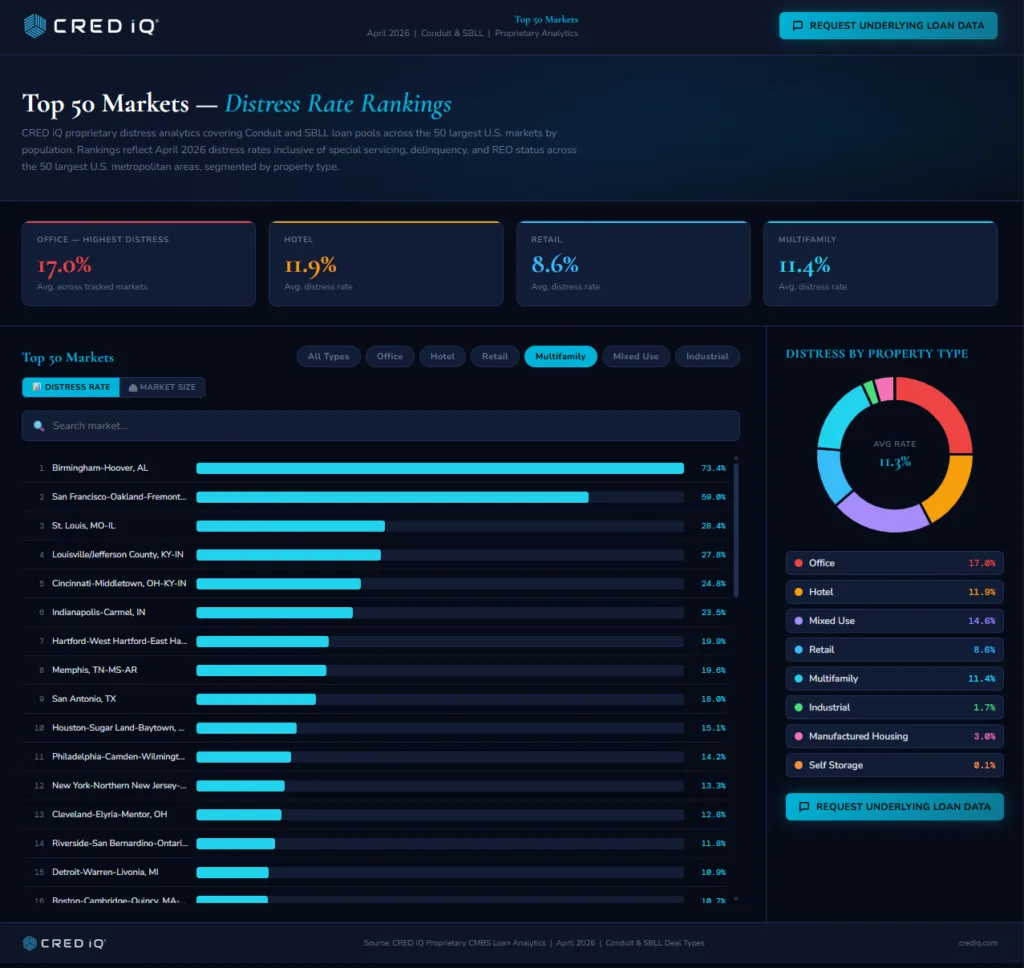
- Office property types posted the highest distress at 17%, with multifamily reaching 11.4%.
- Sun Belt markets like Miami and Dallas reported much lower distress rates compared to Northern legacy metros.
- Chicago, Denver, and Minneapolis accounted for a significant share of overall distressed loan balances.
Office Distress Shapes Market Performance
The latest CRED iQ data highlights ongoing stress in office real estate, significantly impacting CMBS markets. The overall distress rate for the top-50 US metros remains at 12.2%, with office loans leading at 17%. Mixed-use properties followed with 14.6%, while industrial assets stayed the most resilient at 1.9% distress.
Regional Variations Persist
Some Northern and Midwest metros, including Providence (71%), Hartford (44.1%), and Denver (42.3%), reported the highest CMBS distress rates. By contrast, major Sun Belt cities such as Miami, Dallas, Houston, Phoenix, and Atlanta continued to post sub-10% distress, reflecting stronger demand and demographic trends.
Multifamily Joins the Distress Trend
Multifamily distress is rising, with the sector posting an 11.4% distress rate across major metros. San Francisco and Minneapolis emerged as notable hotspots due to rent declines and higher vacancies, while markets like Dallas-Fort Worth and Charlotte saw much lower distress, supported by strong demand. At the same time, some gateway markets continue to push rents higher, highlighting a split between high-demand urban cores and weaker metros facing rising vacancies.
Get Smarter about what matters in CRE
Stay ahead of trends in commercial real estate with CRE Daily – the free newsletter delivering everything you need to start your day in just 5-minutes
Major Northern Metros Under Pressure
Chicago (25.6%), Denver (42.3%), and Minneapolis (39.5%) represent a large share of distressed CMBS balances. Office and hotel assets continue to drive these elevated rates as vacancies and loan performance issues weigh on market stability.
What’s Next
CRED iQ will continue to monitor loan modifications, forbearance, and extensions as market stress persists. Their analytics remain a primary source for detailed CMBS loan data and trends across key US metros.