




- National retail holiday sales surpassed $1T, up 4% year-over-year.
- Federal Reserve is expected to hold rates steady amid persistent 2.7% inflation.
- Prime and grocery-anchored retail real estate outperformed secondary locations.
- Mall ownership and investment activity increased in 2025, despite ongoing risk.
Holiday Sales Drive National Retail
According to Bisnow, US retailers entered 2026 on a strong note, with holiday sales topping $1T and spending up 4% from last year. This performance held steady despite high inflation and no expected cuts to the Federal Reserve’s policy rate in the near term.
Multiple industry reports, including data from the National Retail Federation, echoed strong holiday spending. January’s Retail’s Big Show in New York drew a record-breaking 41,000+ attendees, highlighting optimism in the industry alongside continued uncertainty.
Inflation and Interest Rates Limit Upside
J.P. Morgan Global Research Chair Joyce Chang indicated inflation is likely to remain around 2.7%, keeping interest rates elevated throughout 2026. Lower oil prices have helped at the margin, but not enough to shift Fed policy. Persistent inflation and high rates challenge both retail property owners and consumer spending power.
Asset price gains have broadened the economic divide, with the top 20% of consumers realizing roughly two-thirds of wealth creation. Industry leaders warn that holiday sales strength may not fully translate into widespread retail recovery, exemplified by recent bankruptcies such as Saks Fifth Avenue.
Retail Real Estate: Winners and Shifts
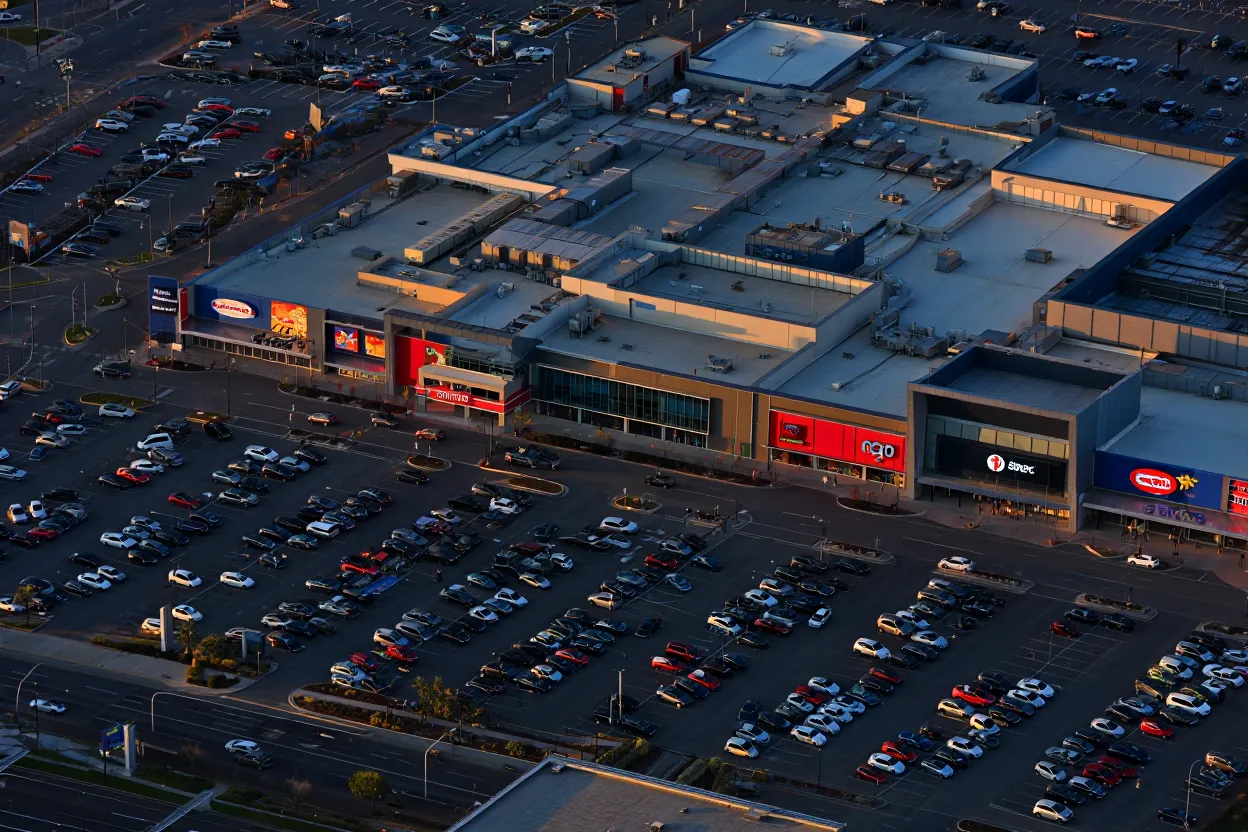
The national retail landscape remains polarized. Prime and grocery-anchored centers are outperforming, while department stores and some traditional mall properties lag. Online platforms grew sales nearly 23% over the holidays, but legacy retailers continue to lose share. Shoppers have increasingly gravitated toward value, influencing both retailer strategy and real estate demand—a continuation of spending trends that began to solidify in 2025. Investor appetite is strongest for lifestyle centers, neighborhood, and community centers, as highlighted in PwC’s 2026 Emerging Trends report.
Investment momentum was evident in 2025 with around 50 mall transactions—the third-highest total in two decades—and portfolio expansions by firms like Oxford Properties and MCB Real Estate. New tax rebates may temporarily boost consumer demand in the spring, yet tariff impacts and shifting spending habits—especially among Gen Z—suggest volatility remains ahead for national retail real estate.
Get Smarter about what matters in CRE
Stay ahead of trends in commercial real estate with CRE Daily – the free newsletter delivering everything you need to start your day in just 5-minutes