



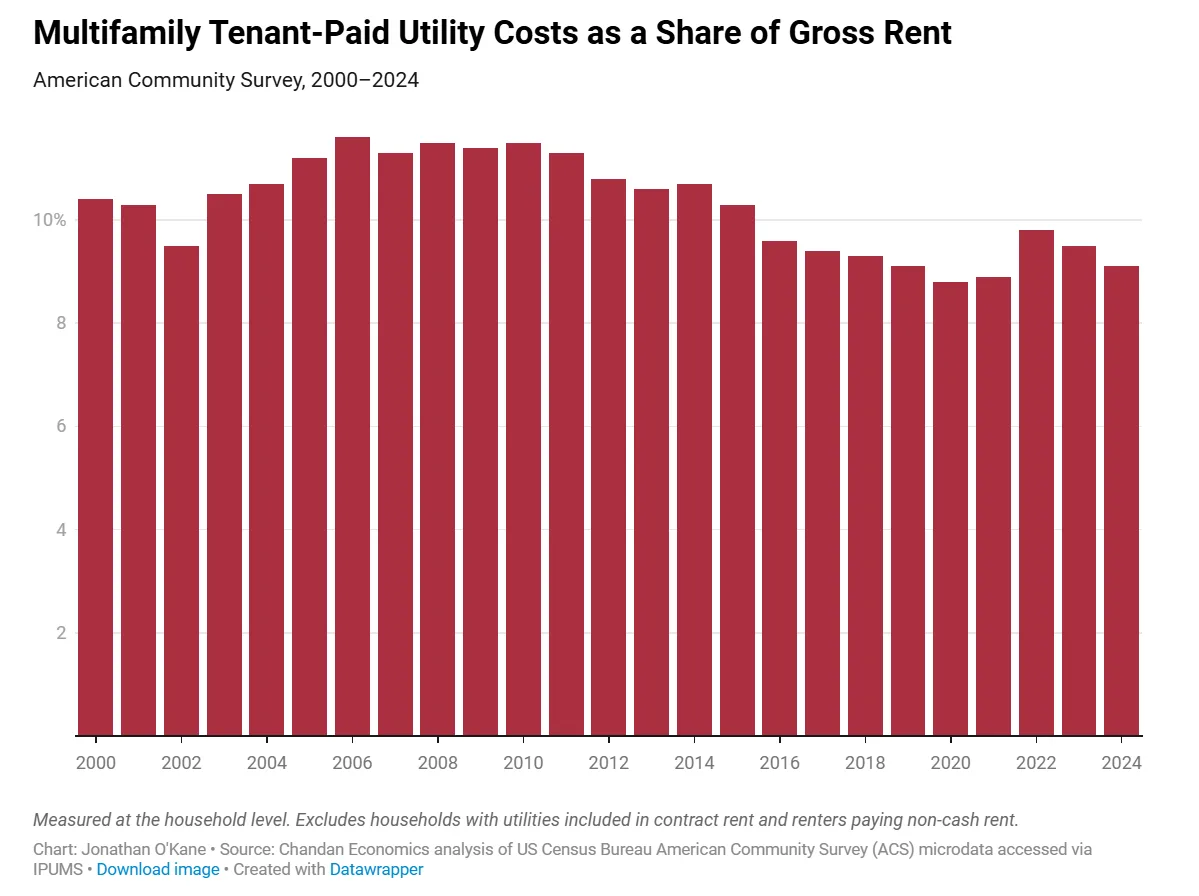
- Utility costs fell from 11–12% of multifamily rent in the mid-2000s to 8.8% by 2020.
- US shale boom and lower natural gas prices reduced utility bills.
- Energy-efficient new construction and Sun Belt migration also contributed.
Utility Costs Trend Down
According to Chandan Economics, multifamily renters are paying a smaller share of their rent on utilities than they did in the 2000s. Data from the American Community Survey show tenant-paid utilities made up as much as 11.6% of gross rent in 2006 but dropped to 8.8% by 2020 before a recent minor uptick.
What’s Driving the Shift
Falling natural gas prices after the US shale boom in the late 2000s helped keep utility bills low. At the same time, strong demand for rental housing pushed rents higher, meaning utilities now make up a smaller proportion. Newer multifamily buildings are more energy efficient due to better insulation, tighter energy codes, and improved lighting and appliances, further cutting energy use per unit. This focus on building performance and operational efficiency also aligns with the growing adoption of smart-home technology and connected systems in apartments, which many renters now view as an important part of modern housing. Migration to Sun Belt regions, with milder climates, also contributed to lower typical utility costs relative to rent.
Long-Term Outlook
The proportion of rent going to utility costs for multifamily tenants is significantly lower than in previous decades, despite overall rent growth. Industry observers expect these structural shifts—especially continued improvements in building efficiency—to help maintain this trend even as energy prices fluctuate.
Get Smarter about what matters in CRE
Stay ahead of trends in commercial real estate with CRE Daily – the free newsletter delivering everything you need to start your day in just 5-minutes