






- Multifamily loan spreads have stayed flat in Q4 2025, even as national vacancy rates reached a record high of 7.2%.
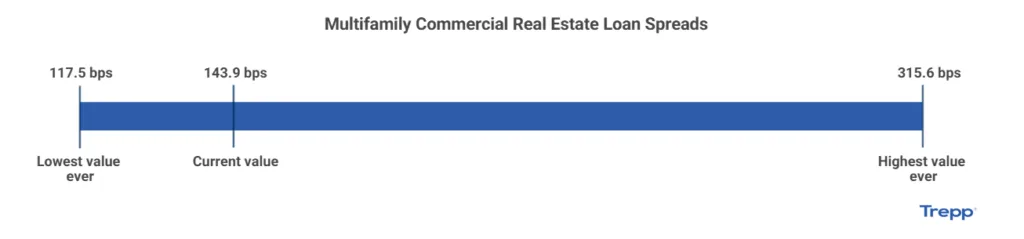
- Low-leverage loans (50–59% LTV) continue to price in the low 140 basis point range over the 10-year US Treasury.
- Median rents fell 1.0% in November, indicating soft demand amid growing apartment supply.
- Analysts don’t expect a significant shift in spreads this year, though a slight drop remains possible.
Market Holding for Now
In Q4 2025, multifamily commercial real estate loan spreads have shown little movement. Trepp reports that low-leverage loans remain priced in the low 140s over the 10-year Treasury.
Meanwhile, the sector faces mounting pressure. National vacancy rates climbed to a record-high 7.2%. Rents dropped as well, with the US median falling by 1.0% month over month in November. These trends suggest that new supply is outpacing tenant demand in many regions.
Understanding the Disconnect
Despite weakening fundamentals, spreads haven’t shifted much. Unlike the more visible and frequently priced CMBS market, private CRE lending moves more slowly. Trepp’s weekly survey, Trepp-i, collects spread data from lenders nationwide. The survey helps benchmark trends across property types and loan-to-value ranges.
Lenders still view multifamily as relatively low-risk. That perception has kept spreads stable, even with rising vacancies and falling rents. Still, some market watchers say this could change if conditions worsen in early 2026.
Regional Differences Matter
National trends don’t tell the full story. Some metro areas continue to post strong rent growth and low vacancy rates. Others, however, are seeing a clear mismatch between new construction and leasing demand. As a result, lenders are closely watching market-level data.
Get Smarter about what matters in CRE
Stay ahead of trends in commercial real estate with CRE Daily – the free newsletter delivering everything you need to start your day in just 5-minutes
What to Watch
The outlook depends on how long supply continues to outpace demand. If that persists, spreads could eventually react. Some lenders have already started pricing in broader economic shifts, especially as markets anticipate potential monetary policy changes. For now, analysts expect spreads to dip slightly by the end of the year—likely by just a few basis points.
Bottom Line
Multifamily loan spreads remain firm, but vacancy and rent trends show cracks in demand. If oversupply continues into 2026, lenders may adjust their pricing—especially in weaker regional markets.