



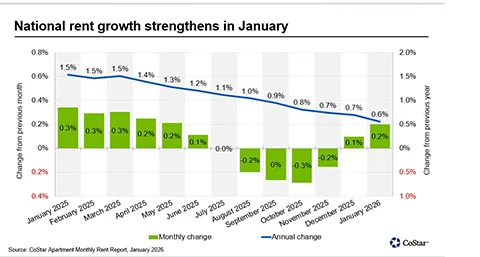
- Multifamily rent growth returned positive in January 2026, up 0.2% from December.
- The Midwest led regional increases, posting +0.27% month-over-month and 2.1% annual growth.
- 42 of the top 50 metros saw rents rise, with San Francisco showing the largest gains year-over-year.
- Markets with high new supply, such as Austin and Denver, saw continued rent declines.
January Rent Growth Returns
Business Wire reports that national multifamily rent growth regained momentum in January 2026, according to Apartments.com’s latest data. The US average rent rose to $1,713, a 0.2% gain from December’s revised average of $1,709. This marks the second straight month of positive rent movement after several flat or negative months in 2025. Annual rent growth, however, eased slightly to 0.6%, down from 1.5% one year ago.
Regional and Metro-Level Performance
Growth was widespread, with all four national regions registering monthly increases. The Midwest led with a 0.27% gain, followed by the Northeast at 0.21%, the South at 0.17%, and the West at 0.09%. On an annual basis, the Midwest remains strongest, up 2.1%, while the South and West posted year-over-year losses of 0.2% and 1.5%, respectively. At the metro level, 42 of the top 50 markets recorded monthly rent growth. Leaders included San Francisco (+1.07% monthly, +6.3% annual), Norfolk (+0.80% monthly), and San Jose (+0.71% monthly). Austin, Denver, and Phoenix continued to see declines — a result of persistent oversupply. The pace of recovery suggests a return to more typical seasonal patterns, especially in markets less exposed to new inventory spikes.
Get Smarter about what matters in CRE
Stay ahead of trends in commercial real estate with CRE Daily – the free newsletter delivering everything you need to start your day in just 5-minutes
Supply Pressure Remains
Excess new multifamily supply is keeping overall rent growth moderate nationwide, particularly where vacancy rates are high. Sun Belt and Mountain West metros have seen the steepest rent declines, due to ongoing construction and softening demand. Meanwhile, supply-constrained areas such as the Midwest and coastal metros continue to outperform other regions.
Outlook for Multifamily Market
While many metros are past peak supply levels, a notable inventory overhang persists into 2026. If new deliveries slow and renter demand remains steady, multifamily rent growth could shift gradually back to its typical seasonal rhythm over the next several months. The pace of multifamily rent trends will closely track localized supply dynamics and employment fundamentals as the year progresses.